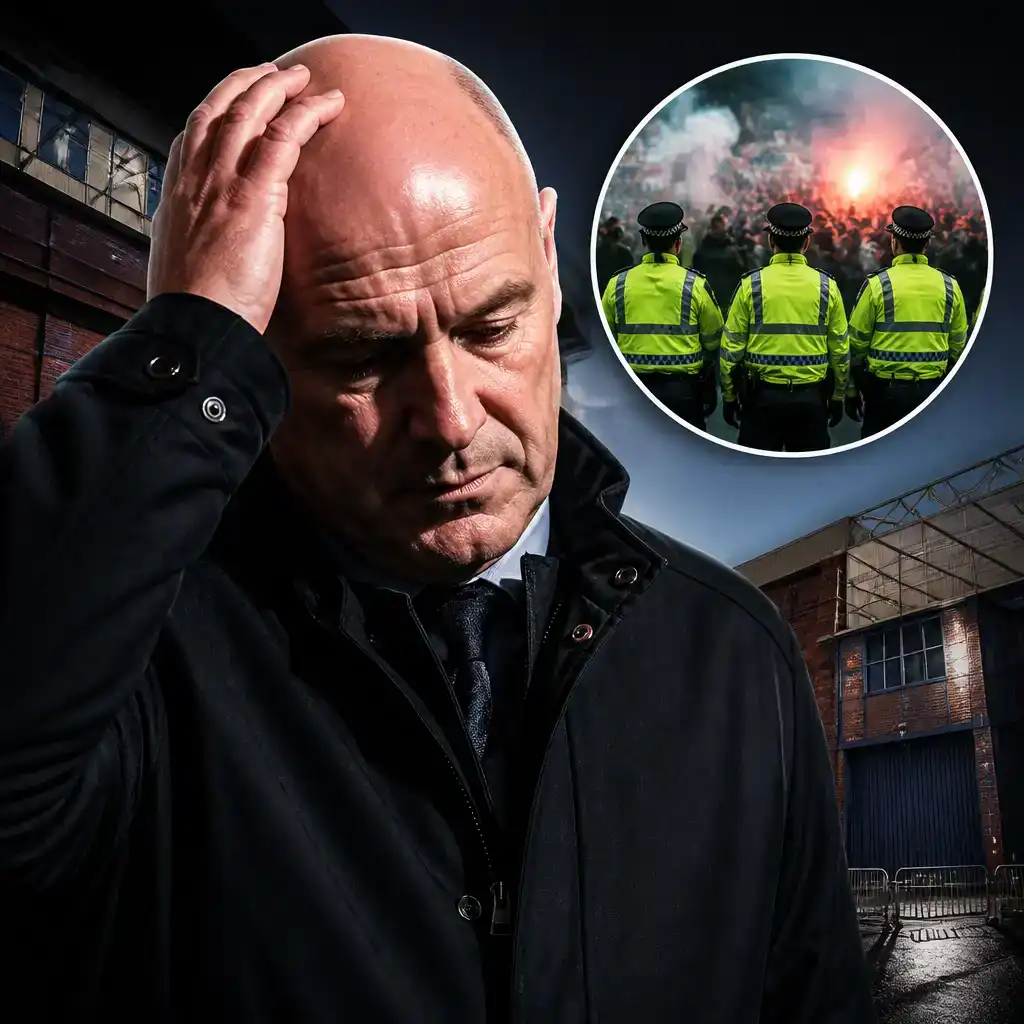
Police Scotland initially announced nine arrests. That figure had risen to 37 by June, while Greater Glasgow divisional commander Emma Croft later told the Safe Glasgow partnership that more than 40 arrests had been made.
The consequences extended well beyond damaged turf and delayed post-match formalities. Police officers and members of the public were injured, and a 10-year-old child was struck by a coin. Among the early cases were three men charged in connection with a serious street assault and another man charged over an alleged attack on a Celtic coach and player.
Chief Superintendent Kate Stephen described the behaviour as “shameful” and said police officers and stewards faced sustained “extreme hostility and violence.”
An independent review led by Mark Blackbourne concluded that the incident came within a “very small margin” of becoming a violent mass confrontation. Blackbourne called it a “minor miracle” that nobody suffered more serious injuries.
Why did the review alarm the Scottish FA?
Blackbourne’s report said police needed four minutes and 28 seconds to regain control after masked Rangers supporters approached a potential mass confrontation. Some carried poles and wore reinforced gloves, according to the review.
The report identified failures by both clubs, but it did not reserve criticism for them. It also questioned policing, stadium planning and the Scottish FA’s previous response to worsening disorder. The governing body, in other words, was asked to punish conduct after being told it had not done enough to prevent or deter it.
In recent years, the Scottish FA and Scottish Professional Football League have generally relied on fines or occasional ticket-allocation reductions for offences including pyrotechnic use. Closing Celtic Park and Ibrox for cup matches is considerably harder to dismiss as an administrative expense.
The review gave the association a detailed basis for stronger action. It also left an awkward question hanging over the decision: whether identical penalties properly reflect the different conduct attributed to each set of supporters.
Why does Celtic dispute the punishment?
Celtic said it was “shocked” by what it called a “disproportionate punishment.” The club stressed that it was not the home side and described its supporters’ initial action as a relatively small celebratory incursion.
It also argued that the panel failed to distinguish between that pitch entry and the violence that followed. Celtic said it would study the tribunal’s written reasons before deciding what to do next, leaving open the possibility of an appeal.
Rangers had previously accepted responsibility for matters within its control but challenged parts of Blackbourne’s review. Its objections included the report’s treatment of Celtic’s allocation of roughly 8,000 tickets and the role played by the Scottish FA itself. No post-ruling Rangers response had been reported when the sanctions were announced on 28 August.
Both clubs defending their respective positions is predictable. More consequential is whether the written judgment explains why equal penalties were appropriate despite the panel hearing different allegations about the actions of each support.
Who else pays for an empty stadium?
The clubs will lose matchday income, while the £100,000 payment is intended to compensate whichever visiting side is drawn against them. That opponent could be a lower-league club for which a cup trip to Celtic Park or Ibrox would normally provide rare exposure and a valuable share of a large gate.
The compensation offers certainty, but it cannot recreate a full stadium, hospitality sales or the occasion itself. A club with no involvement in the March disorder may therefore arrive at one of Scottish football’s largest grounds to find thousands of empty seats and a bank transfer waiting instead. Efficient, perhaps, but not quite the usual attraction of a cup draw.
The sporting effect could also differ between the Glasgow clubs depending on their opponents and when each receives a home tie. The sanction applies to the next such fixture, rather than a named round.
The Scottish FA clearly wants the ruling to reset expectations around pyrotechnics, pitch invasions and organised confrontation. Whether it deters future disorder, survives any appeal and addresses the wider failures identified by the review will determine if this is a genuine policy shift or merely a very visible punishment.