Jessie Cave’s OnlyFans account solved a financial crisis that years of acting work had not. It also brought embarrassment, industry stigma and the awkward discovery that brushing her hair online could pay more than appearing on screen.
During a Thursday appearance on British daytime programme This Morning, Cave said people assumed her role in the Harry Potter franchise had made her wealthy. The reality was less cinematic.
“People just assume I’m rich and I have loads of money, but no, I don’t,” she said. Smaller acting roles after the films were not enough to support the household she shares with comedian Alfie Brown and their four children. Childcare costs made conventional work difficult too.
Why did Jessie Cave join OnlyFans?
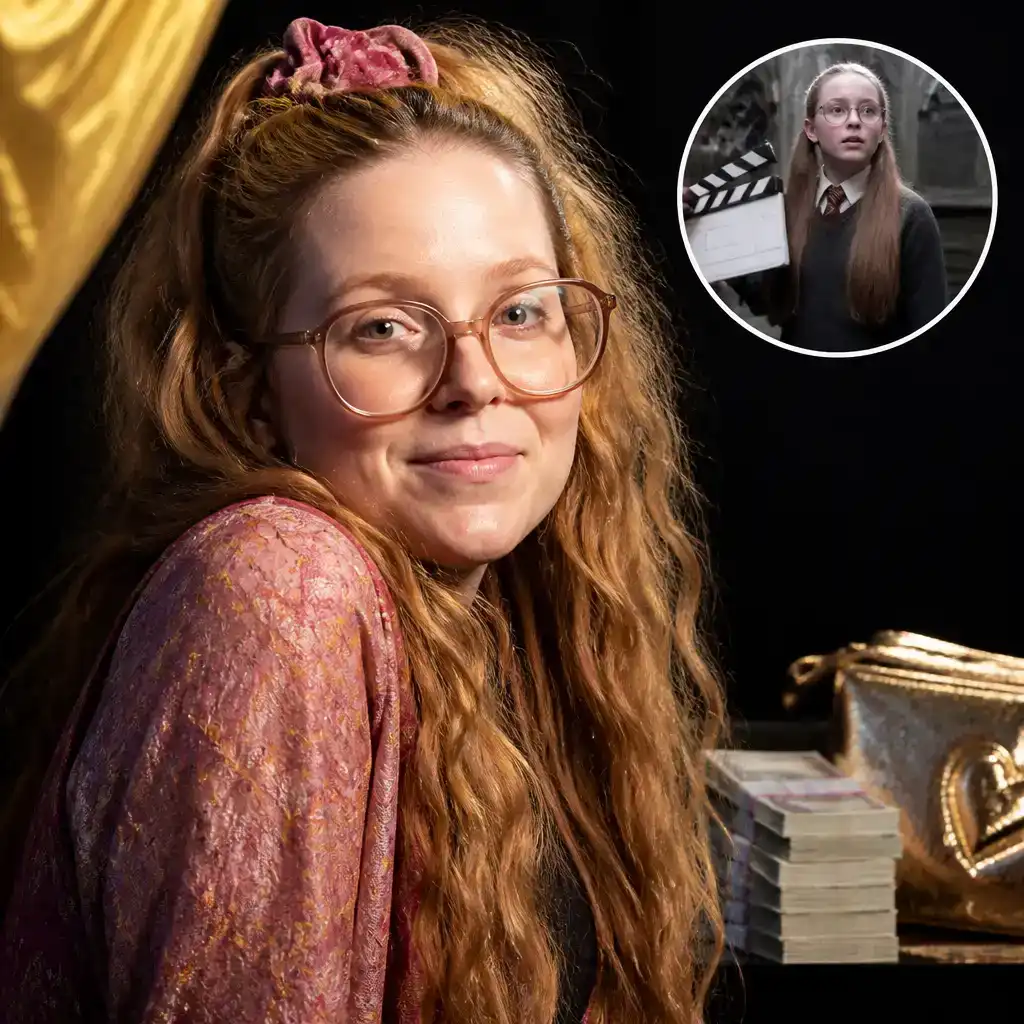
Cave played Lavender Brown, Ron Weasley’s first girlfriend, in the final three Harry Potter films. She won the role at 19 after competing against more than 7,000 applicants, according to The Observer.
That high-profile part did not produce permanent financial security. Over the following years, Cave moved between acting, writing, illustration, comedy and paid convention appearances. She told This Morning that she had managed to remain financially stable for 18 years before reaching a point when the available options had largely disappeared.
“It was embarrassing because, on a certain level, I would have really liked to get a job,” she said. With four children and expensive childcare, however, simply taking another poorly paid role was not a particularly elegant solution.
The Observer reported that Cave had also experienced postnatal depression, professional rejection and bereavements while her family lived in a one-bedroom London flat. She described OnlyFans as a “weird job,” but said she “couldn’t really have done anything else” while raising her children and continuing her creative work.
What does she post, and how much did she earn?
Cave announced her OnlyFans page on Instagram in March 2025, describing it as hair-focused fetish content. “It’s niche, even for me,” she wrote at the time. Her subscription price was $6 a month.
The material includes hair brushing, braiding and role-play costumes, including an elf, a maid and Lavender Brown. Although Cave does not appear nude and says she rejects explicit requests, The Observer reported that the account also features lingerie, suggestive posts and fetish-oriented performances. Calling it entirely nonsexual would therefore require some generous editing.
Cave said she earned £15,000, roughly $20,000, on her first day. USA Today later reported that within a year she had made more through the platform than during her entire acting career. No publication has independently verified those figures.
By April 2026, she reportedly had “many hundreds” of subscribers. As of August 21, 2026, the account remained active, although Cave had not released a newer verified earnings total.
How did the income change her family’s life?
Cave initially expected to earn about £5,000, stay on the platform for a few months and buy herself time to decide what came next. The result was considerably larger.
She told The Times that the subscription income had saved her family’s lives. According to The Observer, the money allowed Cave and Brown to:
- Move from London to Liverpool
- Renovate their house
- Pay outstanding debts
- Support Cave’s one-woman stage shows and other artwork
- Fund a breast enlargement
The financial effect is difficult to separate from the uncomfortable implication. Cave spent years building a conventional creative career, only to find that specialised direct-to-fan content generated more money almost immediately.
She said the work had also improved her confidence. Cave described herself as having always been “very awkward” and “very weird,” but said communicating with subscribers around the world revealed “so much beauty” in a community she had initially viewed with hesitation.
Still, she has called the earning disparity “dangerous.” A platform built around her hair can outperform acting, writing and live performance, which says rather more about creative-industry economics than it does about hair.
Has OnlyFans damaged her acting career?
The income came with professional consequences. Cave said a Harry Potter fan convention declined to book her in 2025 because organisers associated OnlyFans with pornography.
She called the decision “baffling,” arguing: “I’m just playing with my hair.” The description is slightly tidier than the full range of material on her page, but she remains clear about her limits and does not produce nudity or explicit content.
Cave has also expressed concern that casting opportunities may have closed because of the account. That leaves her in a rather efficient employment trap: mainstream work did not pay enough, while the job that rescued her finances may make mainstream employers less willing to hire her.
Convention appearances had previously provided income during gaps between acting jobs, making the rejection more than a symbolic snub. For performers attached to a major franchise but lacking a lead actor’s salary or residual earning power, fan events can form a practical part of the working year.
Why does Cave’s experience matter beyond Harry Potter?
Cave’s story is not simply another celebrity-platform novelty. It reflects a wider shift toward direct subscription income as performers struggle with inconsistent work, touring costs and low streaming payments.
Musicians Lily Allen and Kate Nash have also used fetish-oriented subscription content. Allen has said the income can exceed what her music earns through streaming, while Nash has used it to help subsidise touring. The platforms offer artists direct access to paying audiences, although access arrives bundled with reputational risk and rules applied unevenly by employers.
Cave expects more artists to make the same calculation. “Increasingly, there’s no other way to survive,” she told The Observer.
Her own account makes that argument difficult to dismiss. OnlyFans gave her family housing stability, cleared debts and funded creative projects. It also exposed how little security can follow even a recognisable role in one of cinema’s largest franchises. Fame, as Cave discovered, is not accepted as payment by childcare providers.