Jessie Cave’s OnlyFans earnings have surpassed what she made across nearly two decades of acting, according to the former Harry Potter performer. It is a striking comparison, although perhaps less surprising once the finances of ordinary acting work enter the conversation.
Cave, 39, told The Times that one year of non-explicit hair videos brought in more than her stage-and-screen career. Reports citing the interview said she earned £15,000 on her first day after joining the subscription platform on March 10, 2025. Neither her total income nor her lifetime acting earnings have been independently verified, so the claim remains Cave’s own financial assessment rather than an audited result.
What does Cave post on OnlyFans?
Despite the platform’s reputation, Cave has repeatedly said her account does not feature nudity or explicit sexual material. Her videos focus on her waist-length hair, including brushing, braiding, swishing and sound-heavy clips intended for viewers interested in hair and ASMR-style content.
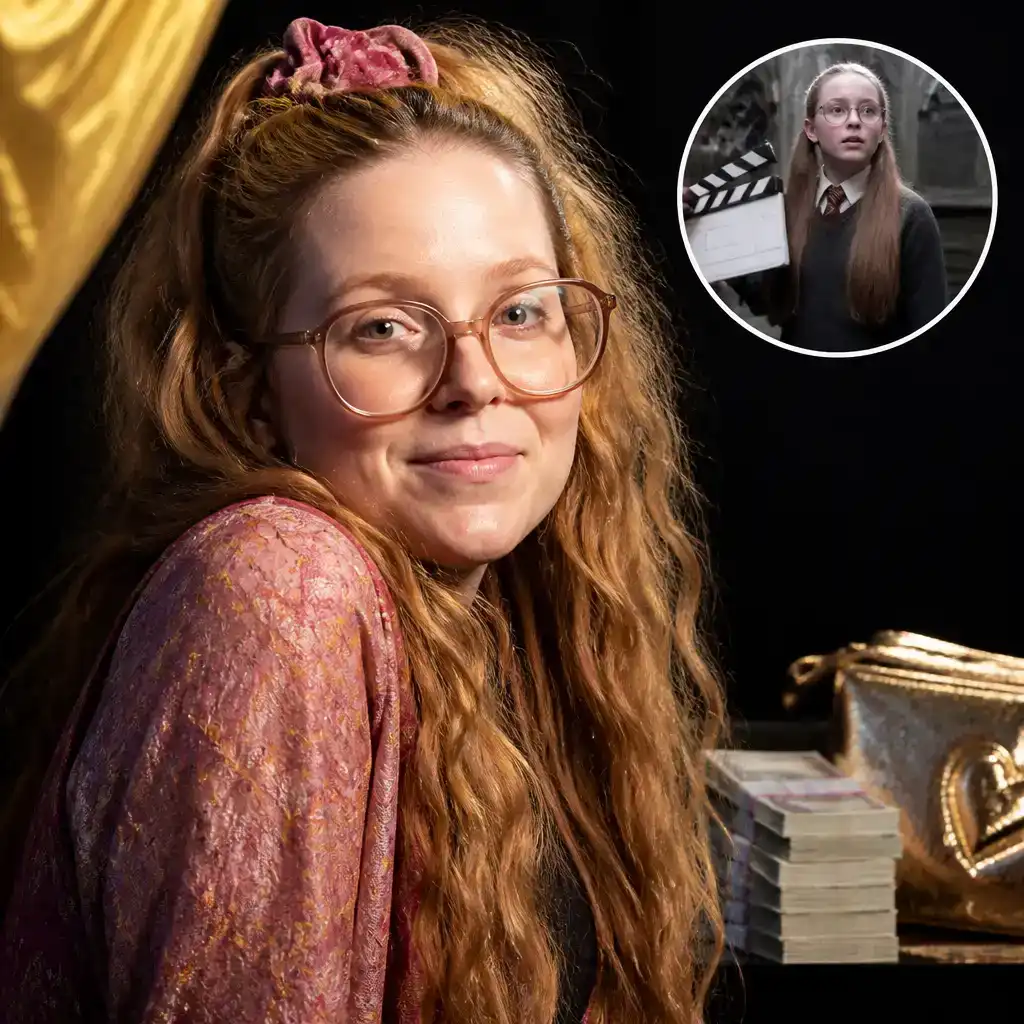
She has described the material as “very sensual stuff” while insisting it is “not a sexual” account. Some videos add costumes, with Cave appearing as an elf, a maid or Lavender Brown, the character she played in the Harry Potter films. The production concept is highly specific, but specificity is often useful when customers are paying directly.
The Week reported that Cave developed a “loyal bunch” of subscribers after the initial surge. Earlier claims that she attracted around 3,500 people paying $6 a month have circulated elsewhere, but accessible reporting did not independently corroborate that figure.
OnlyFans also keeps 20% of fan payments under its creator terms. Headline revenue therefore does not equal take-home pay, even before taxes and production costs make their customary appearance.
Why did she join the platform?
Cave initially presented the account as a one-year experiment intended to clear debt, improve the safety of her home and support her four children. She said she had hoped to make about £5,000, enough to give her family breathing room while deciding what came next.
The decision followed years of trying to build a sustainable career through “little parts and big parts,” one-woman shows, stand-up comedy, writing projects and a novel. She also considered retraining but said she could not afford university. Franchise recognition, inconveniently, does not function as legal tender.
Her acting résumé extends well beyond Lavender Brown. Cave first played the character in 2009’s Harry Potter and the Half-Blood Prince, then returned for both Harry Potter and the Deathly Hallows films. Her later credits include Great Expectations, Black Mirror, Industry, Trollied and Call the Midwife. She has also worked as an author, illustrator, comedian and stage performer.
That range brought visibility but not lasting financial stability. Cave has described the account as both a practical response to debt and a way to regain control after feeling typecast or overlooked.
Does the money mean she is financially secure?
Not according to Cave. In March 2026, one year after launching the account, she wrote that she was still “nowhere fucking near” financially secure, although her circumstances and confidence had improved.
That distinction matters. Subscription income can rise quickly when attention is high, then fluctuate as customers leave or public interest moves elsewhere. Platform fees reduce the total further, and Cave has not published a full breakdown showing gross payments, fees, taxes or net income.
Her first-day figure and career comparison are still revealing, even without a public ledger. They suggest that direct access to a relatively small paying audience can outperform years of conventional creative work, particularly for performers who are recognizable but rarely receive leading-role salaries.
Cave told The Times that she expects more artists to turn to outside platforms when their regular work does not pay enough. Deputy culture editor Alice Jones described that prospect as a “dystopian world view” in which more personal interactions become monetized. The description is severe, but the spreadsheets are not especially cheerful either.
How typical are Cave’s acting struggles?
Industry figures place her experience within a much wider problem. A 2024 British Equity Collecting Society survey found that performers had a median annual income of £17,500. Among those relying exclusively on performance work, the median was £22,500, still below the survey’s cited full-time minimum-wage equivalent of £23,795.
A 2026 Actors’ Trust survey produced an even lower figure. Actors reported median total pre-tax income of £17,000 from all sources, while 73% said they had experienced financial problems.
Those numbers help explain why appearing in a major franchise does not necessarily produce lifelong wealth. Supporting cast members may receive global recognition without the residual income, bargaining power or steady work enjoyed by central stars. Between jobs, many performers fund auditions, travel, training and personal projects themselves.
Cave’s case is unusually public because her most profitable alternative happens to be OnlyFans. The underlying pattern is less unusual: intermittent contracts, modest pay and pressure to build a separate business around whatever attention an actor can retain.
What has the account cost her professionally?
The platform brought money, but it also produced unwanted attention. Soon after launching, Cave said she received “lurid” messages despite making her boundaries clear. She also spoke about feeling ashamed that the account earned more than years of work in the arts.
In September 2025, Cave said organizers had declined to book her for a Harry Potter fan convention because they associated OnlyFans with pornography and considered the gathering a “family show.” She called the decision “baffling,” pointing out that other convention guests had performed sex scenes or appeared nude on screen.
“I’m just playing with my hair!” she said.
The dispute exposed an awkward double standard. Conventional productions can depict explicit material without permanently defining an actor, while merely opening an OnlyFans account can trigger assumptions regardless of what the creator posts. In Cave’s case, the stigma may have closed off paid appearances even as the platform solved more immediate financial problems.
Other entertainers have described similar economic calculations. Singer Lily Allen said photographs of her feet earned more through OnlyFans than her Spotify streams, while actor Drea de Matteo said subscription income helped prevent her from losing her home when acting work slowed.
Cave’s account is therefore not simply a celebrity side project. It shows how direct-to-audience income can offer performers greater control while exposing them to platform fees, unstable subscriptions, harassment and professional judgment. Her hair videos paid better than acting, but they did not make the insecurity disappear. They merely changed who sends the invoice.