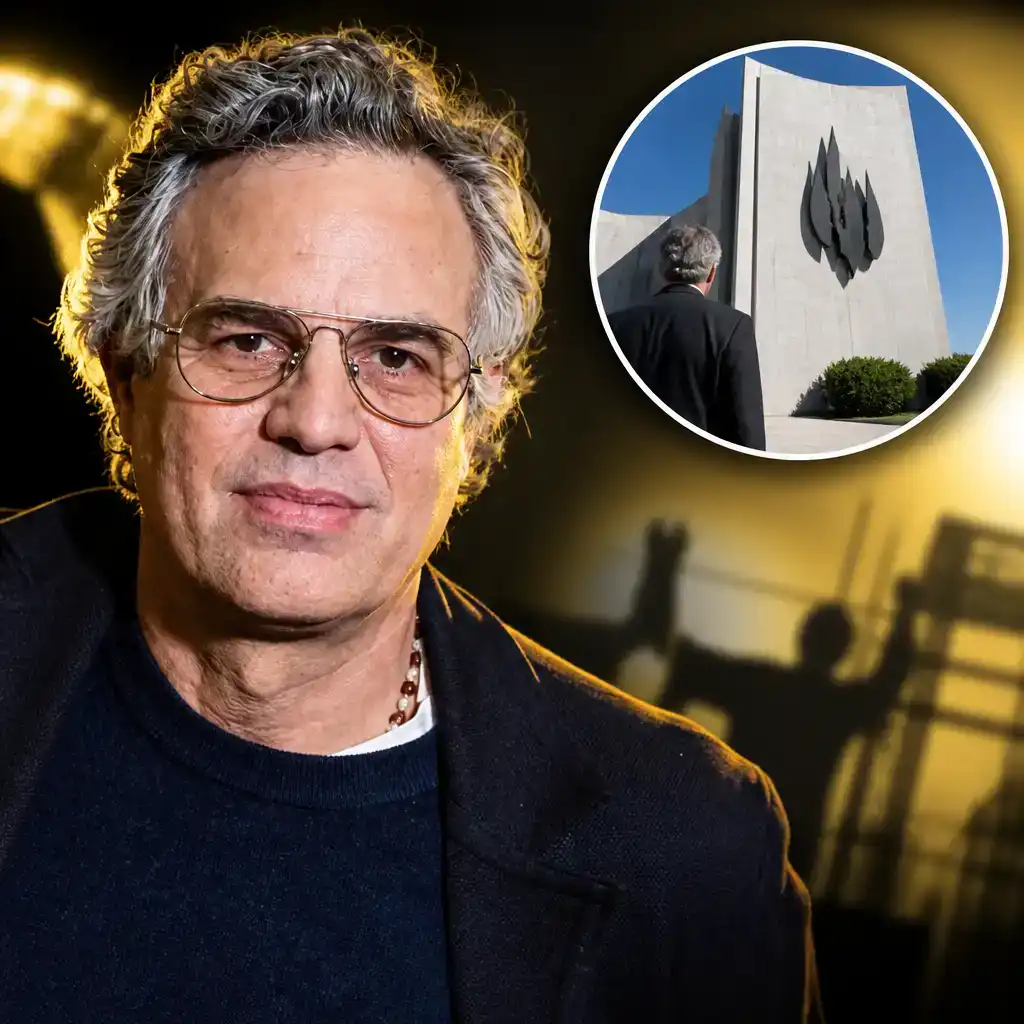
The Mark Ruffalo antisemitism row has widened after two prominent Jewish advocacy groups accused the actor of spreading inflammatory rhetoric and backed Paramount’s decision to condemn one of his social media posts.
Jim Berk, chief executive of the Simon Wiesenthal Center, said legitimate debate had given way to antisemitic tropes. Ari Ingel, executive director of Creative Community for Peace, separately argued that Ruffalo’s comments had moved beyond criticism of Israel.
Their statements followed a rare public rebuke from Paramount on Friday. The company said it was “troubled when antisemitic tropes are invoked in purported service of a business dispute.” Ruffalo rejected that assessment, calling the allegation “appalling and fundamentally dishonest.”
What did Mark Ruffalo post?
The dispute began after Ruffalo shared a year-old video clip on Instagram featuring Safra Catz, a Jewish member of the Paramount Skydance board, speaking during a panel discussion.
In the accompanying text, Ruffalo told his roughly 20 million followers that the footage showed Catz “revelling” in a “genocide” powered by technology company Oracle. The remark was understood as a reference to the Israel-Hamas conflict, although the broader subject of Ruffalo’s post was Paramount Skydance’s planned acquisition of Warner Bros. Discovery.
Catz previously served as chief executive of Oracle. The company was co-founded by Larry Ellison, whose son, David Ellison, is chief executive of Paramount Skydance. That network of corporate and family connections gave Ruffalo plenty to criticize without introducing Israel. He introduced it anyway.
Paramount responded by arguing that antisemitic language had been inserted into what was ostensibly a disagreement over corporate ownership. The company’s intervention was unusual, particularly because Ruffalo has worked extensively within the Hollywood studio system and remains one of the entertainment industry’s most recognizable actors.
Why is Ruffalo opposing the Warner Bros. Discovery deal?
Ruffalo has been among the most outspoken critics of Paramount Skydance’s effort to acquire Warner Bros. Discovery. In his latest commentary, he claimed Larry Ellison was financing his son’s takeover and would effectively own “most of” the company if the transaction succeeded.
The proposed $111 billion deal is currently caught in legal disputes involving 12 state attorneys general. Larry Ellison has reportedly committed as much as $46.7 billion, while sovereign wealth funds from Saudi Arabia, Qatar and Abu Dhabi have together pledged at least $24 billion.
Ruffalo described the elder Ellison as a “classic Oligarch” who was “crushing workers and consolidating the wealth of the world for their own power and concentrated dominance.” He also accused Larry and David Ellison of “powering some of the most destructive and inhuman forces in the world.”
The actor, who is believed to have earned millions playing Hulk in Marvel films, has focused much of his criticism on concentrated ownership, labor and the influence of immense private fortunes. Paramount did not challenge his right to oppose the takeover. Its objection concerned the language he used while doing so, a distinction at the center of the increasingly unpleasant argument.
What have the Jewish advocacy groups said?
Berk praised Paramount for drawing a public line between corporate criticism and antisemitism.
“Words matter, and so does the willingness to draw a line when legitimate debate gives way to antisemitic tropes,” he said. “We commend Paramount for speaking clearly and refusing to allow prejudice to masquerade as political or corporate criticism.”
He added that antisemitism was too often minimized or presented in more socially acceptable language. According to Berk, bringing Israel into a dispute where it was irrelevant amounted to “a textbook case of obsession and demonization.” He said more institutions should identify antisemitism directly, regardless of who was responsible for spreading it.
Ingel offered a similar assessment, saying Ruffalo’s rhetoric had “increasingly crossed the line from criticism of Israel into extremist and antisemitic messaging.”
He also rejected Ruffalo’s argument that the allegation misrepresented his intentions. “Intent does not erase impact,” Ingel said, adding that repeatedly promoting inflammatory claims and language resembling historic antisemitic tropes could normalize anti-Jewish hatred.
Ruffalo has not withdrawn his criticism of the acquisition or accepted Paramount’s characterization of his post. For now, a dispute that began with media consolidation has expanded into a fight over antisemitism, Israel and personal responsibility online. Corporate mergers were apparently not complicated enough already.