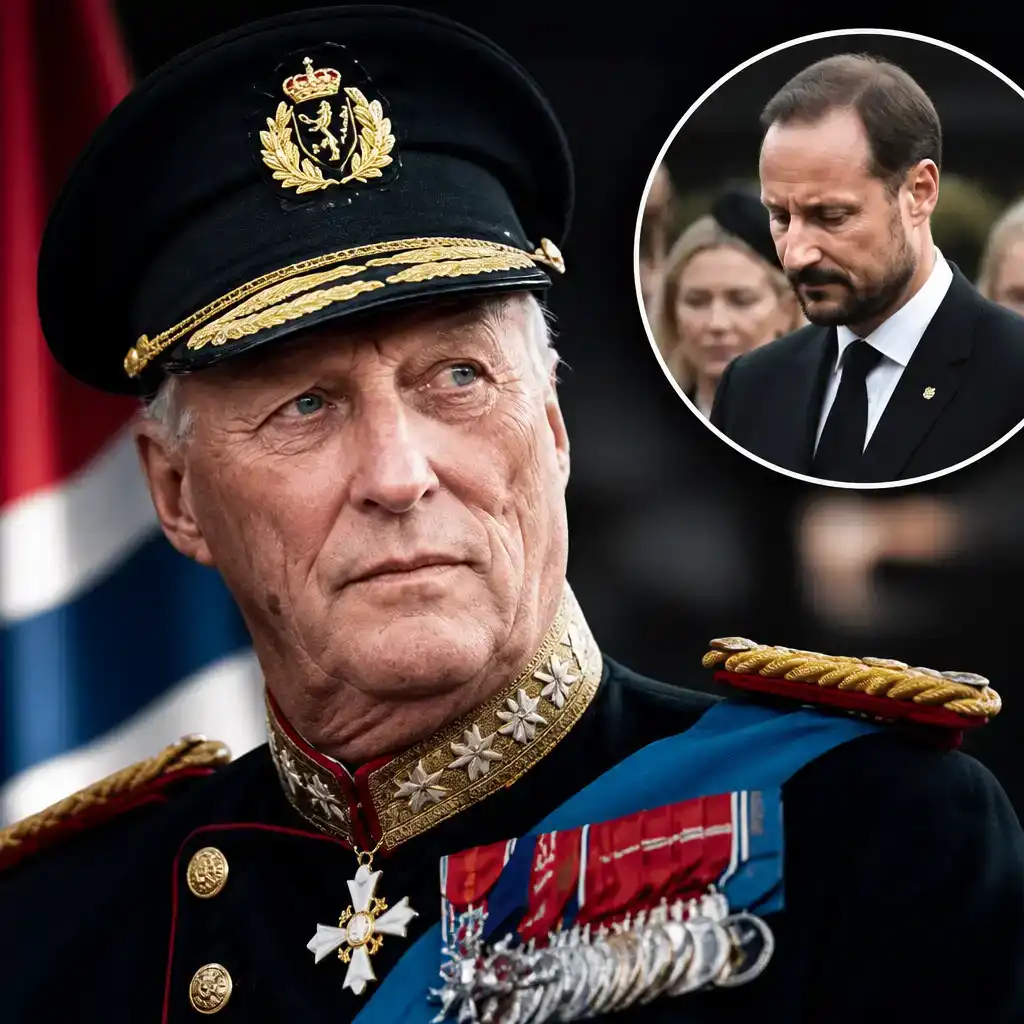
Sweden’s King Carl XVI Gustaf remembered him as “a good friend to me, my family and to Sweden”. He also wished his godson Haakon “success and good fortune” as Norway’s new monarch.
Harald was the first Norwegian-born king since the 14th century. Over more than three decades on the throne, he developed a reputation as a steady, approachable figure who made the monarchy more open and less formal, a notable shift for an institution built largely from ceremony and inherited furniture.
Royal commentators frequently described him as the nation’s grandfather and the “People’s King”, a title also associated with his father, King Olav V.
Historian and TV2 royal correspondent Ole-Jørgen Schulsrud-Hansen said the monarchy became more egalitarian during Harald’s reign, with greater transparency around royal finances and health.
Tove Taalesen of Nettavisen called him “one of us”, while Se og Hør royal expert Caroline Vagle said he had “always been very close to the people”.
Why Harald became a unifying figure
The defining public moment of Harald’s reign came after the terrorist attacks of 22 July 2011.
Far-right extremist Anders Breivik killed eight people with a car bomb in Oslo before travelling to a youth camp on Utøya, where he shot dead another 69 people, most of them teenagers.
Harald addressed the country on television the following day. Weeks later, speaking to victims and their families, his voice broke as he described responding not only as king, but as a father, grandfather and husband.
“I can only imagine the depth of your pain. As King of this nation, I feel for each and every one of you,” he said.
Schulsrud-Hansen later said the moment had been “burned into our minds of what a monarchy should be”. Harald urged Norwegians to support one another and not “let fear take over”.
In 2016, he again attracted international attention with a speech embracing differences in religion, ethnicity and sexual orientation. Norwegians, he said, came from “Afghanistan, Pakistan and Poland, from Sweden, Somalia, and Syria”. They believed “in God, Allah, the Universe and nothing”, and included “girls who love girls, boys who love boys, and girls and boys who love each other”.
From wartime exile to the Norwegian throne
Harald was born on 21 February 1937 at the Skaugum estate near Oslo, more than three decades after Norway gained independence from Sweden in 1905.
He was three years old when Adolf Hitler ordered Nazi Germany’s invasion of Norway during the Second World War. His mother, Crown Princess Märtha, fled with her children across the border into Sweden. The family later travelled to the United States at the invitation of President Franklin D. Roosevelt.
Prince Harald returned to Norway after the war, completed his schooling and performed compulsory military service. He became crown prince in 1957 and studied social science, history and economics at Balliol College, Oxford, between 1960 and 1962.
He met Sonja Haraldsen, the daughter of a businessman, at a party. Their relationship presented a problem for a royal establishment that still preferred princesses to members of the public. Harald waited nine years for permission to marry her.
He later said he told his father that if he could not marry Sonja, he would remain single. King Olav eventually relented, and the couple married at Oslo Cathedral on 29 August 1968.
They remained married for almost 58 years.
How Harald changed during his reign
Harald became regent when his father fell ill in 1990. He ascended the throne after Olav died on 17 January 1991.
Historian Trond Norén Isaksen said Harald grew into the role around the beginning of the new millennium. Once regarded as reserved, serious and shy, he became increasingly open and empathetic in public.
His reign also carried a deliberately less distant style. When Norway’s national football team returned from the United States after reaching the World Cup quarter-finals for the first time, Harald welcomed the players home at the palace.
Sport was more than a ceremonial interest. Harald was an accomplished sailor who represented Norway at three Olympic Games. He ended his competitive sailing career in 2022.
He also maintained a long involvement in environmental causes. Harald helped establish the Norwegian branch of the World Wide Fund for Nature and served as president of the national organisation for 20 years.
That combination of public warmth, sporting credibility and carefully managed reform helped preserve his personal popularity even as support for the wider royal institution became less secure.
What health problems affected his final years
Harald faced repeated health difficulties toward the end of his reign. Most recently, doctors treated him with cortisone for haemolytic anaemia.
He entered hospital on 17 August, and Haakon assumed the role of regent, taking over his father’s official duties.
The king’s illness came during an already difficult year for the royal family. Crown Princess Mette-Marit, Haakon’s wife, underwent a lung transplant two days after the conclusion of her son’s criminal trial. She had been diagnosed eight years earlier with a rare form of pulmonary fibrosis.
Her doctors have said they will not consider her condition stable until a year after the transplant. Haakon therefore begins his reign while supporting a wife facing a long recovery, which is not the most forgiving introduction to a new job.
Harald is survived by Queen Sonja, their daughter Princess Märtha Louise, King Haakon and six grandchildren.
How scandal weakened support for the monarchy
The final period of Harald’s reign was overshadowed by controversies involving Mette-Marit and her son, Marius Borg Høiby.
Judges in Oslo convicted Høiby in June of multiple offences, including rape, and sentenced him to four years in prison. He has appealed the verdict. Shortly before Harald died, Høiby visited the king at his hospital bedside.
Documents released days before the trial showed that Mette-Marit had maintained frequent contact with Jeffrey Epstein, the late convicted sex offender, during a three-year friendship.
She apologised to Harald and Sonja, acknowledged “poor judgement” and said in a national television interview that she wished she had never met Epstein.
The combined scandals and health problems placed the family under sustained public scrutiny. An Aftenposten poll found support for the monarchy had fallen from 72% in 2024 to 54%. Other surveys suggested almost half of Norwegians believed Mette-Marit should no longer become queen, although Haakon is widely expected to confirm her position.
Royal experts said the criticism rarely attached itself to Harald personally. “When things go wrong in the royal family, people tend to blame anyone but the king,” Isaksen observed.
What Haakon inherits as Norway’s new king
Haakon now takes over a monarchy facing lower public support, questions about his household and possible further scrutiny related to the Epstein documents.
Taalesen said the turbulence surrounding his family would follow him into the role, but argued that he had already shown leadership and handled recent events well.
The Royal House largely tried to distance itself from Høiby’s criminal case. Schulsrud-Hansen believes that strategy mostly succeeded, though the wider damage to the institution is evident in the polling.
For the immediate future, however, public attention is likely to remain on Harald himself. Despite dissatisfaction with the monarchy and the conduct of some relatives, commentators consistently found that affection for the late king endured.
Vagle said she was left with the impression that “everyone has loved King Harald”. For an institution based on inheritance rather than customer satisfaction, that was no small achievement.