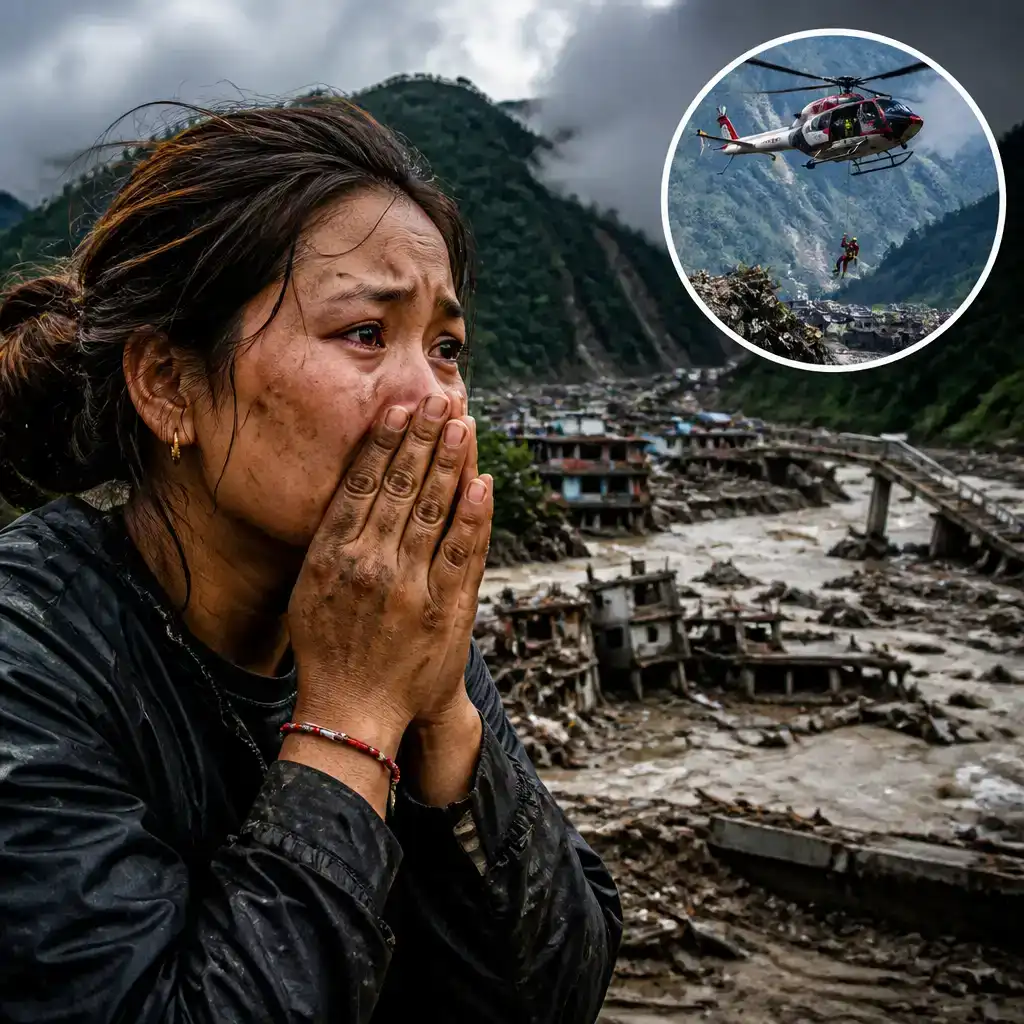
The differences do not necessarily mean one list is wrong. Tourism companies, local authorities, embassies and national governments may receive information at different times, while communications remain disrupted. They may also classify residents, workers, tourists and pilgrims differently. Disaster accounting, regrettably, does not arrive in one convenient spreadsheet.
Death tolls have varied too. The Associated Press put the confirmed number at 273, while reports from Agence France-Presse, ITV News and Anadolu Agency cited earlier totals ranging from 165 to 168. The higher figure is the more recent and more fully attributed count.
What caused the glacier disaster?
The precise starting point remains disputed. Le Monde cited the International Centre for Integrated Mountain Development, known as ICIMOD, as placing the probable ice-rock avalanche on the Tibetan side. The Associated Press later quoted ICIMOD specialist Saswata Sanyal saying it originated from a glacier in Nepal.
Sanyal said the avalanche blocked the river before the temporary barrier failed, releasing a sudden surge through the Lhende and Bhotekoshi river corridor. That sequence would explain the destructive mixture of floodwater, rocks and mud reported downstream.
The United States Geological Survey initially recorded what appeared to be seismic activity. It later determined that the magnitude-5.2 signal came from the glacier collapse and debris flow, not an earthquake. A moving mass of ice and rock can apparently imitate one on instruments while producing quite enough damage of its own.
In Tibet, Chinese state broadcaster CCTV reported that a mudslide near the Gyirong border crossing buried surrounding areas under an average of more than 1.5 metres of mud. On some road sections, deposits exceeded two metres.
How are rescue and relief operations progressing?
Nepal Army helicopters rescued more than 100 people from affected areas on Thursday, according to army spokesperson Brigadier General Raja Ram Basnet. At least eight foreign nationals were flown to Kathmandu, while military teams evacuated people trapped at facilities connected to the Trishuli hydropower project.
Rescuers recovered bodies in Chitwan district, about 100 kilometres downstream from the main disaster area. Dozens of injured people were transported to Kathmandu for specialist treatment.
Bishal Kumar Bhandari, chairperson of the Nepal Red Cross Society, said operations in affected districts were shifting from immediate rescue work to large-scale relief. About 1,200 people had been displaced from at least three villages, he said.
Reaching them remains a serious problem. Dozens of bridges have been destroyed, and long sections of road are damaged or covered by debris. Helicopters can move survivors and medical teams, but they cannot quickly replace the ground routes needed to deliver food, shelter materials and equipment across several communities.
Why is this river corridor especially vulnerable?
The same Lhende-Bhotekoshi corridor flooded in July 2025 after a supraglacial lake about 35 kilometres upstream drained rapidly. That disaster killed 10 people and left 19 missing in Nepal.
Sanyal said the river has now flooded twice in 14 months. The repeat event is likely to sharpen questions about cross-border glacier monitoring, information sharing and early-warning systems, particularly when scientists and reports still disagree over which side of the border the latest collapse began.
Gyirong is not a remote crossing with little traffic. It is an important route for traders, tourists entering Tibet and pilgrims travelling toward Mount Kailash and Lake Manasarovar. That helps explain both the unusually international missing-person list and the difficulty of reconciling records held by tour companies and governments.
Nepalese President Ramachandra Paudel said he was “extremely saddened” by the loss of life and property. For families awaiting news, the immediate priority remains identifying survivors and recovering the missing. The longer-term question is whether two major floods in little more than a year will produce stronger warning systems before the corridor is tested again.