A night at a concert has turned into a wider argument about what celebrity association means when the celebrities involved have tens of millions of people watching.
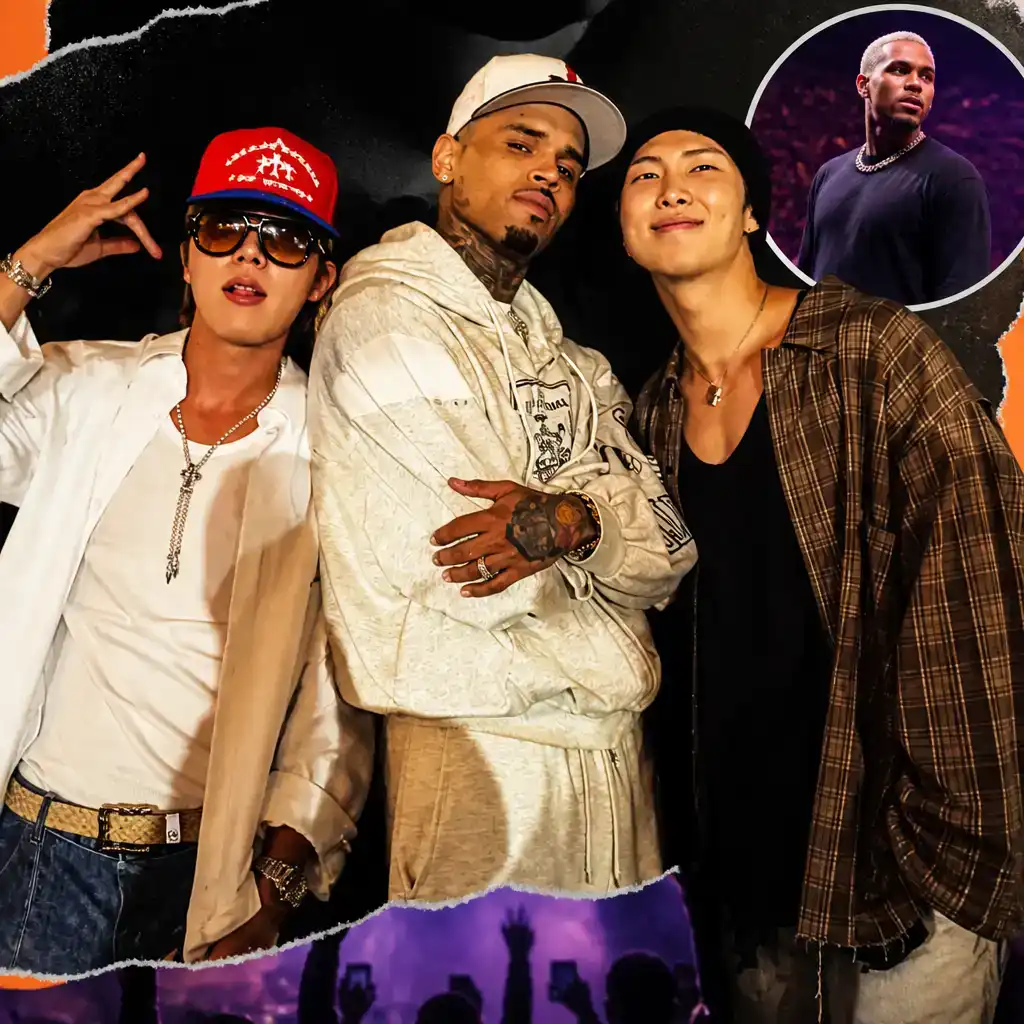
BTS members RM and J-Hope are facing criticism after attending a Chris Brown concert in Toronto on August 12 and later appearing in a backstage photograph with the American singer, whose legal history includes a 2009 felony assault conviction involving his then-girlfriend Rihanna.
The debate moved beyond social media on August 19, when The Pixel Project, a nonprofit focused on ending violence against women, indefinitely suspended RM from its list of “16 Male Role Models Helping to Stop Violence Against Women”. The organisation said it had waited a week for him to publicly address the controversy before taking action.
Neither RM, J-Hope nor Big Hit Music had publicly responded to the criticism as of August 20, according to reporting by The Korea Herald.
Why a backstage photo became more contentious than the concert
RM and J-Hope attended the August 12 show featuring Brown and Usher at Rogers Stadium in Toronto. J-Hope subsequently shared material from the concert on social media, while Brown posted a backstage photograph showing himself with the two BTS members.
For some fans, that distinction became important. The criticism was not limited to two musicians buying tickets or enjoying another artist’s performance; it centred increasingly on the decision to be photographed publicly with Brown.
Brown pleaded guilty in 2009 to assaulting Rihanna, an attack that remains one of the most prominent episodes associated with his career. He has since been involved in other allegations and legal cases. More recently, in July 2026, Brown pleaded guilty in Britain to affray over a 2023 London nightclub incident; prosecutors dropped more serious charges in that case, and sentencing is scheduled for October.
Against that history, critics argued that appearing alongside Brown carries a different weight when the people in the photograph are members of one of the world’s most influential pop groups.
Others rejected that interpretation. Some fans argued that attending the show or posing for a photograph with another musician does not amount to approval of everything that person has done, and suggested RM and J-Hope may simply have been interacting with fellow artists.
That disagreement is effectively the argument now surrounding the photograph: whether celebrity association should be understood primarily through intent, or through the audience and legitimacy that association can provide regardless of intent.
The Pixel Project says fame changes the calculation
The Pixel Project came down firmly on the latter side.
The organisation had named RM to its male role model list in 2024, citing what it described as his efforts to examine internalised misogyny, support women in the arts and speak about violence against women. Its original profile highlighted his response to earlier criticism over misogynistic lyrics and his subsequent efforts to educate himself on gender issues.
On August 19, it amended that listing to mark RM as “indefinitely suspended” and published a separate statement explaining the decision.
“We have never expected any male role model (including RM) to be perfect. Everyone is human after all,” the organisation said. “But being a decent human being also means being accountable when your choices hurt other people. RM’s (and J-Hope’s) choice to take that photo with Brown is, at best, careless about the wider damaging impact that comes from publicly associating with a known abuser.”
The group was also careful not to claim that the photograph proved RM or J-Hope endorsed violence against women.
“Even if RM (and J-Hope) did not intend for that picture to be a public endorsement of an abuser or violence against women, their level of fame means that they have automatically platformed Brown in front of their millions of fans and the general public,” it said.
That is a considerably narrower argument than saying a photograph establishes somebody’s beliefs. It focuses instead on reach: famous people can amplify other famous people without issuing anything resembling a formal endorsement. Celebrity culture rarely bothers with paperwork.
RM's previous recognition made the criticism sharper
The decision attracted particular attention because RM had not merely been praised in general terms by The Pixel Project. He had been selected specifically as an example of a man whose public behaviour could contribute to challenging sexism and violence against women.
When it included him in its 2024 list, the organisation pointed to his acknowledgment of past criticism over misogynistic material, his efforts to learn about feminism and his support for female writers and artists. It later used him in a 2025 piece about “imperfect male role models”.
The nonprofit said it would now review and revise that 2025 piece as well.
Its decision therefore does not amount to a declaration that RM's previous actions never happened. Rather, The Pixel Project argues that being treated as a role model creates an expectation of continuing accountability — including when a later choice appears inconsistent with the behaviour that earned the recognition in the first place.
The organisation also stressed that it had deliberately delayed its response. According to its statement, it waited for RM to issue an acknowledgment before deciding to suspend him.
“It has been a week of silence on RM’s part and that silence is deafening,” it said.
Fans remain divided over where accountability ends
The backlash has not produced anything close to unanimous agreement among BTS fans.
Those defending RM and J-Hope have argued that a concert appearance and backstage encounter should not be treated as a moral declaration. Musicians routinely meet other artists, and a photograph offers little evidence about the private reasoning behind the interaction.
Critics respond that intent is only part of the equation for public figures whose photographs can travel instantly across platforms and reach audiences far beyond the people who attended the show.
The Pixel Project itself acknowledged the first point while making the second: it did not say the photograph automatically constituted an endorsement, but argued that RM and J-Hope's fame inevitably gave Brown further visibility.
That distinction leaves room for disagreement over how much responsibility celebrities should carry for every public association they make. It also explains why the controversy has lasted beyond the familiar cycle of an unpopular photograph, several angry posts and everyone moving on by dinner.
The next development depends on whether RM or J-Hope responds
For now, the most important unanswered question is whether either BTS member will address the criticism.
The Pixel Project's suspension is indefinite rather than described as permanent, leaving open the possibility that RM's status could be reconsidered. The organisation has not suggested that perfection was the standard; its statement repeatedly framed accountability and a willingness to respond to criticism as the issue.
RM and J-Hope, meanwhile, have not publicly explained why they attended the show, what they intended by meeting Brown or how they view the reaction to the photograph.
Until they do, supporters and critics are left arguing over the same image and assigning different meanings to it.
The photograph itself documents only a meeting between three famous musicians. The dispute surrounding it is about something less easily photographed: how much responsibility comes with being watched by millions, particularly when a public figure has previously been celebrated for the values those millions believe he represents.