Rota studied under Ildebrando Pizzetti, Alfredo Casella and Rosario Scalero before developing a career that crossed cinema, orchestral music, chamber works and theatre. His screen credits included Luchino Visconti’s The Leopard and Rocco and His Brothers, as well as Franco Zeffirelli’s Romeo and Juliet.
His collaboration with Federico Fellini produced the music for La Strada, Nights of Cabiria, La Dolce Vita, 8½ and Amarcord. Those scores helped establish the playful, melancholy sound now closely associated with Fellini’s films.
Why Rota’s Godfather Oscar history is complicated
Rota found his largest international audience through Francis Ford Coppola’s The Godfather, but the score’s awards history did not proceed smoothly.
The Academy of Motion Picture Arts and Sciences initially nominated Rota for best original score. It later withdrew the nomination after learning that parts of the music, including the principal theme, had previously appeared in his score for the 1958 film Fortunella. The music was memorable. The definition of “original” proved less cooperative.
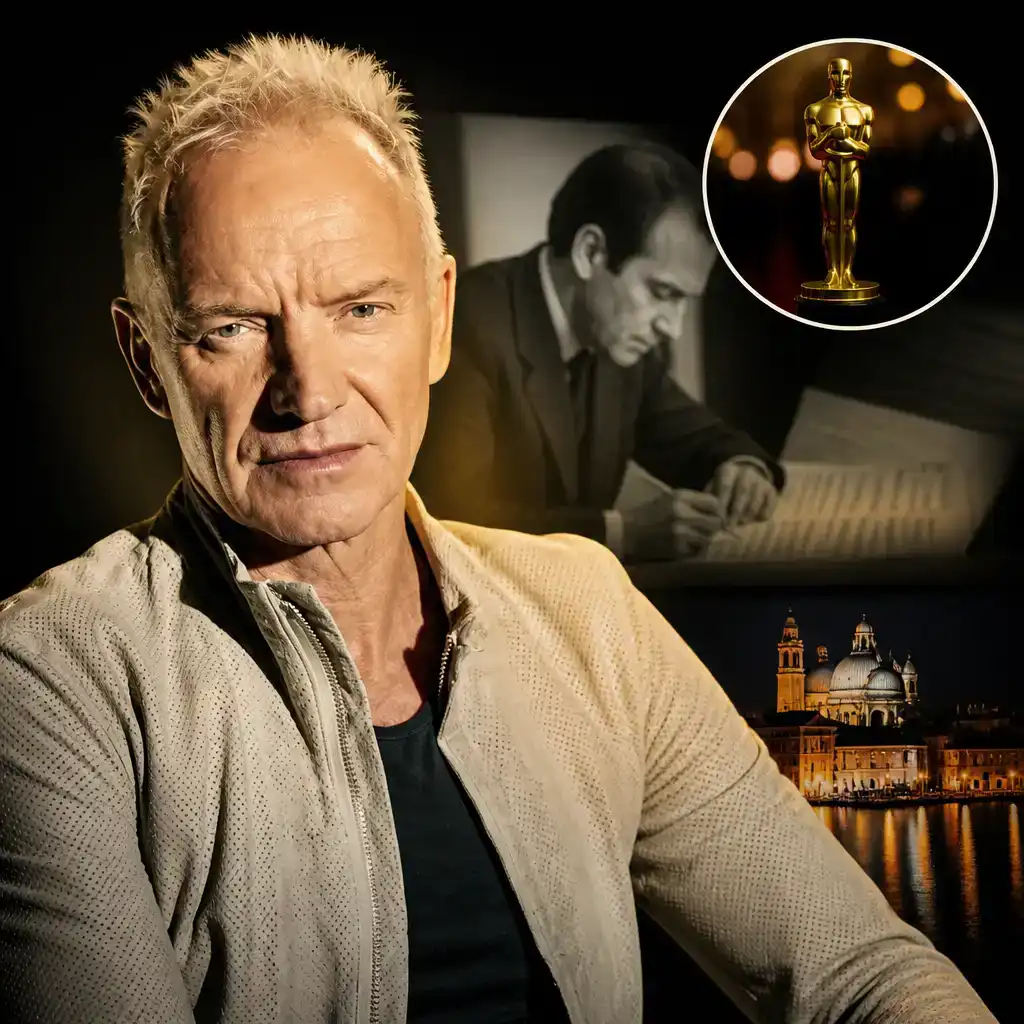
Rota returned to the series for The Godfather Part II. He and Carmine Coppola, the director’s father, shared the 1975 Academy Award for original dramatic score. The victory made Rota the first Italian composer to win in that category.
The documentary places that famous work within a much larger output. Publisher Schott Music credits Rota with about 150 film scores, alongside extensive compositions for the concert hall and stage. His ease with older musical forms sometimes put him at odds with critics during a period when the avant-garde expected composers to reject tradition rather more enthusiastically.
The film argues that this judgment has shifted, presenting Rota as a major 20th-century composer whose importance extends well beyond a handful of familiar themes.
What Bari reveals about his other career
Rather than settle permanently in his native Milan or in Rome, the centre of Italy’s film industry, Rota chose to live and work in Bari in southern Italy. That decision shaped the less publicised half of his career.
He directed the city’s conservatory from 1950 to 1977, a tenure of nearly three decades, and taught future conductor Riccardo Muti. The position gave him a lasting influence on Italian musical education while he continued supplying scores for major directors. Fame may have come from cinema, but his working life was not confined to studio deadlines and ominous trumpet themes.
Bari also provides one of the documentary’s central settings. American arranger and conductor Vince Mendoza rehearses and leads a large concert celebrating Rota’s music in the conservatory hall where the composer worked for so many years.
That concert helps Fasano connect Rota’s film music with his wider catalogue rather than treating his career as an extended introduction to The Godfather. It also supports the film’s broader case that Rota belonged equally to cinema, the concert stage and the classroom.
When will the film reach cinemas?
La Biennale’s main listing gives the documentary a running time of 115 minutes, while individual festival schedule pages and another listing state 120 minutes. Viewers may therefore want to reserve two hours and accept that five of those minutes remain administratively unsettled.
The film is due in Italian cinemas later in 2026 through Be Water Film and Adler Entertainment, although no specific theatrical release date has been confirmed.
Mattia Guerra produced for Be Water Film, with Filippo Sugar and Elisabetta Biganzoli for Sugar Play and Marco Colombo for Adler Entertainment. Marco Morabito and Walter Fasano also produced, while I Diavoli and Rai Documentari joined as production partners.
The project received backing from the Italian Ministry of Culture’s cinema and audiovisual investment fund, along with support from the Apulia Film Fund, the Apulia Film Commission and the Apulia Region.