The Venice Biennale EU funding dispute has moved beyond an argument over one national pavilion. It now threatens programs that help emerging filmmakers and producers, even though those cinema initiatives had no role in deciding whether Russia could participate in the visual arts exhibition.
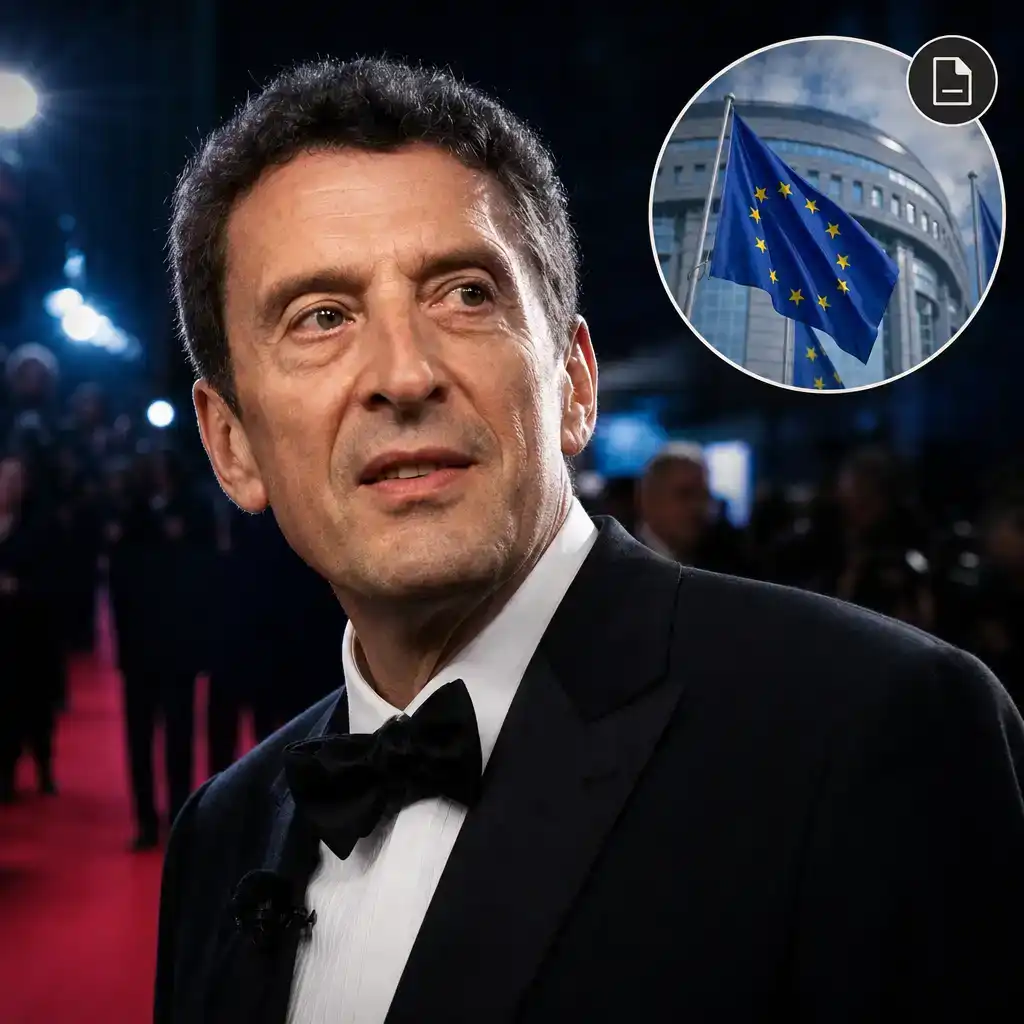
At a July 23 press conference announcing the Venice Film Festival lineup, Biennale chairman Pietrangelo Buttafuoco condemned the European Union’s decision to terminate a €2 million grant. The European Commission’s Education and Culture Executive Agency formally withdrew the 2025–2028 funding on July 21 over Russia’s return to the Biennale for the first time since its 2022 invasion of Ukraine.
Buttafuoco said accepting political pressure would compromise the institution’s “autonomy and freedom of expression.” The Biennale operates across art, architecture, cinema, dance, music and theater, which is precisely why the consequences have become complicated.
Why did the European Union withdraw the grant?
The dispute followed three requests from the European Commission for clarification and an earlier 30-day period in which the Biennale was asked to address concerns about Russia’s participation. According to reports from Euronews, The Art Newspaper, EFE and El País, the Commission ultimately found the institution’s explanations insufficient.
Fourteen of the European Union’s 27 national governments supported suspending funding during a May discussion among culture ministers. Before that, 22 European governments had urged the Biennale to reconsider allowing Russia to return.
European Union spokesperson Thomas Regnier said the termination followed a legal assessment and recommendation from the Commission. He argued that cultural events supported by European taxpayers should protect democratic values, open dialogue, diversity and freedom of expression, adding that those values “are not respected in today’s Russia.”
Ukrainian Foreign Minister Andrii Sybiha welcomed the decision. He said there could be “no EU funding” for initiatives that give Russia a platform while its war against Ukraine continues.
The grant cancellation therefore reflects a broader European position: official cultural representation is not being treated as separate from the actions of the Russian state.
Why are film programs losing money over an art decision?
The withdrawn funds were not allocated to Russia’s pavilion or to the visual arts exhibition. According to the Biennale, they supported cinema activities, particularly Biennale College and the Venice Production Bridge.
Biennale College develops projects by emerging filmmakers, while the Venice Production Bridge connects creators with financiers, distributors and other industry partners. Neither program appears to have had authority over the rules governing national participation elsewhere in the institution.
“They are abandoning us today because of a political decision, certainly not a legal decision, and certainly not a cultural decision,” Buttafuoco said. “They are abandoning us in our journey, but La Biennale cannot accept that.”
His objection raises an institutional question that extends beyond Venice: whether funding for one division should be revoked because of a decision made in another. Brussels views the Biennale as the grant recipient and therefore as one organization. Buttafuoco is emphasizing its separate artistic sectors and the practical harm to film programs.
The Biennale has said it will challenge the cancellation through “all competent venues.” It also maintains that losing the grant will not materially affect its budget or scheduled programming, so the immediate impact may be more political than operational.
How extensive was Russia’s return?
Russia’s presence was more limited than a normal pavilion reopening. Euronews and the Italian news agency ANSA reported that the state-owned pavilion opened during the May press preview but remained closed to ordinary visitors. Recordings were displayed outside instead.
That qualification matters, although it does not settle the argument. Russia still held official national status, and its exterior presentation attracted international attention. A closed pavilion can still produce soft-power value when the dispute surrounding it becomes part of the exhibition’s global coverage. Apparently, a locked door is not always the end of the presentation.
Russia had withdrawn from the 2022 edition after invading Ukraine and did not participate in 2024. Buttafuoco has defended its return by citing Biennale regulations that permit any country maintaining diplomatic relations with Italy to take part.
The exhibition runs from May 9 to November 22. Its duration means the disagreement will remain visible well beyond the initial press preview, even if most visitors never enter the Russian pavilion.
Italy’s government remains divided over the response
The dispute has also exposed sharp differences within Italy. Culture Minister Alessandro Giuli told ANSA that Russia’s return happened “behind the government’s back,” and the Culture Ministry said it remained opposed to the decision. That account undercuts suggestions that the government simply accepted or endorsed the pavilion.
Other Italian officials took the opposite view. Culture Undersecretary Lucia Borgonzoni called the withdrawal a “shameful political and ideological attack.” Veneto President Luca Zaia argued that artists should not be treated as soldiers.
The Kremlin also seized on the dispute. Spokesman Dmitry Peskov described the funding pressure as another effort to “cancel our culture.”
Those responses reveal the deeper disagreement beneath the budget fight. One side sees Russia’s official participation as a state platform that cannot be separated from the war. The other sees cultural access as something that should remain open even during political conflict.
For filmmakers supported by Biennale College or seeking partners through the Venice Production Bridge, the philosophical distinction may feel remote. Their programs became leverage in a conflict they did not create. The Biennale says the work will continue, but the episode leaves a difficult question behind: how independent can a cultural institution remain when public funding carries political and ethical conditions across all of its divisions?