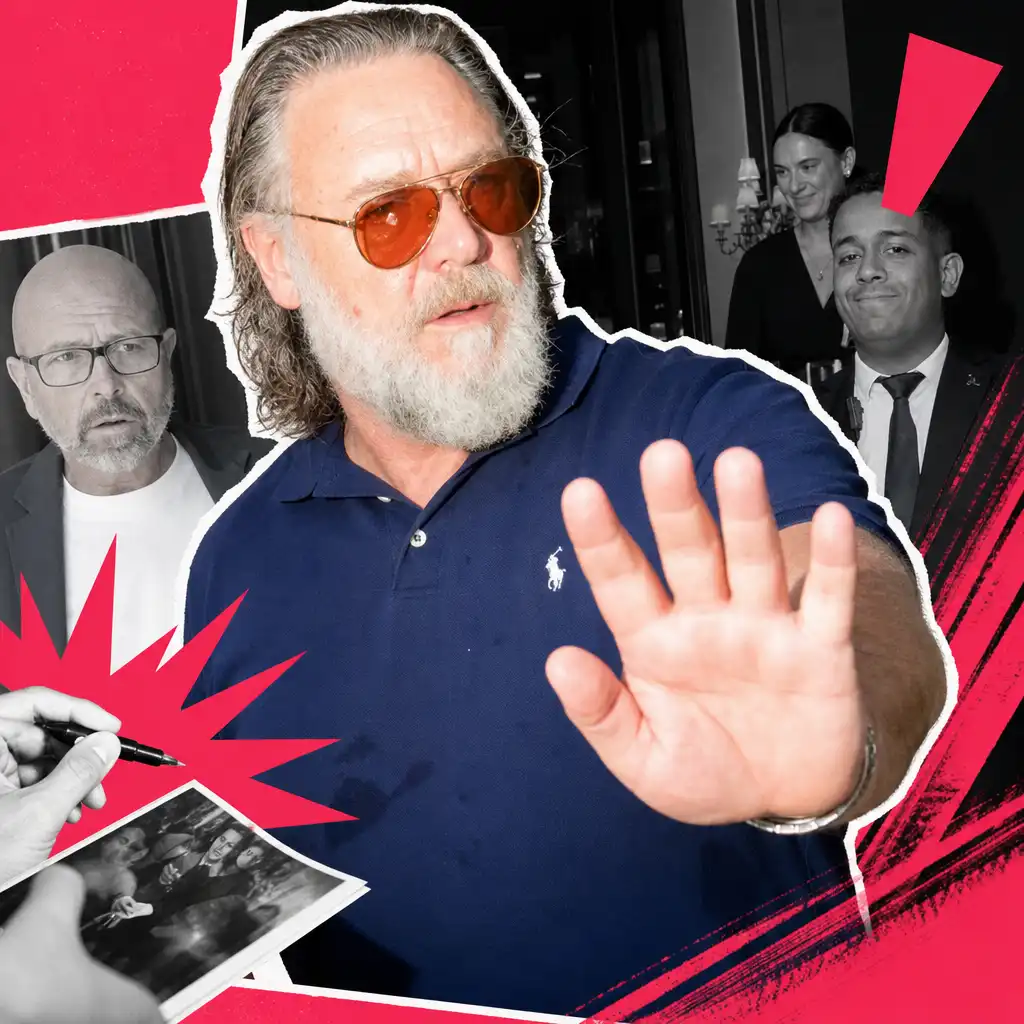
He then added: “As soon as somebody is a d***, I’m gone. You got me?”
Those waiting appeared to respond with “yes sir” as he moved toward them to sign items.
Crowe, best known for roles in Gladiator and Les Misérables, was not accompanied by security at the time, according to his later explanation. That detail matters, because a crowd pressing toward a celebrity is not just awkward. It can quickly become unsafe for the person being approached, the fans, and anyone else trying to enter or leave the building.
How did Russell Crowe respond?
Crowe addressed the clip on X on Tuesday morning, saying he was managing the crowd rather than refusing to engage.
“Everybody got their autograph and selfie, the passage to the hotel was kept free for guests, and I still got to the airport on time. One man, no security. Handled,” he wrote.
The post was short, direct, and very much in keeping with the tone of the video. Crowe’s point was clear: he did sign for people, but only after setting rules about space and behavior.
The actor’s representative was contacted for comment by the original outlet.
Why the warning may not have come from nowhere
Crowe has had difficult encounters around autograph seekers before. In 2024, he was reportedly “forced to flee” after a show in London when one of his representatives allegedly became involved in a heated argument with people waiting outside the venue.
An eyewitness said at the time that the situation turned ugly “out of nowhere” after an overexcited fan began pushing. The incident reportedly escalated into a brawl, with police attending the scene.
That helps explain why Crowe may have been quick to set hard limits in Paris. Celebrity autograph lines can look harmless from the outside, but the difference between a queue and a crush is sometimes one person deciding personal space is optional.
Crowe’s bluntness has shown up elsewhere
The Paris exchange also matches Crowe’s reputation for being unusually direct. He has never seemed especially interested in smoothing every edge for public consumption.
Last month, reports claimed he had advised his friend Nicole Kidman “not to dive headfirst into a new relationship to fill the void” following her reported divorce from husband Keith Urban. The advice was said to draw, at least in part, from Crowe’s own experience after his divorce from his partner in 2018.
In December, he was also frank about Gladiator II, the sequel starring Paul Mescal in the lead role.
Speaking to an Australian radio station, Crowe said: “I think the recent sequel that, you know, we don’t have to name out loud, is a really unfortunate example of even the people in that engine room not actually understanding what made the first one special.”
He continued: “It wasn’t the pomp. It wasn’t the circumstance. It wasn’t the action. It was the moral core,” which he did not believe the sequel had delivered.
Fan boundaries remain a larger celebrity issue
Crowe is not the only high-profile figure pushing back against fan behavior. Chappell Roan has repeatedly spoken about feeling uncomfortable with some interactions, saying certain behavior had left her “scared and creeped out.”
Earlier this year, Roan was drawn into controversy after she was accused of making Jorginho Frello’s 11-year-old daughter cry. The claim alleged that the singer had sent a security guard to warn the girl not to “harass” her.
Roan strongly denied being involved. Jorginho later released a statement confirming the Good Luck, Babe! singer had no part in the incident.
The wider issue is not whether stars should ever sign autographs. Many do, including Crowe in Paris. The question is what happens when access is treated as an entitlement, especially in public spaces where security is thin or nonexistent.
Crowe’s delivery was sharp. The message was less complicated: keep distance, do not push, and everyone has a better chance of leaving with a signature instead of a police report.