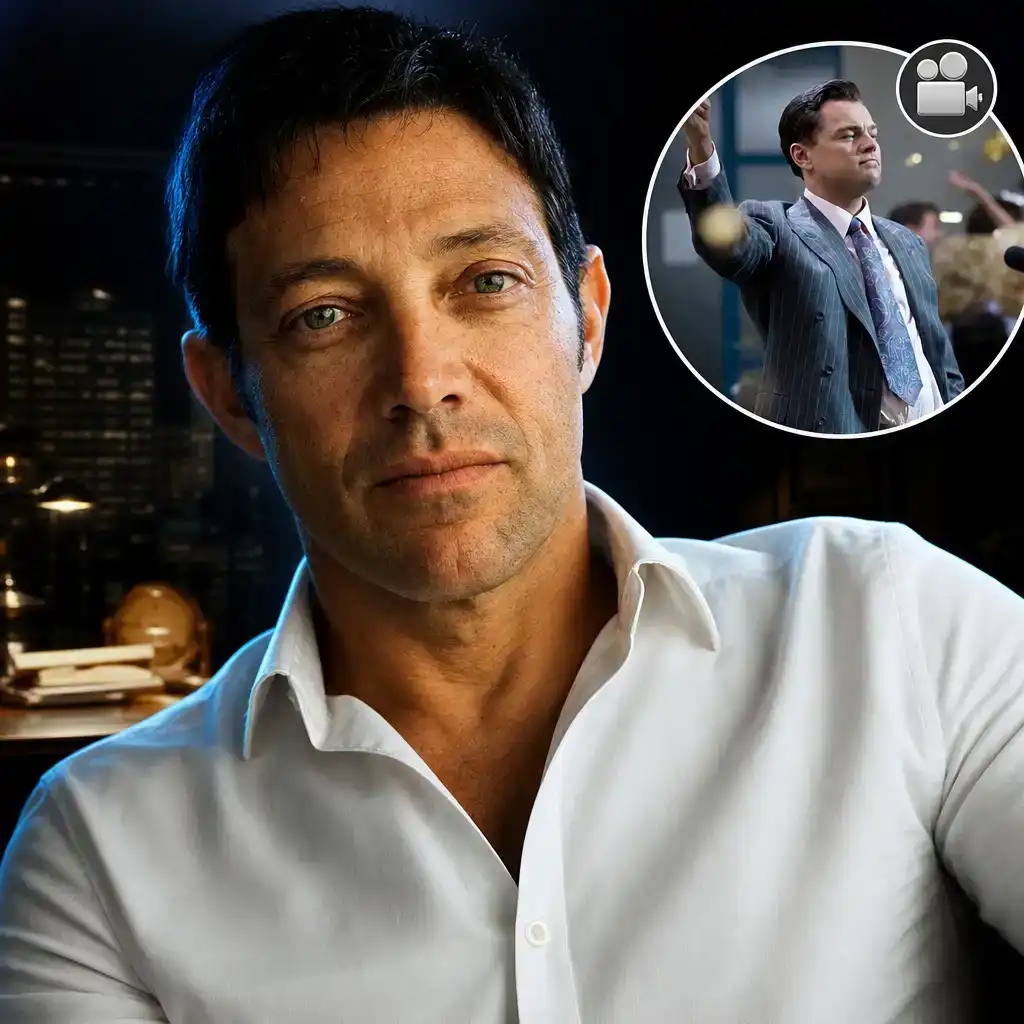
Belfort’s rise and collapse became one of Wall Street’s best-known fraud stories. Before prison, he was associated with an extreme lifestyle built around drugs, yachts, sex workers and lavish parties. He served 22 months in prison for securities fraud and was released in 2006.
Neither Gelfand nor Portenoy served prison time. He said his own damage was severe, too. He struggled with drug addiction for years and said he crashed 17 cars while driving under the influence.
He described Stratton Oakmont as a place where some people knowingly defrauded investors and others got pulled into conduct they later regretted.
“There were a lot of good guys that got involved with a bad thing. I consider myself one,” Gelfand said. “I had to stay anesthetized [on drugs], to do what I was doing.”
Which scenes were invented, and which were not
The Wolf of Wall Street portrayed Stratton Oakmont as a brokerage with the social temperature of a frat-house basement and the regulatory standards to match. According to Gelfand, the film’s infamous dwarf-tossing scene did not happen.
Still, he said the workplace was hardly understated. In one real episode, two employees attached their bodies to a car battery for a promised $10,000. They had wagered they could last 10 seconds. They stopped at eight seconds and did not get the cash. One assumes a prudent compliance department was not running that meeting.
Another scene, in which Hill’s character eats a live goldfish in front of an audience, did come from Gelfand’s life.
“I am guilty as charged,” he told Page Six, adding that it was “not one of my proudest moments.”
Gelfand also said the film left out one major part of the group’s routine: gambling. He called it one of their “biggest vices,” even though the movie found time for many other forms of excess.
The money scene may have had a real source
One of the film’s better-known explicit scenes shows DiCaprio and Robbie’s characters having sex on a pile of cash. Portenoy said he could not verify the exact moment depicted in the movie.
“Well, I wasn’t there watching Jordan and [his then-wife, Nadine Macaluso] have sex,” he told Page Six.
But he said the idea was not purely invented. Portenoy recalled Belfort once carrying a “paper shopping bag” filled with “a million dollars in cash” and boasting that he had just had sex on top of “three million dollars.”
Portenoy also praised Robbie’s performance, saying she “nailed” the role and played Macaluso “to a T.”
Gelfand said that when he watched the Oscar-nominated movie in 2013, he heard audience members dismissing parts of it as Hollywood exaggeration. His brother’s reaction was different: “If only they knew that was the mild version!”
Why the film missed some firsthand material
Gelfand said he believes an assistant for Scorsese contacted him while the film was being made. He said he was in no shape to help at the time.
“Sadly, I was stoned for about 15 years of my life … I was too stoned to partake in anything,” he said.
Gelfand has now been sober for 14 years and works in the travel industry.
Portenoy said he was “shocked” that Scorsese never contacted him. He frequently shot home videos of Belfort and the group’s behavior, and those clips appear in the Paramount+ docuseries.
“I think they could have used the videos,” Portenoy said. “I think Marty [Scorsese] would have jumped all over it, if he knew about it.”
He said one scene in the film hit him especially hard: the yacht sinking. Portenoy said he was present for the real incident and “cried” when he saw the dramatized version in theaters.
“It was a living hell,” he said.
The unresolved cost behind the spectacle
Both Gelfand and Portenoy said they believe the film romanticized Belfort too much, though neither expressed hostility toward the filmmakers.
“I’m a big fan of Martin Scorsese’s,” Gelfand said. “I thought he made a great movie.”
His objection is less about the movie’s quality than its emphasis. He said the film did not fully account for what happened to people caught up in the real scheme and its aftermath.
“The price to pay for people who were truly involved in it … was never touched upon,” Gelfand said.
Many people connected to the real events “never recovered,” he added. “Thank God I didn’t die.”
The docuseries is now streaming on Paramount+.