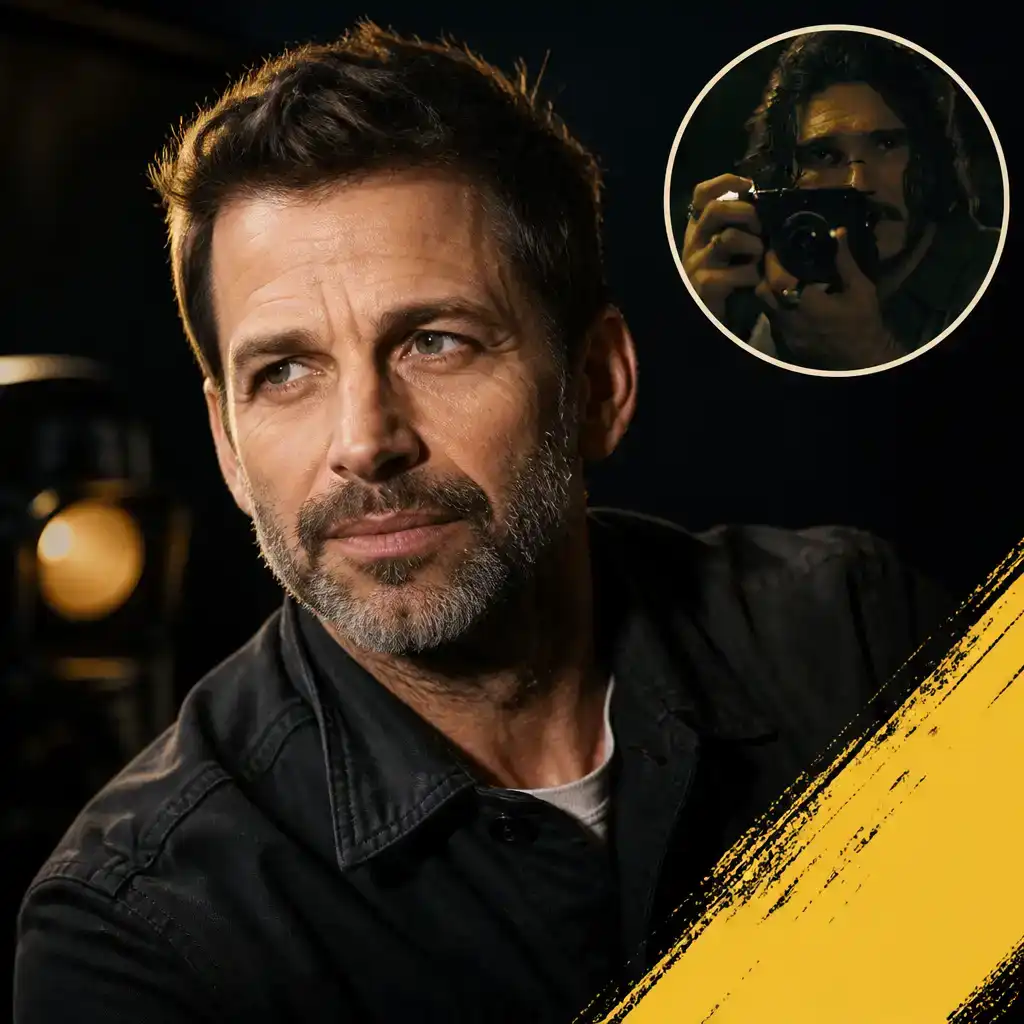
Zack Snyder’s The Last Photograph will make its world premiere at the 2026 Toronto International Film Festival, bringing a project conceived in the mid-2000s to the screen at last. The drama-thriller will play Sunday, September 13, at 6:30 p.m. local time in the John Bassett Theatre, TIFF’s new venue inside the Metro Toronto Convention Centre.
The film was added to the festival shortly before its opening. A teaser arrived on August 17, although GamesRadar reported that a full trailer was still on the way. After roughly 20 years in development, another few weeks apparently seemed manageable.
What is Snyder’s new film about?
The story follows a former Drug Enforcement Administration agent who travels into the South American jungle after the murder of his diplomat brother and sister-in-law. According to The Hollywood Reporter, he is searching for their missing children, his niece and nephew, turning what has sometimes been described as a revenge story into a psychological rescue mission.
Stuart Martin leads a cast that also includes:
- Fra Fee
- Jackie Kay
- Costanza Andrade
- Carolina Henao
- Marlon Moreno
Snyder directed the film and developed its original story. Reports differ slightly on the screenplay credit. Early coverage described Snyder and longtime collaborator Kurt Johnstad as co-writers, while The Hollywood Reporter credited Johnstad with writing the screenplay from Snyder’s story.
The production team includes Zack Snyder, Deborah Snyder, Wesley Coller and Gianni Nunnari. Hans Zimmer, Steven Doar and Omer Benyamin composed the score, giving the intimate independent drama a notably heavyweight musical department.
How did the project change over two decades?
Snyder first developed the idea in the mid-2000s. By the early 2010s, Christian Bale and Sean Penn were attached to an Afghanistan-set version involving a war correspondent. That incarnation never reached production, joining the large archive of ambitious films that Hollywood discusses enthusiastically before quietly placing them in storage.
The completed version shifts the action to South America and replaces the earlier war story with a more personal account of grief, violence and survival. Filming took place in Colombia, Iceland and Los Angeles, including work in Leticia, a Colombian city on the Amazon border. Screen Daily reported that the production used Colombia’s CINA transferable tax-credit programme.
Production wrapped on November 12, 2025. Snyder thanked the Icelandic, Colombian and American crews after filming ended. He later described the movie to The Hollywood Reporter as “a meditation on life and death,” saying it reflected difficult experiences from his own life.
That personal element helps explain why the filmmaker kept returning to a story that had changed locations, stars and narrative focus before cameras finally rolled.
Why is this film different for Zack Snyder?
The budget was reportedly “significantly lower” than those of Snyder’s recent spectacles, and he shot the film with an intimate, handheld approach. That is a marked change for a director associated with armies, superheroes, zombies and slow-motion destruction on an industrial scale.
Snyder’s franchise credits include Man of Steel, Batman v Superman: Dawn of Justice and Justice League. His four-hour director’s cut of the latter became a streaming event after years of fan campaigning. Earlier films such as Dawn of the Dead, 300 and Watchmen established the visual style that later made him one of the more polarising figures in blockbuster cinema.
More recently, he directed Netflix’s Rebel Moon films, another large-scale science-fiction undertaking. His decision to return with a lower-cost independent production suggests less a complete reinvention than a temporary reduction in the number of explosions required per scene.
Snyder also has a remake of Escape from New York in development with The Picture Company and StudioCanal. For now, however, Toronto audiences will see him working on a smaller canvas and revisiting an idea that predates much of his superhero career.
What else is screening at TIFF 2026?
The Toronto International Film Festival runs from September 10 to 20 in downtown Toronto. Snyder’s film joins a programme containing several projects built around familiar entertainment-industry figures.
Peter Farrelly will present I Play Rocky, a biographical drama about Sylvester Stallone and the making of the 1976 boxing film Rocky. Anthony Ippolito stars as Stallone, with Farrelly directing after his Oscar-winning success with Green Book.
Chris Rock’s Misty Green is scheduled as a Special Presentation. Rock wrote and directed the film and also stars in the industry drama alongside Rosalind Eleazar, Adam Driver, Daniel Kaluuya, Anna Kendrick, Topher Grace and Anthony Anderson. It is not a cast designed to pass unnoticed.
The festival’s closing-night selection is Villeneuve: The Rise of a Legend, a sports drama about the early career of Canadian racing driver Gilles Villeneuve. Its screening is scheduled for September 19, one day before the festival officially ends.
For Snyder, the Toronto premiere closes a much longer timetable. A film once planned around major stars and the war in Afghanistan has emerged as a Colombian-shot independent drama about bereavement and rescue. Few productions take 20 years to reach their first audience, but Snyder has rarely shown much interest in modest running times, whether for films or their development histories.