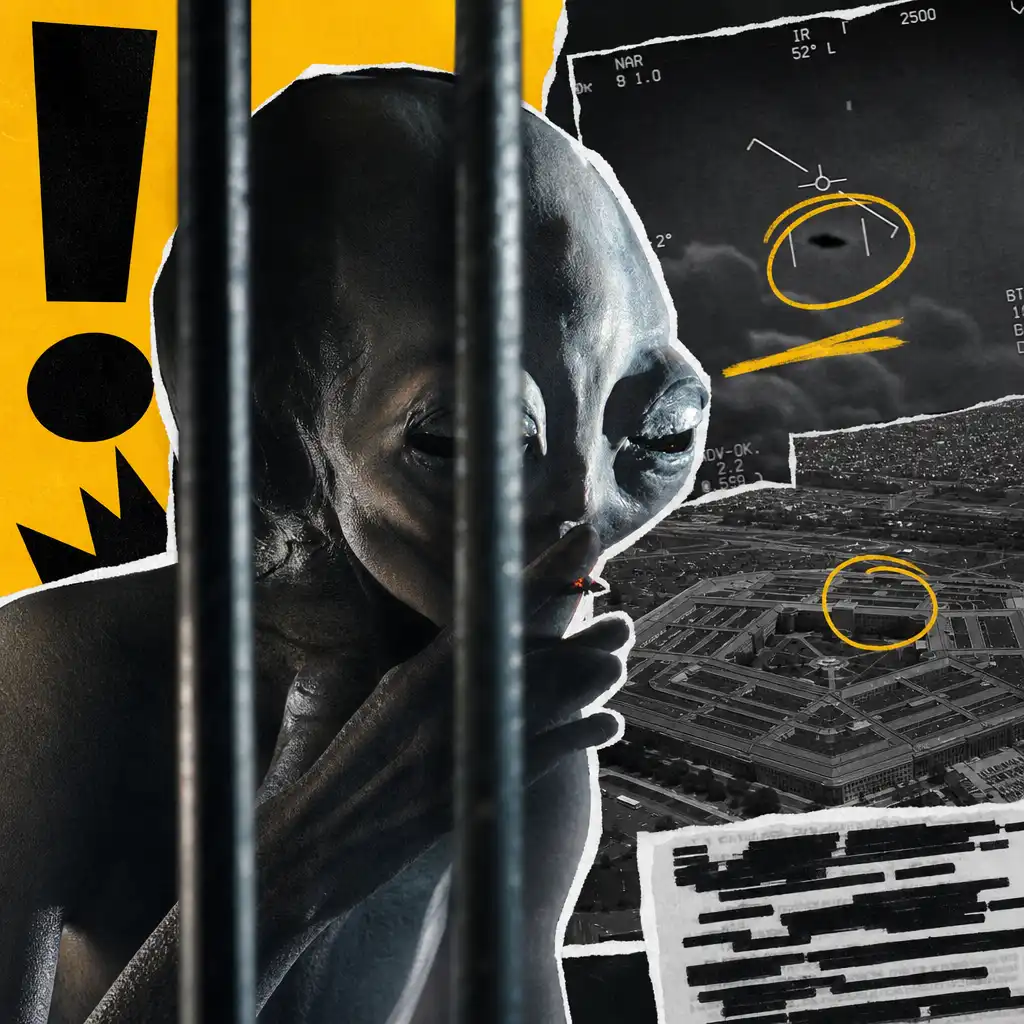
“With these new Documents and Videos, the people can decide for themselves, ‘WHAT THE HELL IS GOING ON?’” Trump wrote. “Have Fun and Enjoy!”
The claim that no previous administration tried to address the topic is, generously, not quite the full record. Government interest in unexplained aerial sightings has surfaced repeatedly over the years, sometimes through formal programs, sometimes through public pressure, and sometimes through the reliably strange overlap of politics, pop culture, and classified paperwork.
Why do the videos still fall short of alien proof?
The new files fit into a pattern that became much more visible in 2017, when The New York Times reported on a Pentagon UFO program and released military footage that had also been pursued by Blink-182 musician Tom DeLonge. That unlikely pairing helped move the topic from late-night radio territory into mainstream national security coverage.
Some of the footage is genuinely unsettling. Fighter pilots can be heard reacting with confusion as objects appear to move in ways they cannot immediately explain. Still, unexplained is not the same as extraterrestrial. It simply means the available evidence has not produced a settled answer.
The point became especially clear in 2023, when fighter jets were scrambled over detected objects in North American airspace. Several of those incidents were later tied to balloons, including weather balloons, while officials also raised concerns about Chinese surveillance. The episode showed how improved detection systems can create more alerts, more confusion, and, naturally, more reasons to request new military technology. Democracy, but with better radar.
How have other politicians handled UFO questions?
The UFO issue has been politically useful for years because it lets public figures sound curious, skeptical, and slightly mischievous without committing to much. Former President Barack Obama said in a YouTube interview that he had seen no evidence of space aliens at Area 51, though he said he believed life likely exists somewhere beyond Earth.
Trump later claimed that interview amounted to an illegal release of classified information. That accusation did not produce proof of aliens either, but it did keep the subject in circulation.
Hillary Clinton also leaned into the issue during her presidential campaign, promising to declassify information about aliens if elected. Her interest revived memories of her 1990s meetings with Laurance Rockefeller, a philanthropist and UFO enthusiast who pushed for greater government disclosure. It did not appear to win over the conspiracy-minded voters she might have hoped to reach, many of whom had moved on to darker and more earthbound theories.
What are UFO believers saying about the new files?
The latest release has not ended suspicion among committed UFO researchers. John Ege, the Texas director of the Mutual UFO Network, told the BBC that much of the material feels familiar to people who have followed the subject closely.
“I don’t think they’re trying to hide anything, but the stuff that they’re releasing is stuff that we’ve known for, like, forever, almost,” Ege said.
He added that he suspects about one-fifth of his peers will view the release as “misdirection.” That response captures the central problem for official disclosure efforts: if the government releases too little, it is accused of hiding the truth; if it releases more, some believers decide the real truth must be somewhere else.
Why does the UFO story feel different now?
In the 1990s, government knowledge about aliens could feel like one of the great forbidden mysteries. High-profile abductee accounts from figures such as Travis Walton and Whitley Strieber helped build a culture obsessed with visitors, cover-ups, and secret files. Art Bell’s Coast to Coast and Chris Carter’s The X-Files turned that anxiety into entertainment that was eerie, stylish, and strangely comforting.
Today, the documents are more accessible, but the mood has changed. After 9/11, conspiracy culture shifted toward more immediate fears: surveillance, terrorism, domestic politics, elite corruption, and institutional collapse. UFOs are still fascinating, but they now compete with a much larger menu of mistrust.
So the public has more official material than it once did, and also fewer simple conclusions. The Pentagon has opened another drawer of unexplained sightings. The little green visitors, if they exist, remain inconsiderate enough not to appear clearly on camera.