- The number of guests it can accommodate
- The size or shape of the bed
- Whether it has a viewing window
- Any included Pokémon toys or decorations
- The length and dates of available stays
- A nightly price, because there may never be one
The precise Hokkaido location also remains undisclosed. NOT A HOTEL has a separate property planned for Rusutsu, designed by Snøhetta and scheduled for completion in November 2028, but no reliable report has connected that development to the Poké Ball project.
What will the Pokémon accommodation be like?
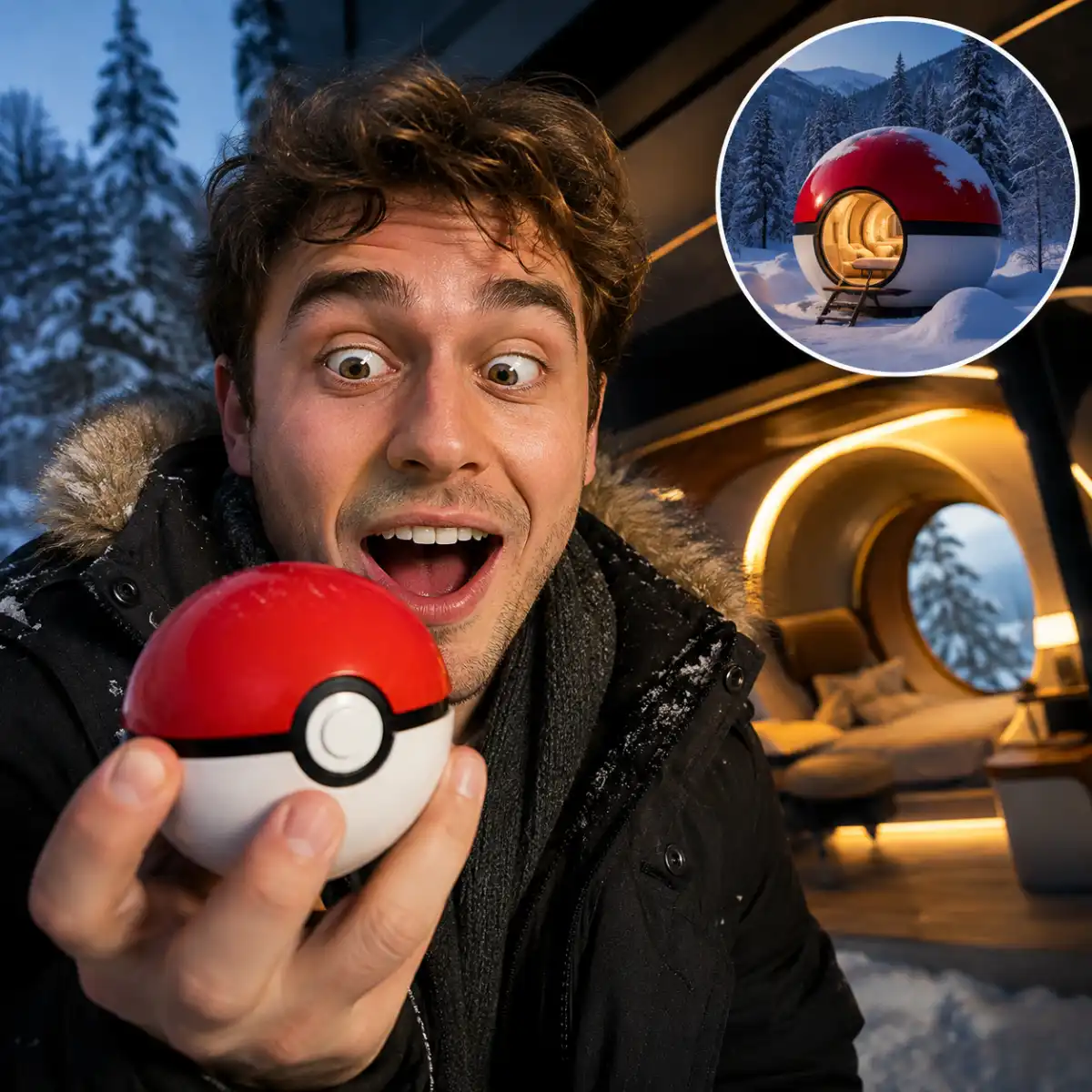
For now, the exterior is doing most of the work. The installation recreates the familiar red-and-white sphere used to carry Pokémon throughout the games and animated series, enlarged to a scale suitable for humans who apparently also need compact storage.
The interior will remain under wraps until September 15. Official descriptions promise a restful accommodation created with NOT A HOTEL’s architectural and technological expertise, but they stop short of showing how the space is arranged.
Pokémon Chief Operating Officer Takato Utsunomiya said the idea was to make the ball as comfortable and relaxing for people as Poké Balls are imagined to be for Pokémon. That raises several questions about the fictional living conditions inside regular Poké Balls, though this campaign is unlikely to settle them.
Actor Kanata Hongo appeared at the launch and said he had followed Pokémon “from the very beginning.” He also recalled travelling from Miyagi to visit the original Pokémon Center Tokyo, giving the announcement the required level of lifelong fan credibility.
Why is NOT A HOTEL involved?
Founded in 2020, NOT A HOTEL develops architect-designed, technology-enabled holiday homes aimed at the luxury market. The company reported 10 locations, 1,115 owners, ¥65.6 billion in contracted sales and ¥33.2 billion in funding as of early 2026.
Its involvement suggests the accommodation is intended to feel closer to a design installation than a themed bedroom with licensed bedding. The campaign also suits the company’s emphasis on unusual architecture and controlled access, while giving Pokémon a physical attraction that cannot simply be downloaded from an app store.
Hokkaido provides a suitably scenic setting, although the companies have not revealed whether guests will be surrounded by forest, mountains or another carefully selected landscape. Until the location and interior are shown, any more specific description is speculation wearing a very official-looking hat.
How Pokémon Sleep moved beyond the app
The accommodation forms part of a broader expansion for Pokémon Sleep during Pokémon’s 30th-anniversary year. The sleep-tracking game launched in July 2023 and had passed 28 million downloads by August 2025, according to The Pokémon Company.
Rather than leaving the idea inside a phone, the company has increasingly extended the brand into physical sleep products, research, events and collaborations. The anniversary sleep presentation included bedding initiatives and projects involving Google, alongside the NOT A HOTEL announcement.
Earlier in 2026, The Pokémon Company also released wedding rings presented in wooden Poké Balls. Pokémon Sleep later worked with Google on a Fitbit collaboration featuring Pikachu, ensuring the franchise can now participate in both bedtime and the resulting sleep data.
The Hokkaido installation is the most literal version of that strategy so far. Fans will not merely track their sleep with Pokémon. A small number will sleep inside one of the franchise’s most recognisable objects, provided they first survive the social media selection process.
Further campaign rules, eligibility requirements and accommodation details are scheduled for September 15. Until then, the only certainty is that the Poké Ball exists, somebody will be allowed to sleep in it, and ordinary hotel booking habits will be of no assistance whatsoever.