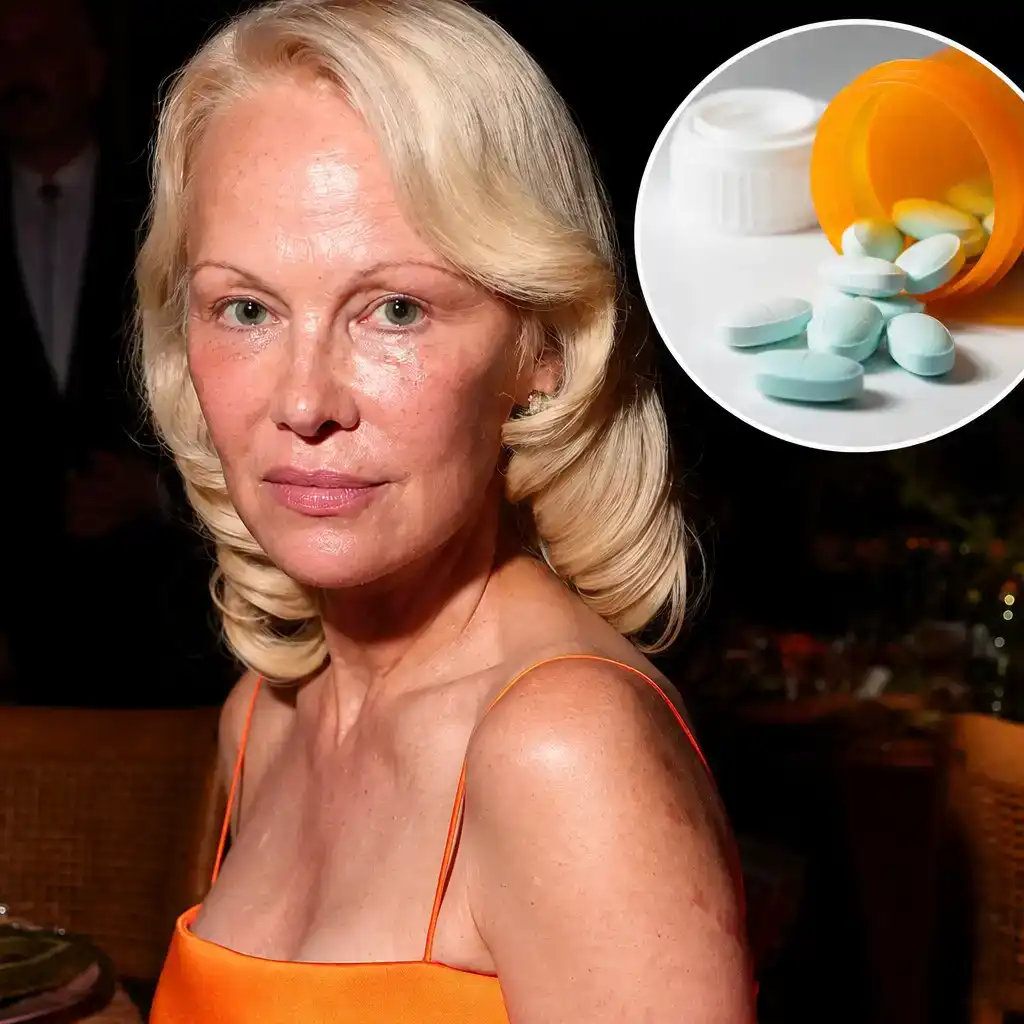
The former Baywatch star said those feelings shaped how she presented herself and how she understood her public image. “My truth has come through my work,” she told the crowd.
Still, Anderson rejected the idea that hardship had reduced her to a passive figure. “I’m not a victim, I’m a victor,” she said. “I am strong and capable, more now than I could ever dream of. I’m not the damsel in distress, no matter how easy that role is to play.”
That message helped earn her amfAR’s Award of Courage. The organization focuses primarily on ending AIDS, but Anderson’s story also highlighted what medical research can change when effective treatment actually reaches patients. Science, rather inconveniently, does not distribute itself.
What cured her hepatitis C
The treatment picture changed dramatically after direct-acting antiviral medicines began arriving in 2011. Anderson underwent treatment in 2015 and announced that year that she had been cured.
She previously told Time that she had genotype 3 hepatitis C and took two pills each day for 12 weeks. She also said she had no cirrhosis or liver damage. Her course included a Sovaldi-based regimen, part of a generation of oral treatments that transformed an infection once associated with long-term liver disease, cancer and death.
According to the Centers for Disease Control and Prevention, modern oral antivirals now cure more than 95 percent of hepatitis C cases, usually within eight to 12 weeks.
Anderson told the Venice audience that obtaining treatment “took everything I had in my bank.” That account conflicts with reporting from ABC News in 2016, which said her approximately $100,000 regimen was covered by insurance and cost her nothing personally. Neither account has been publicly reconciled. Even celebrity medical billing, it appears, can arrive with competing versions of events.
How Anderson says she contracted the virus
Anderson has consistently said she contracted hepatitis C while sharing a tattoo needle with Tommy Lee, the Mötley Crüe drummer to whom she was married from 1995 to 1998.
Lee disputed that account when her diagnosis became public in 2002. He told the Associated Press and Reuters that he did not have hepatitis C and had not shared a needle with her. The disagreement remains unresolved in the public record, so Anderson’s explanation is her account rather than an independently established transmission history.
Hepatitis C spreads through contact with infected blood. Shared needles and other equipment exposed to blood are recognized risks, while many people remain unaware they have the virus because symptoms can take years to appear.
The World Health Organization estimates that 47 million people worldwide live with chronic hepatitis C. The infection caused about 239,000 deaths globally in 2024. In the United States, the CDC estimates that at least 2.2 million people have it, and hepatitis C contributed to more than 10,000 deaths in 2024.
A cure exists, but access still falls short
Anderson’s recovery reflects one of medicine’s clearer success stories: a chronic viral infection that can now usually be cured with a short course of tablets. The less impressive part is how many people still go undiagnosed or untreated.
The CDC says use of curative therapy remains too low in the United States despite its effectiveness. Globally, the World Health Organization reports that access to testing and treatment also remains limited. The medicines work. Health systems have been less consistent.
The Venice gala raised more than $1 million for amfAR’s research programs. Its largest auction result came from an artwork-and-dinner package offered by performance artist Marina Abramović, which brought in €500,000. Abramović told guests that art could not change the world, but argued that amfAR’s medical research could.
For Anderson, the event connected that research mission with a prognosis she survived long enough to see overturned. A doctor once gave her roughly a decade. More than 25 years later, she stood in Venice accepting an award and discussing a cure that did not exist when she was diagnosed.