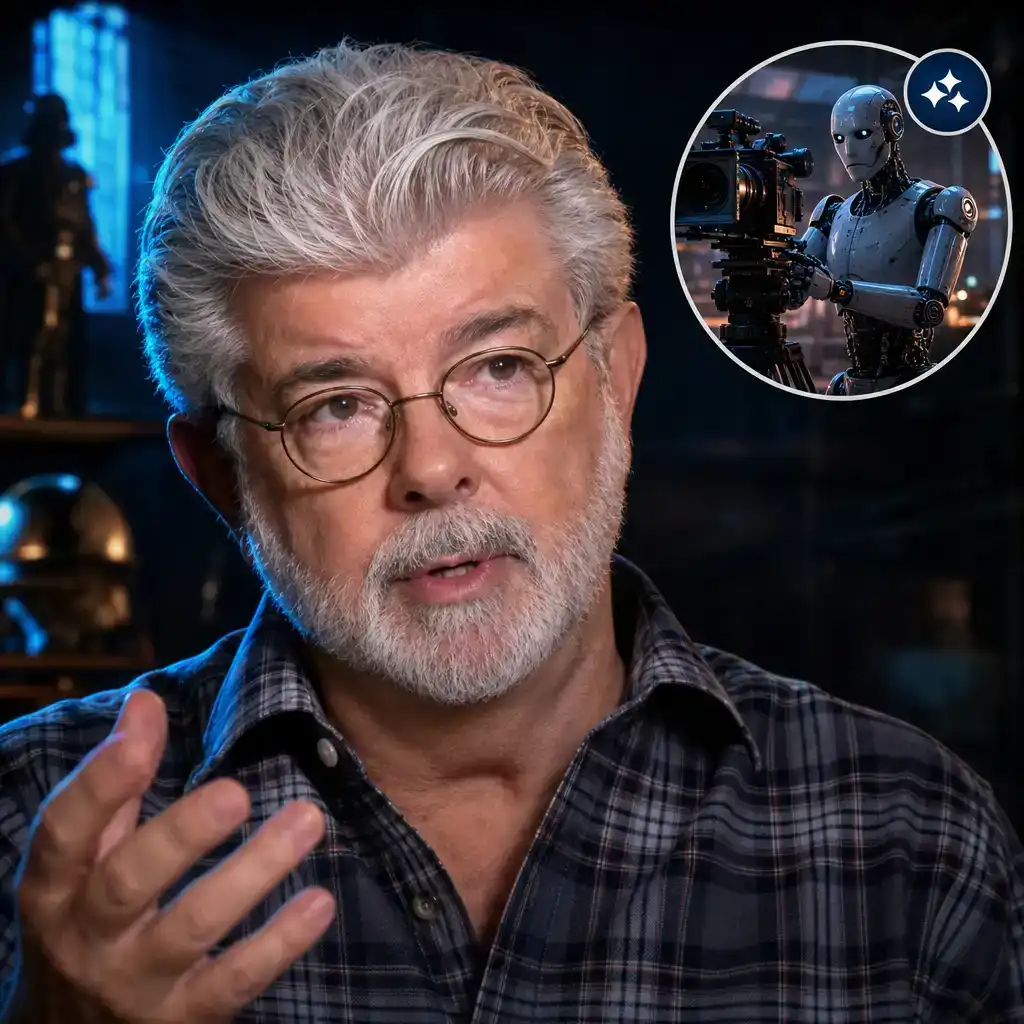
It is a striking argument from a filmmaker whose work is often cited as proof that technology is at its best when it serves imagination, not replaces it. Lucas has spent much of his career pushing technical boundaries, from visual effects to digital filmmaking. So his comfort with new tools is not exactly shocking.
Still, AI is not simply another camera rig or editing system. The current debate around generative tools is tied to consent, copyright, job security, and whether artists’ work is being absorbed into systems they never agreed to train.
Why The Timing Feels So Strange
The AI remarks followed Lucas offering a much more traditional defense of human-led filmmaking. He spoke about the danger of studios handing too much creative control to test audiences and fan reactions, especially when those reactions are misunderstood.
“If they don’t like a character, that’s interesting, and as a filmmaker I want to find out why,” Lucas said. “But when the studios hear that, they take the wrong message. They let the audience actually make the movie. Of course, now they go crazy with that. Now, it’s all about what the fans think. That isn’t how you make the movie. You make a movie by finding someone that knows how to make movies, that has a story to tell and is passionate about it.”
That is a clean, forceful case for authorship. Lucas is saying movies need a person with judgment, taste, and a reason to make the thing in the first place. Then, almost immediately, he argues for a technology widely criticized for flattening those very qualities into prompt-generated output.
There is a real tension there. It is hard to champion the passionate storyteller and then wave through tools that many writers, artists, actors, and craftspeople see as designed to reduce their role.
Lucas Also Argued AI Could Police Fakes
When A Rabbit’s Foot pressed Lucas on the risks, he acknowledged there are dangers. But he also suggested artificial intelligence could help identify manipulated work and trace where it came from.
“If you want AI that tells you when something is fake and where it came from, AI can do that,” he said. “Humans can’t, we’re not that smart. The whole idea is you’re a human being, you’re responsible for what you say and what you do, and if you’re doing something that’s illegal you should be punished for that. Whatever you do, you should be recognized. It’s just like real life.”
The argument is familiar in entertainment and tech circles: yes, the tool creates problems, but perhaps the tool can also help solve them. Convenient, certainly. Reassuring, less so.
AI detection is still contested, and the entertainment industry is still wrestling with how to credit, compensate, and protect people whose work may be used in training datasets. For many artists, “the system will sort it out later” is not much comfort when their livelihoods are the part being sorted.
The Star Wars Parallel Is Hard To Miss
There is a clear Star Wars echo in all of this. In Star Wars Episode V: The Empire Strikes Back, released 46 years ago, Luke Skywalker asks Yoda whether the dark side is stronger. Yoda says no, but warns that it is “quicker, easier, more seductive.”
That line fits a little too neatly here. Lucas’s argument for AI leans heavily on ease and inevitability. It will make things simpler. It is progress. There is nothing anyone can do about it.
Cinema is not only a delivery system for images. It is also labor, memory, intention, accident, disagreement, and taste. Audiences respond to movies because people made choices, sometimes brilliant ones, sometimes strange ones, sometimes ones a focus group would have sanded into dust.
Lucas is right that technology changes art. He helped prove that. But the current AI fight is not about whether tools should exist. It is about who gets erased, who gets paid, and whether “easier” is a good enough reason to remake the creative process around machines.
For a filmmaker so closely associated with mythic warnings about seductive shortcuts, this is a notably bleak turn. The future may be coming, but that does not mean everyone has to applaud while it enters the room.