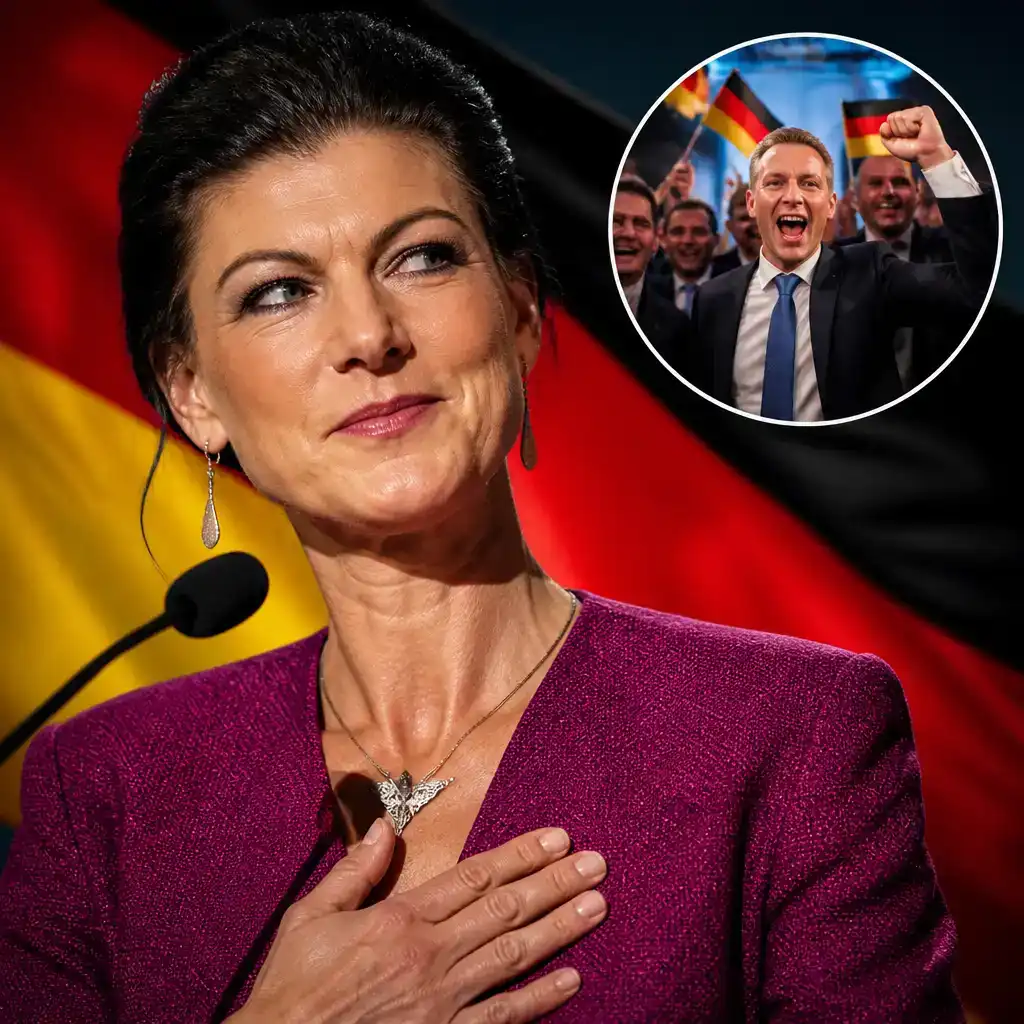
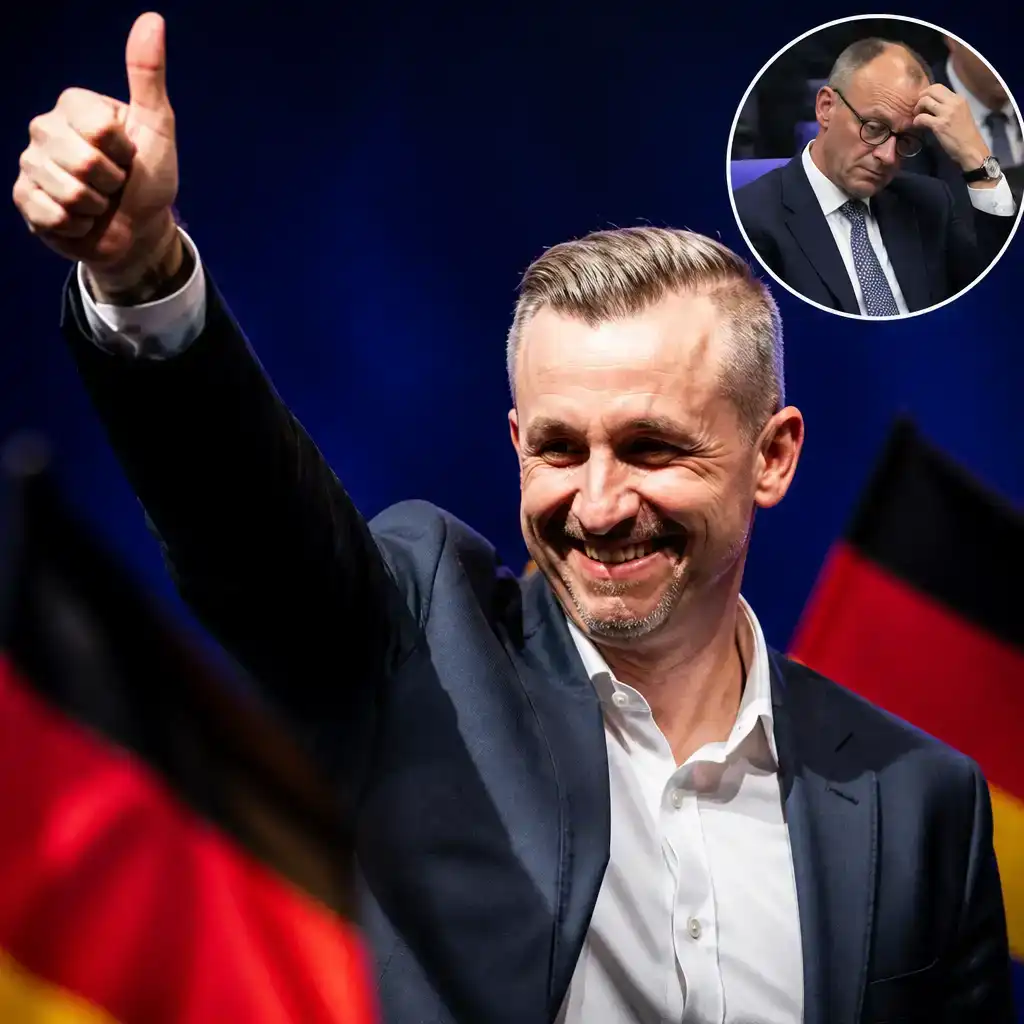
BSW lead candidate Thomas Schulze told Deutschlandfunk that his lawmakers could abstain during a third-round vote for state premier. At that stage, a simple majority would be enough, potentially allowing AfD lead candidate Ulrich Siegmund to win without BSW formally voting for him.
The party’s national leadership offered a conflicting message. BSW co-leader Amira Mohamed Ali told Tagesschau that it would help elect neither Siegmund nor Christian Democratic Union candidate Sven Schulze.
BSW has instead proposed a nonpartisan state premier governing through changing parliamentary majorities. Siegmund rejected that idea as political “muddling through” and raised the possibility of another election. He has also said he does not want to lead a minority government, leaving everyone with several firm positions and no obvious administration.
The dispute matters beyond Magdeburg. Germany’s established parties have long maintained a political firewall against cooperation with the AfD. Even an abstention that enabled an AfD premier would test whether that firewall remains a practical rule or merely an increasingly complicated statement of intent.
European officials warn about nationalism
French minister Roland Lescure called the result a “very, very worrying signal” for Europe. Speaking to RTL radio, he said the continent faced “a major challenge” from a populist movement spreading internationally and argued that governments must resist it.
France’s European Affairs Minister Benjamin Haddad described the election as “a very grave moment for Europe”. He added that “nationalism and xenophobia will never be the answer” and warned: “We cannot forget our history.”
Polish Foreign Minister Radosław Sikorski focused on how close the AfD came to outright control. He told Radio Vox FM that finishing only a few votes short of an absolute majority was “a very worrying sign”.
Polish Prime Minister Donald Tusk was considerably less diplomatic. He wrote that only “idiots or traitors” in Poland could celebrate the result.
German Chancellor Friedrich Merz said the country could not “return to business as usual”. The result places pressure on his government after tougher migration policies and the Christian Democratic Union’s shift to the right failed to reduce AfD support in Saxony-Anhalt.
Christian Democratic Union secretary-general Franziska Hoppermann ruled out cooperation with “right-wing extremists”. Saxony-Anhalt’s domestic intelligence service has classified the state AfD as a confirmed right-wing extremist organisation since 2023, a designation the party is challenging.
Europe’s far right celebrates the result
Nationalist politicians elsewhere treated the election as evidence that their movement is gaining ground.
Spanish Vox leader Santiago Abascal congratulated AfD co-leader Alice Weidel and Siegmund on what he called a “spectacular result”. He said it represented “great hope for Germany and Europe”.
Portugal’s Chega leader André Ventura described the outcome as a “historic victory”. He claimed German voters were increasingly rejecting illegal immigration, corruption and threats to national freedom and identity.
Viktor Orbán called it “a huge night for Germany and Europe” and said the result was “just the beginning”. Former United States Ambassador to Germany Richard Grenell similarly described the election as “a huge win and a new day for Germany”, adding that voters were ready for change.
Kirill Dmitriev, chief executive of the Russian Direct Investment Fund, praised Siegmund as a “voice of reason”. These endorsements will do little to calm critics worried about the AfD’s foreign-policy sympathies, although that was presumably not their purpose.
Musk and Trump add their reactions
Elon Musk welcomed the result on X with a brief “Well done!” written in German. Siegmund thanked him for his “support” and for what he called Musk’s “clear and highly important perspective” on current political developments.
Musk has previously used his platform to comment on German politics, giving his response an audience far beyond Saxony-Anhalt. His latest intervention was short, but subtlety was not required to establish which side he preferred.
United States President Donald Trump reposted the election projection without adding a comment, according to the Associated Press. The silence left others to interpret his position, although sharing the result was hardly an act of administrative housekeeping.
Siegmund told reporters after the vote: “We must reclaim our old, safe, beautiful Germany.” Whether he can turn the AfD’s historic result into executive power now depends on negotiations among parties that mostly insist they will not help him.
That leaves Saxony-Anhalt at the centre of a wider European argument. The election showed the AfD can dominate a state vote, but not yet whether Germany’s fragmented opposition to the party can still keep it out of office.