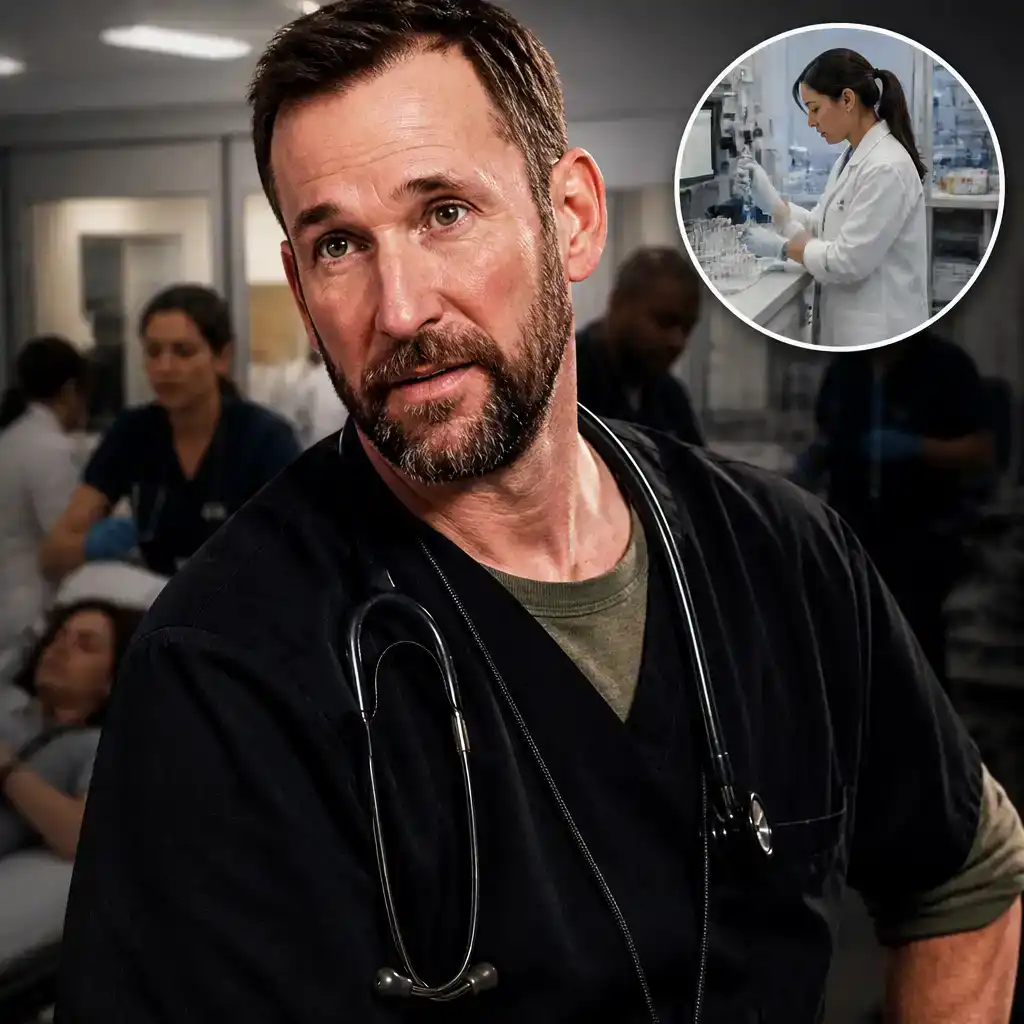
“We finally feel validated for everything we go through every day,” he said.
When Wyle appeared before more than 6,000 emergency medicine specialists at a conference, Cirillo said attendees approached him simply to say thank you. “The Pitt is more than just a good TV show. The term I use is validation.”
Emergency physician K. Kay Moody offered an even more personal assessment, telling Forbes that watching it was “like reliving my career.” Clinicians interviewed by STAT and The Boston Globe also said they had recommended the programme to family members as an explanation of what their work actually involves.
What does the drama get right?
The strongest detail is not any particular operation or diagnosis. It is the relentless disruption. Staff move between serious injuries, worried relatives, hospital managers and patients who have spent hours waiting for care. A calm conversation can become an emergency without warning, which is less convenient for storytelling but very convenient for accuracy.
Harvard emergency physician Ali Raja called the pacing and constant interruptions “exceptionally accurate.” His colleague Shan Liu estimated that about 97% of the cases shown are plausible. She also said public awareness of emergency-department crowding “makes my job easier.”
The programme does not limit itself to clinical puzzles. Its storylines include:
- A daughter overwhelmed by caring for her sick mother, who leaves her at the department and cannot be found
- Parents pleading for treatment to continue when doctors believe their child cannot recover
- Patients struggling with costs in the US healthcare system
- Staff arguing with management over beds, capacity and the movement of patients through the hospital
Those pressures travel easily. Long waits and frustrated patients require little explanation to anyone familiar with the National Health Service.
Why has it connected with NHS staff?
Dr Fiona Hunter, vice-president of the Royal College of Emergency Medicine in Scotland, said she would not watch immediately after working a shift. Emergency clinicians, rather reasonably, sometimes prefer not to spend their first free hour looking at a fictional version of the department they just left.
“We all need to decompress and debrief what we have experienced,” she said. “But in between shifts, when I have got downtime, it’s watchable, relatable. It makes me feel other people might get it.”
North Wales emergency medicine consultant Dr Rob Perry said the show was reassuring because its doctors and nurses were portrayed trying to provide the best care possible, despite working in a different health system.
Professor Damian Roland, a practising emergency medicine consultant, said the capacity problem shown in Pittsburgh is widespread. “Virtually every emergency department in the world at the moment has not enough space to see patients,” he said.
He pointed to Robby’s repeated demands for better patient flow and his objections to leaving people waiting without suitable space. According to Roland, that conflict with hospital management is “a very common problem.” The accents and billing arrangements may change. The shortage of beds remains remarkably consistent.
Where does television improve on reality?
Medical professionals have not given the series a completely unrestricted certificate of authenticity. Several noted that its urgent trauma cases would normally be spread across at least 24 hours rather than arriving in one highly organised avalanche.
Liu said the show concentrates rare and dramatic conditions far more heavily than a typical department would encounter. Raja identified another familiar television shortcut: scans, laboratory results and patient recoveries happen much faster than they generally do in real hospitals.
Emergency medicine expert Jesse Pines also highlighted what the programme leaves out, particularly electronic documentation and routine interruptions. Real clinicians spend substantial time working at computers, an activity that may be essential to modern healthcare but has so far resisted becoming gripping television.
There is also debate over whether the permanently chaotic waiting room reflects everyday emergency care or a particularly severe version of it. The broader pressures are real, but television naturally selects the most dramatic patients and removes much of the repetitive administration. Nobody ordered 15 episodes of password resets.
How were the actors trained?
Sarah Tosh, a senior NHS nurse and medical adviser to the series, said the programme captures the collaborative nature of hospital work.
“In my work in the NHS, it’s very much we all work for one another, and I like that we represent that on the show,” she said. Rather than devoting most of its time to the characters’ private lives, the drama stays focused on their medicine, their current patient and the next demand arriving through the doors.
The cast attended a medical boot camp covering clinical techniques and terminology. Training included practising cardiopulmonary resuscitation and procedures on medical mannequins.
Gerran Howell, who was born and raised in South Wales, said the experience increased his respect for healthcare workers rather than inspiring a career change.
“I have such a newfound respect for the medical profession,” he said. “It’s maybe made me realise that I don’t know how I would do this. I will stick to acting.”
Howell is nominated for outstanding supporting actor at the Emmys, where pretending convincingly to survive an emergency shift may prove the wiser professional choice.
How successful has The Pitt become?
The drama has moved well beyond specialist approval. According to TheWrap, the Season Two finale attracted 9.7 million US viewers within three days. The season averaged 15.4 million viewers per episode, 50% higher than Season One. HBO renewed the programme for a third season before the second had premiered.
It enters the latest awards ceremony as the reigning outstanding drama series. Its 2025 victory made it the first medical procedural to win that category since ER in 1996, giving Wyle an unusually direct connection between the two landmarks.
Four of this year’s 25 nominations have already produced Creative Arts Emmy wins:
- Guest actor for Ernest Harden Jr., who cried after receiving his first Emmy at 73
- Casting for a drama series
- Prosthetic makeup
- Original music and lyrics for “Need Someone”
The preliminary awards were not a complete sweep. Widow’s Bay led that stage of the competition with eight wins. Awards forecasters cited by the Associated Press nevertheless expect The Pitt to retain outstanding drama series at the main ceremony.
For clinicians, the trophies may be secondary. The show’s more unusual achievement is making hospital crowding, staff fatigue and difficult end-of-life decisions understandable to millions of viewers without turning the department into a polished fantasy. It speeds up the laboratory and quietly hides the paperwork, but even doctors can accept some emergency treatment for the pace.