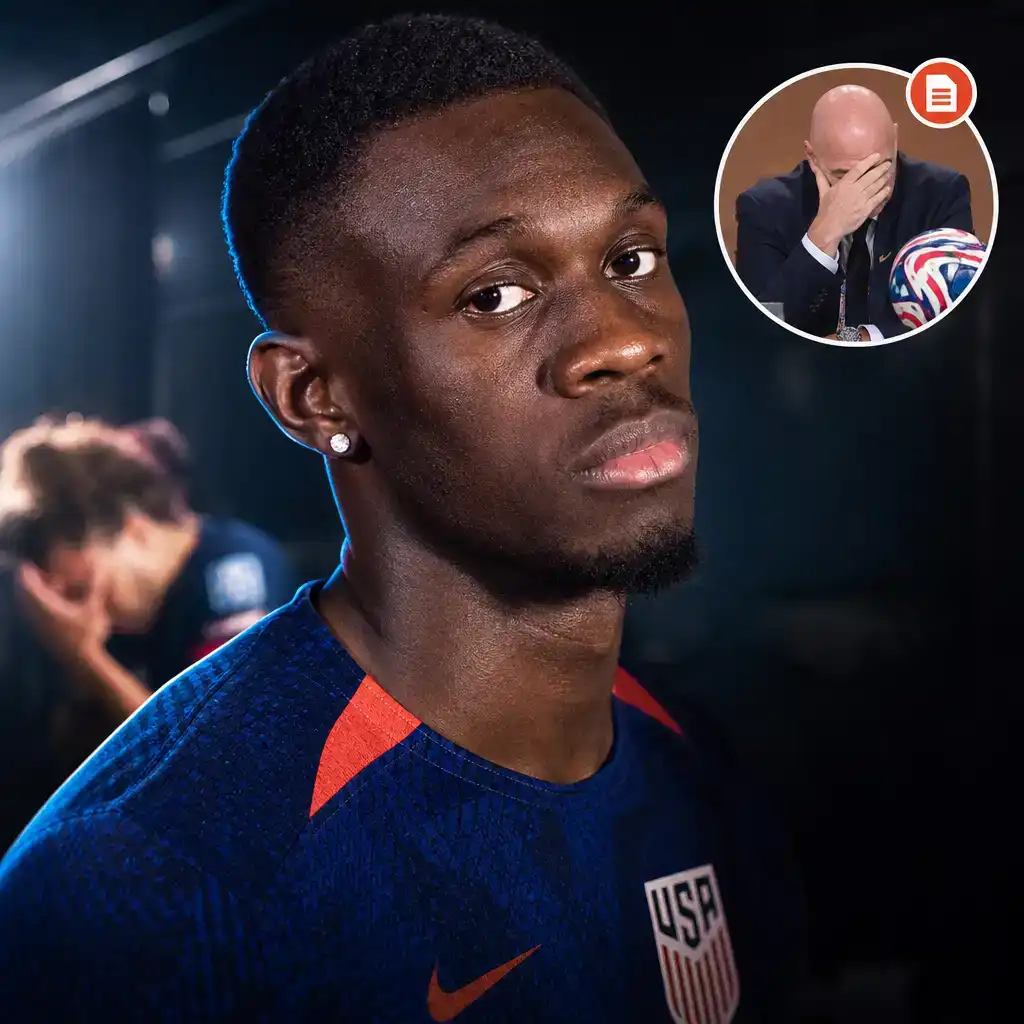
Balogun, restored to the starting lineup after FIFA suspended his one-game ban, had little influence. He was largely anonymous in the knockout tie and was substituted in the 92nd minute, which is about as close as football gets to a footnote with boots on.
Why was Balogun’s reprieve so controversial?
The match was overshadowed before kickoff by FIFA’s decision to suspend Balogun’s ban, a ruling that followed actions by US President Donald Trump and immediately placed the forward, the team, and the tournament’s governing body under scrutiny.
The backlash was swift. Critics argued that FIFA had intervened in a way it had repeatedly claimed it could not, or would not, do in other politically complicated situations. Belgium supporters arrived at Lumen Field already angry, and their pre-game march included chants of “FIFA Mafia.”
The frustration was not only about Balogun. Fans and commentators pointed to previous cases where FIFA President Gianni Infantino had said the organization had limited power to help. Those included issues involving Iranian players needing US visas, Somali referee Omar Artan being denied a US visa, and Haiti being forced to change a jersey at the last minute because of war imagery.
Infantino had tried to frame FIFA’s limits at a news conference on the eve of the tournament.
“We try always to find solutions – always,” he said.
“But then we need to respect that we are not the kings of the world who can rule over governments and police forces and I don’t know what. We are a sports organisation; we try to do our best with the means that we have.”
He also added, in a line that aged with impressive speed: “We don’t control everything. Maybe it’s good to just chill, relax.”
How did Belgium respond on and off the pitch?
Belgium did not hide that the controversy had reached the dressing room. Captain Youri Tielemans said the team discussed the decision before the match and used it as fuel.
“Let’s be honest: We held a meeting when we heard the news,” Tielemans said.
“We told ourselves we needed to do our talking on the pitch. That’s what we did today. I’m very proud of the team,” the Aston Villa midfielder told Belgium’s RTBF broadcaster.
Midfielder Nicolas Raskin also cast the result as a kind of sporting correction after the anger around Balogun’s eligibility.
“Like I said, I think there is always a justice somewhere in life, and the fact that something can happen like that, you can put it all you want, but we don’t think that was fair,” Raskin told reporters.
“And today, I think it just brings us a little bit of luck. We needed to win the game and the message throughout.”
Belgium’s official account joined in shortly after full time, posting “Overturn this” in a pointed response to the earlier ruling. The Belgian Red Devils also found time to take a swipe at the American habit of calling the sport “soccer,” because apparently a 4-1 win still leaves room for administrative teasing.
What role did social media play in the fallout?
Once Lukaku scored Belgium’s fourth, his teammates joined him in a celebration that many viewers quickly compared to Trump’s familiar dance move. It did not take long for the clip to become part of the broader pile-on.
Online reaction had already been hostile toward FIFA before kickoff, but the United States’ performance opened a second front. Some users joked that the team looked as if it was playing its first match. Others said the performance was more embarrassing than the previous 48 hours of controversy.
A recurring joke was that Trump might try to overturn Belgium’s 4-1 win if he disliked the result. The sarcasm was obvious in most cases, though the past day had made the premise feel less far-fetched than it probably should have.
Trump’s own niece, Mary Lea Trump, who has sued him over personal disputes and is one of his most vocal critics, also condemned his involvement.
“He casts a shadow over everything. He can only win if he cheats, and he thinks that applies to everybody else. Sad,” she wrote on X.
That meant the American players were not just dealing with a sporting failure. It became a public referendum on fairness, influence, and whether the hosts had been handed something they did not earn.
What did the managers say after the match?
Belgium coach Rudi Garcia tried to lower the temperature after the final whistle. Asked whether the Balogun dispute had motivated his team, Garcia said the answer was no.
“No, it wasn’t needed or necessary … What really mattered to us is our game plan,” he said.
Garcia also said he spoke with Balogun after the match and made clear he did not blame the player personally.
“He came to talk to me, I really like that,” Garcia said. “It’s not his fault, he’s not the one to blame and that’s what I told him.”
That distinction matters. Balogun became the visible symbol of a decision made above him, but Belgium’s anger was directed more at the process than at the forward himself. Still, on a night when he needed a statement performance, he gave the story very little reason to move away from the controversy.
Pochettino’s United States side now leaves the tournament knowing it let a real chance slip away. The run had captured the host nation’s attention, but the ending combined a flat performance, a governance dispute, and an internet reaction that will not be filed under mercy.
Belgium move on to face Spain in Los Angeles on Friday, with a place in the semifinals at stake. After a chaotic buildup and a clinical win, they will arrive with momentum, and likely with a little less interest in relaxing.