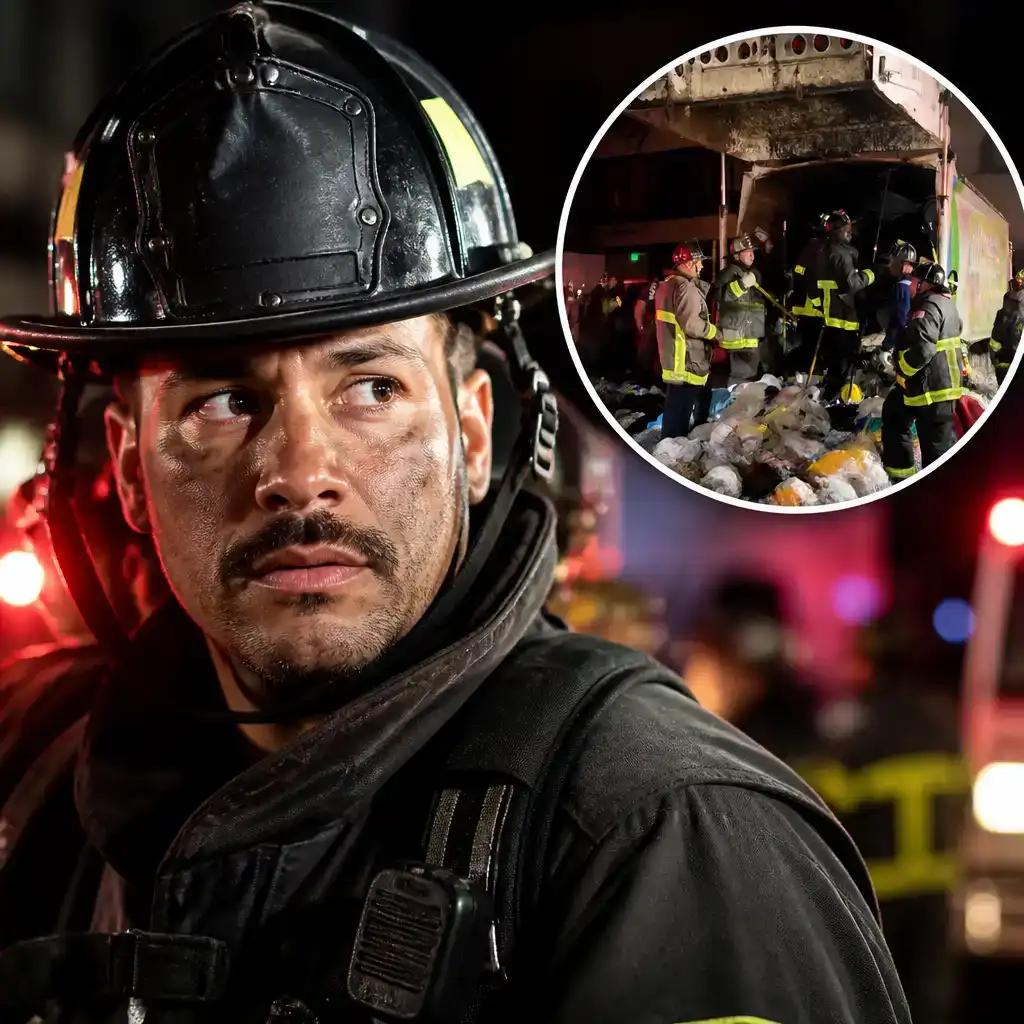
“I personally heard him yell a few times,” Elias said, adding that he could not determine whether the shouting came from pain or frustration.
Once crews reached the man, they removed him from the truck and transported him to a trauma center. Zuckerberg San Francisco General Hospital listed him in serious condition late Wednesday. As of September 3, authorities and hospital officials had not released a newer medical update.
Why was the rescue medically complicated?
Paramedics treated the man through an IV while he was still buried and monitored him for possible crush syndrome, PEOPLE reported. The condition can develop after a person remains compressed for an extended period, making removal a medical concern as well as a physical one.
The compactor cycle added another serious unknown. Reports confirmed that the machinery operated once before the driver realized someone was inside, but officials had not publicly detailed which injuries resulted from the compression.
One firefighter also suffered a hand laceration during the rescue and needed stitches, according to NBC Bay Area. Considering that crews were digging through tightly packed commercial waste around a trapped patient, the injury underlined why the operation required time rather than speed alone.
Dumping the load would have been faster. It also could have shifted thousands of pounds of material onto the man. Firefighters therefore continued removing rubbish piece by piece until they could extract him safely.
Was the man actually dumpster diving?
Early reports said the man had been searching through the dumpster before the truck arrived. ABC7 attributed that account to fire officials. Other reporting introduced some uncertainty.
SFGATE quoted Elias as saying he did not know why the man had entered the container. The captain said people may climb into commercial bins to sleep, look for food or recover possessions, and described such incidents as common even if this particular outcome was not.
Elias called the case “an unfortunate situation,” regardless of the reason the man entered the bin. Reed described it as “pretty unusual.” Both statements can be true. People entering waste containers may be familiar to emergency workers, while a person surviving a compactor cycle and a two-hour extraction remains exceptional.
The distinction matters because “dumpster diving” suggests a confirmed activity. Authorities had not established whether the man was searching for something, seeking shelter or inside for another reason. Firefighters planned to interview him when his condition allowed.
What happens after the rescue?
Recology said its investigation was continuing. The company had not announced any findings about the collection process or whether additional safety measures would follow.
Reed told the San Francisco Standard that roughly 15 years had passed since city firefighters last rescued someone from a Recology truck. Commercial collection vehicles routinely lift large bins whose contents cannot be fully inspected from the cab, especially when a driver is operating alone before dawn.
That leaves a dangerous overlap between automated waste collection and people using commercial bins for shelter, food or recoverable belongings. In this case, a bystander’s ability to hear the man and stop the driver prevented a second compactor cycle. The machinery had already done enough.