Rincón and several others from the flight were among those unaccounted for. For their families, already shaken by the speed of the deportations, the aftermath became a second ordeal: trying to locate loved ones in a country overwhelmed by a national disaster.
Families searched hospitals, morgues and rubble
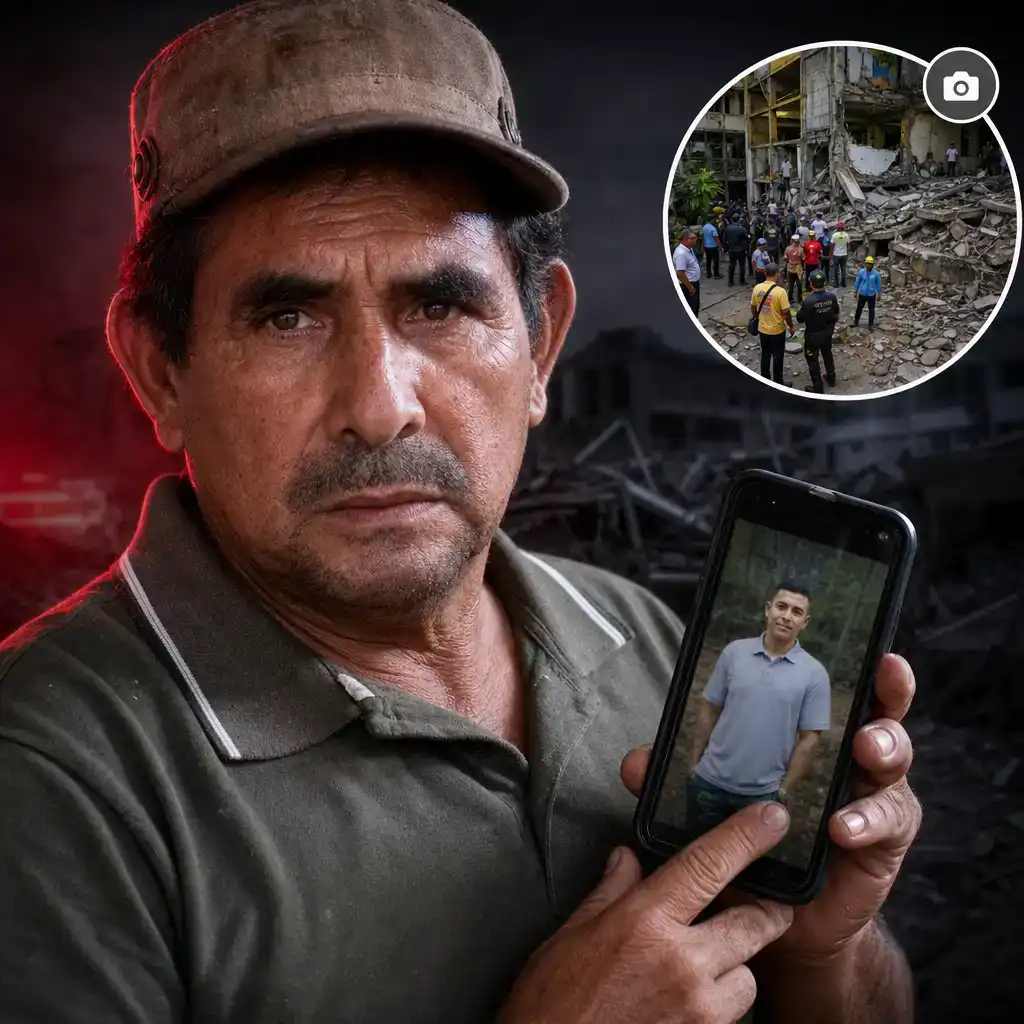
Rincón's grandfather, Jose Rincón, told BBC Mundo that he had viewed at least 200 bodies, including at a morgue in Caracas, while searching for his grandson.
He also tried to reach what remained of the hotel where the deportees had been staying, but Venezuelan authorities blocked access. They told him there was "no life" at the site.
"If we could just see what we need to see - if I could see the rubble, I'd be satisfied - but days have gone by and I still haven't found him, alive or dead... So what am I supposed to do?" Rincón told the BBC.
The question is not really rhetorical, though it sounds like one. In the chaos after a mass-casualty earthquake, families have been left to do the kind of searching that official systems are supposed to make unnecessary.
One call came minutes before the first quake
Another passenger, Darwin Eliecer Serrano Lopez, 35, called a cousin at 05:32 local time to say he was back in Venezuela after four years living in the United States. The first earthquake hit less than half an hour later.
His cousin, Paola Chacón, said the family drove through the night after learning he had returned. Relatives said Serrano Lopez had first been detained in Chicago, then moved through four detention centres before US authorities put him on the deportation flight.
After nearly a week of searching without finding him, Chacón told BBC Mundo on Monday that she had come to believe her cousin was dead.
"So many days have passed… we aren't getting any answers," she said.
But the family was not leaving, she added: "we are going to stay here until we can take [Darwin's body] home".
Relatives say they still need proof
The family of Daniel Alejandro Nunez, 28, another passenger on Flight 164, also received a call after he arrived in Venezuela. He contacted his mother while still in state custody.
Then came conflicting reports, silence and the grim practical work of searching.
"We've searched for him in hospitals, in morgues – everywhere," his stepfather, Jose Alejandro Abache, told BBC Mundo.
For families separated for years by immigration status, the possibility that their relatives died immediately after an involuntary return has been almost impossible to process. They are not only grieving, or preparing to grieve. They are stuck waiting for confirmation, which is its own kind of punishment.
Mildrey Sarazo, wife of Darwin Serrano Lopez, had not seen her husband in three years. As of Monday, she still had not told their daughters, aged nine and 15, what had happened.
She said Serrano Lopez "didn't want to come back yet" from the United States. Now she is waiting for proof, and for his body.
"We want to bury our relatives," she said. "We want them to hand him over so we can identify him and be certain."
What have US and Venezuelan authorities said?
The Department of Homeland Security, which oversees US immigration enforcement agencies including Immigration and Customs Enforcement, gave a statement to the BBC but did not provide details about the individual cases.
"This flight safely reached Venezuela and all illegal aliens on board were returned home," a DHS spokesperson told the BBC on Tuesday. "When an individual is no longer in ICE custody, ICE is no longer responsible for them."
It remains unclear whether the migrants on the flight were deported for crossing the US border illegally or for other reasons.
The Venezuelan government has posted phone numbers for the public to call, but families say information has been scarce after a disaster of this scale. That is perhaps unsurprising, but not especially comforting when someone is missing and every hour carries the same weight.
Some deportees survived the hotel collapse
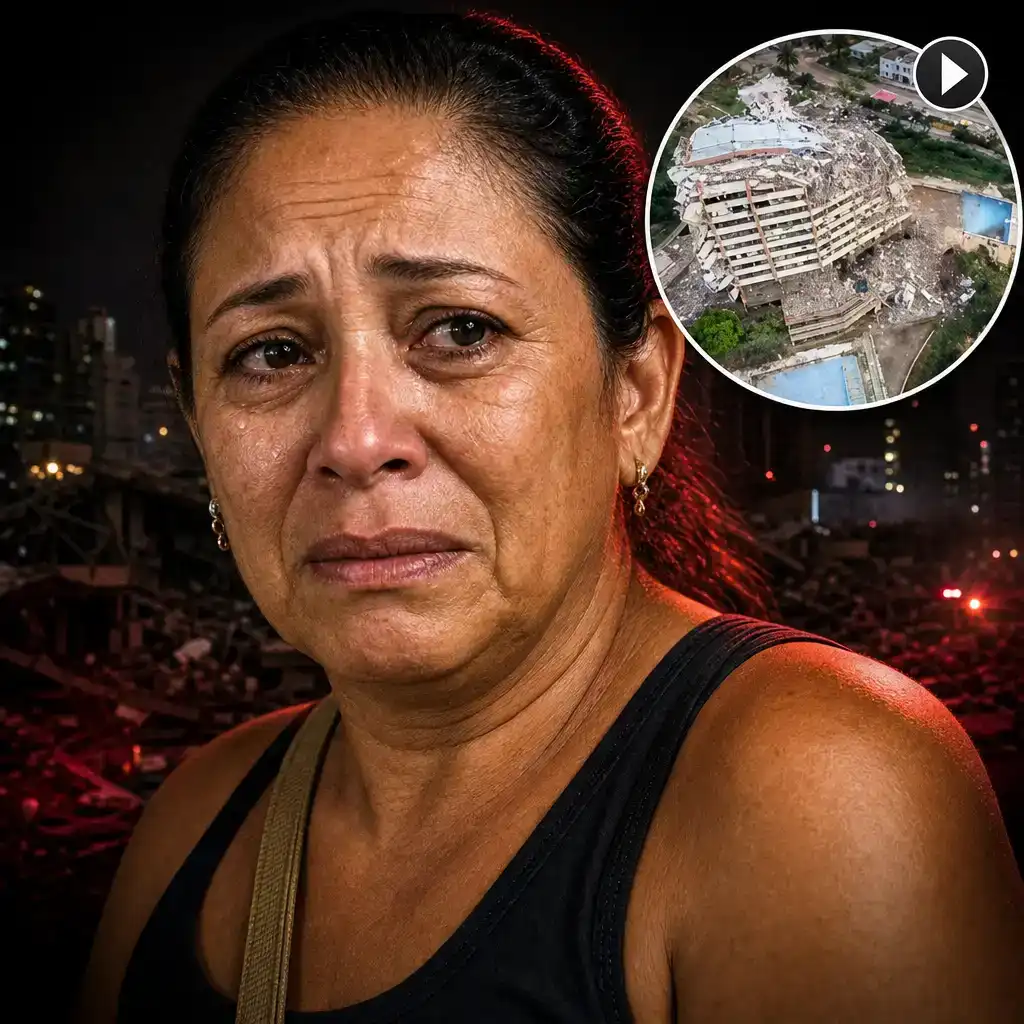
Not everyone from Flight 164 vanished into the rubble. Some survived the collapse of the hotel and later described the shock of escaping a disaster in a country they had believed they had left behind.
Lisbeth Portillo, 58, told the Associated Press that she was lying on a bed in a second-floor room shared with 16 other women when the building crumbled.
"I saw the woman next to me start to fall… they were all screaming for help," she said.
"I was born again - God gave me a second chance."
For other families, word of survival came only after days of uncertainty.
Relatives found Anderson Daniel Salcedo, 22, at Caracas's university hospital and alerted his mother, who immediately travelled to the capital, Reuters reported. By the time she arrived, doctors had amputated both of his legs.
Salcedo had lived in the United States for three years and had been sending money home before he was placed on Flight 164. After the quake, he was trapped under the rubble for nearly two days.
"He spent 40 hours in that hole, he didn't have an ID, they couldn't account for him because he had no documents," his grandmother, Marlene Lozano, told Reuters.
"We had no way to communicate with him and didn't know anything."
Lozano said the family was now praying for his recovery.
"Here we are praying, asking God to give him strength and courage," she said. "We know he won't be the same anymore - he's missing his legs - but we love him, just the way he is."
For the families of those still missing, even that painful certainty has not arrived. They are waiting in hospitals, outside morgues and near blocked-off ruins, asking for the most basic thing after a catastrophe: to know what happened to the people they love.