“That was the right choice because the world has changed. National security is economic security.
“Today we uplift defence spending further – an additional 15 billion pounds worth of funding – by … reprioritising spending across government.”
That phrase, “reprioritising spending”, is doing a great deal of work. It signals that the money is not simply appearing in a neat new pile, but being moved from other parts of government spending.
Drones and autonomous systems get a major slice
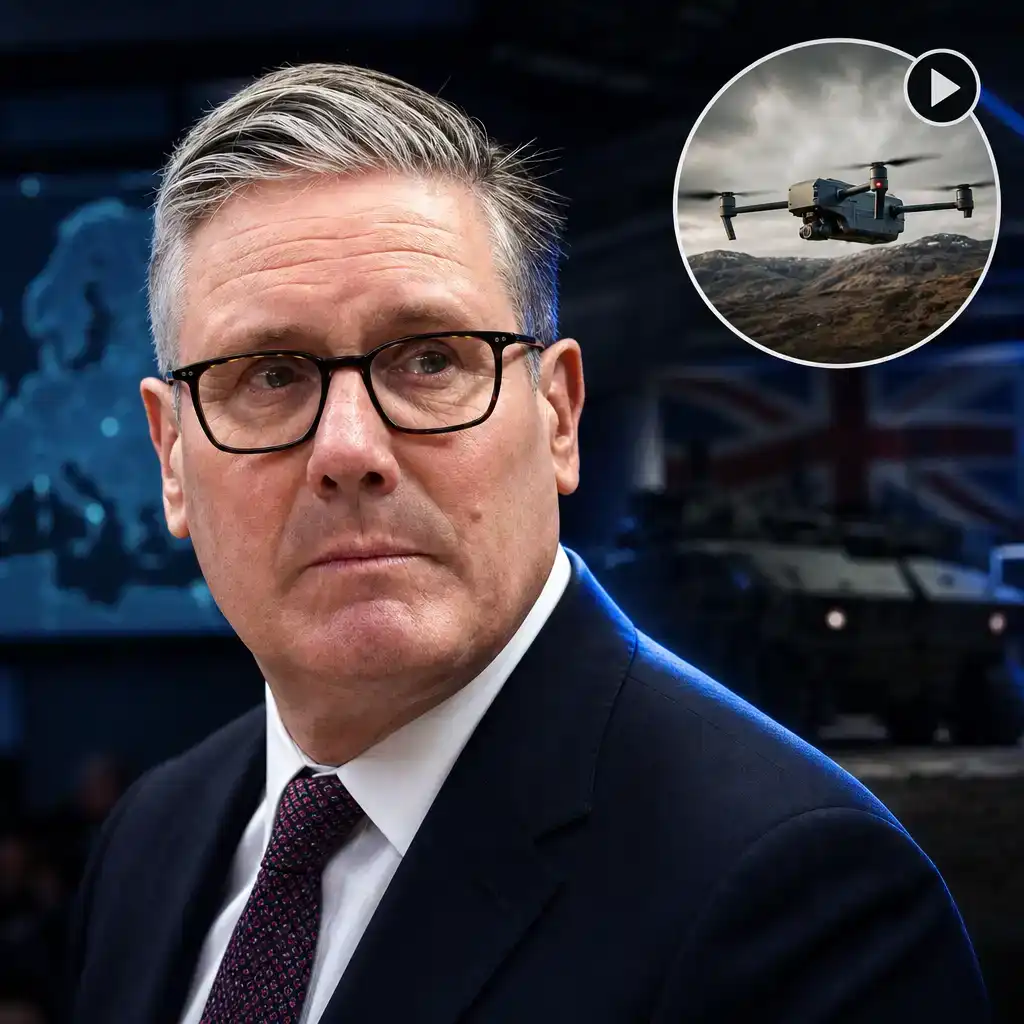
According to the Ministry of Defence, the plan includes more than £5bn, or $6.6bn, for drones and autonomous systems over the next four years.
That focus reflects a broader shift in modern warfare, where remotely operated and autonomous technologies have become central to military planning. For the UK, ministers are selling the funding as part of a push to update forces they say need to adapt faster.
The government says the package is a modernisation drive for the armed forces. It is also a political message, aimed at allies as much as domestic critics: Britain wants to show it is not merely discussing military readiness in committee rooms while the world becomes less cooperative outside them.
The Ministry of Defence said the funding for drones and autonomous systems sits within the broader four-year settlement. Starmer’s office says the plan shows Britain preparing for a more dangerous security environment, rather than waiting until it is impossible to ignore.
Why was the plan delayed?
The announcement follows more than nine months of delays and disputes inside Starmer’s Labour government over the scale and design of the spending package.
Those tensions became public this month when two defence ministers resigned in a row over the proposals. One of them was Defence Secretary John Healey, who said the plans risked making Britain “less safe”. That is not the kind of quote a government wants attached to its flagship security blueprint, but there it is.
The internal fight was over whether the proposed funding could actually meet the government’s stated goals for military renewal. Critics of the plan said it was too little, too late, particularly given the length of time it took to produce.
Starmer says the package is a serious uplift and continues the shift he began last year, when he redirected aid spending toward defence. His critics argue that the scale of the threat requires a bigger and faster response.
How does NATO fit into the announcement?
Starmer’s pledge comes as United States President Donald Trump has repeatedly pressed NATO allies to spend more on their own defence and reduce their reliance on Washington for security.
The timing is not subtle. Starmer is expected to take the plan to Ankara for a NATO summit on July 7 and 8, where he will seek to show that Britain is moving toward spending 3.5 percent of gross domestic product on defence by 2035.
The target is supposed to reassure allies that the UK is taking burden-sharing seriously. It also gives Starmer something concrete to present on the international stage at a moment when his domestic authority has been badly weakened.
For NATO, the message is about credibility. For Starmer, it is also about legacy. He is presenting the plan as a framework that can survive his departure, rather than a late-stage policy announcement that disappears with the ministerial stationery.
What happens after Starmer leaves office?
Starmer acknowledged that future governments could “build” on the blueprint, a notable concession given that he is expected to be replaced soon.
Andy Burnham, widely seen as Starmer’s likely successor, could take power as early as July 20. If that happens, the new prime minister would inherit a major defence spending commitment, an unresolved fight over government priorities, and a military modernisation plan already carrying political bruises.
The question now is whether Burnham would adopt the plan, revise it, or use it as a starting point for a broader reset. Starmer’s wording gives his successor room to adjust the policy without formally abandoning it.
For now, the government says Britain will spend nearly £300bn over four years to strengthen its armed forces, with drones, autonomous systems and NATO commitments at the centre. The opposition from critics and former ministers suggests the argument over whether that is enough has not ended. It has merely been given a larger number attached to it.