Critics Praise The Scale And Immersion
The BBC focused on the film’s sheer visual force, especially Nolan’s use of IMAX to make Odysseus and his crew look small against the sea, cliffs, and divine forces surrounding them.
In one explosive set piece after another, Nolan uses his IMAX cameras to reflect the scale of Odysseus’s journey and also how powerless mortals are next to the gods. Much of the film takes place on a sapphire-blue sea, with a wide horizon and enormous cliffs that dwarf the boat carrying Odysseus and his men. The film is so immersive that we feel like we are in the boat with them.
The Sydney Morning Herald argued that Nolan has been circling The Odyssey for years, connecting the film to earlier work including Inception, Interstellar, Memento, Dunkirk, and Oppenheimer. The review notes that flashbacks inside the Trojan Horse recall Nolan’s images of suffocation in Dunkirk, while the horse itself is compared to the atom bomb in Oppenheimer because of the devastation it unleashes.
Read that way, The Odyssey feels less like a sudden career detour and more like the movie Nolan was always going to make.
The Cast Gives The Myth Human Weight
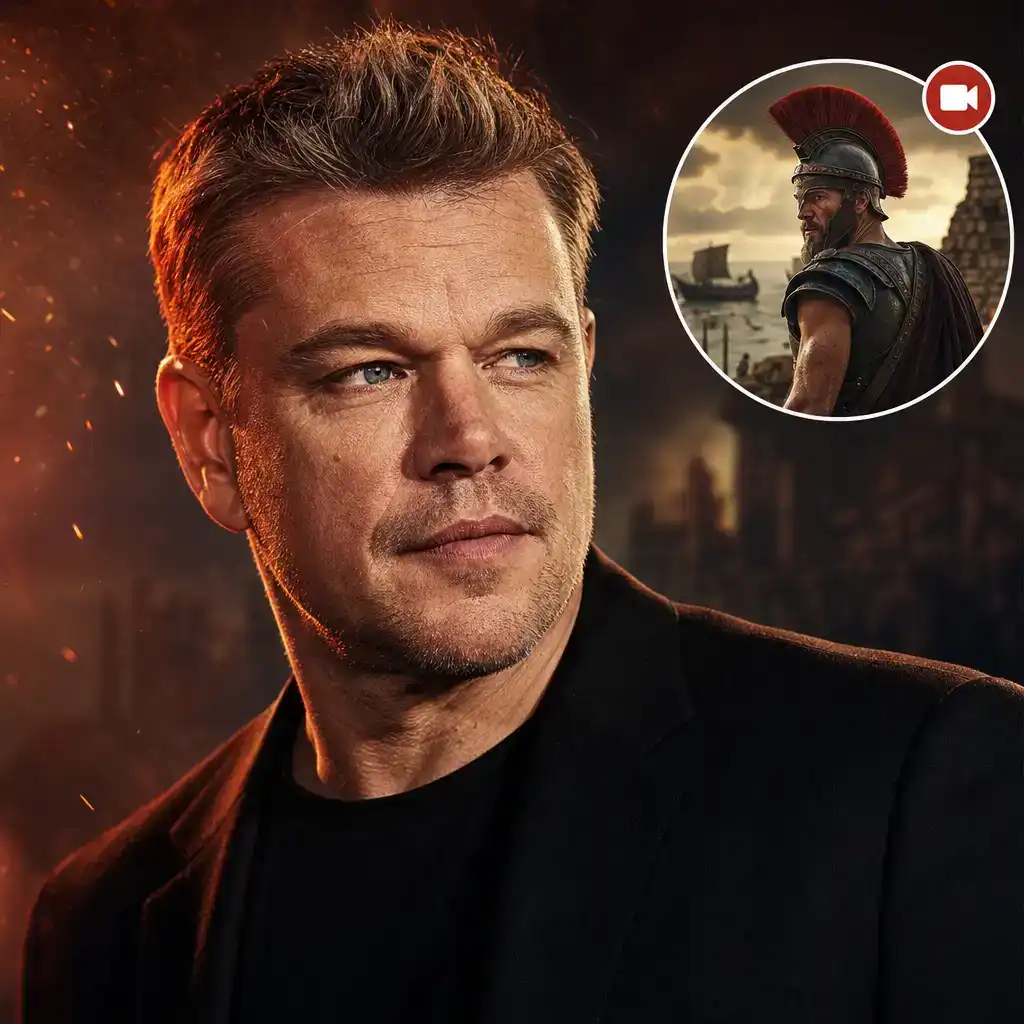
Several reviews highlight Damon’s Odysseus as a man celebrated for victory but haunted by the cost of achieving it. Forbes describes the character as someone praised for his role in the Trojan War while carrying the guilt of his most notorious success.
His guilt led him to wander for 10 years, lost in his own pain. It was his resilience and his desire to rectify the wrong that allowed him to return and reclaim his family.
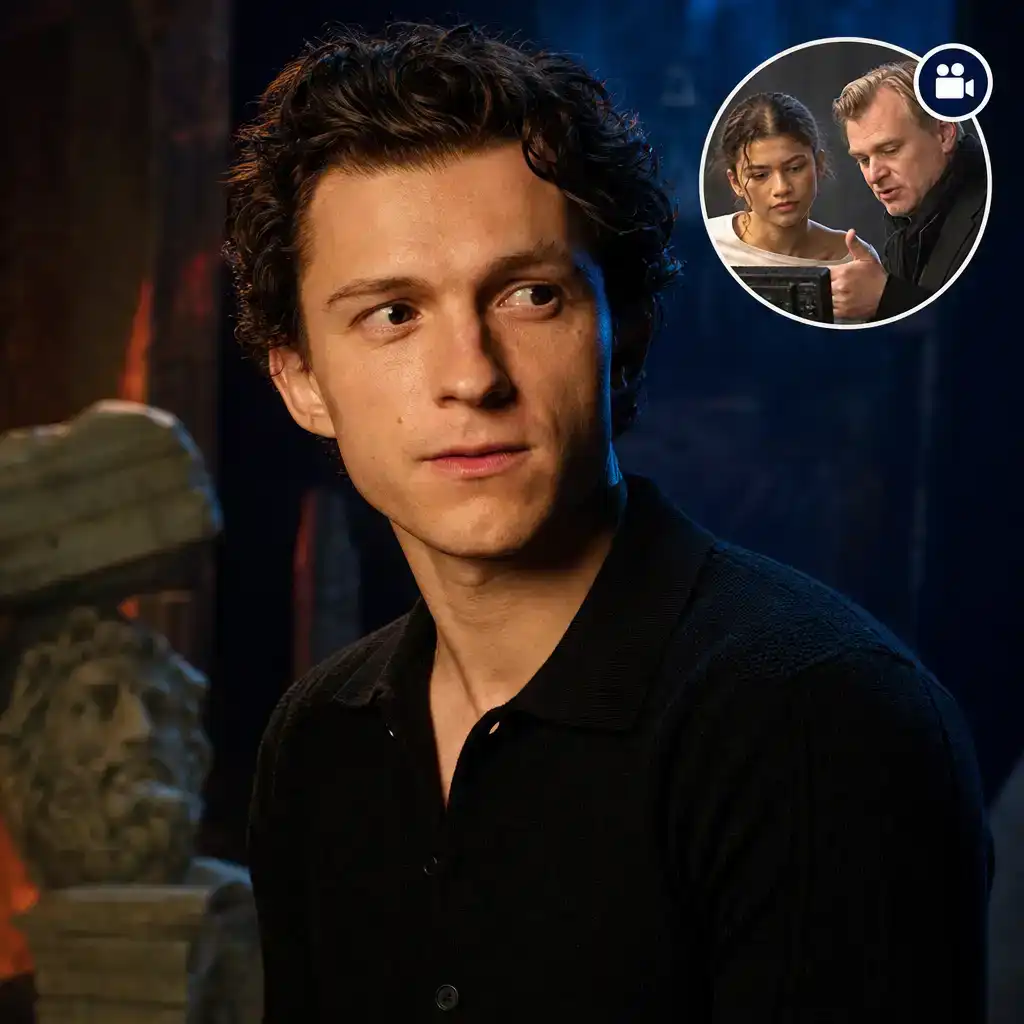
Fresh Fiction goes further, reading Nolan’s film as a story about trauma and memory. The review says Nolan frames Odysseus like many of his male protagonists: a man trying to live with the fallout of his own destructive brilliance. His encounters with Calypso, played by Charlize Theron, and Athena, played by Zendaya, are described as key to that struggle, especially as guilt and memory loss shape his journey.
Hathaway’s Penelope also earns attention. The New Yorker praises her controlled intensity, saying she gives Penelope “a laser gaze” and notes a pointed moment with Telemachus when she wordlessly makes clear he is not yet ready for the fight ahead.
Authenticity Was Not The Assignment
One of the major debates around the film has been whether it looks or sounds “authentic.” The Irish Times suggests that may be the wrong question, since nobody alive can verify what 1200 BC sounded like at dinner, in battle, or during awkward palace conversations.
The review credits production designer Ruth De Jong and costume designer Ellen Mirojnick with building a stylized ancient world that works on its own terms, blending different eras of armor into what it calls a “catch-all heroic aesthetic.” In other words, the film chooses mythic coherence over strict archaeological obedience.
The New Yorker also points to the contemporary dialogue as a feature rather than a defect, saying Nolan’s terse language gives his cast firm ground and turns “ancient, iridescently complex figures crystalline and hard-edged.” It also notes Jon Bernthal’s Menelaus, king of Sparta, comes with an “oddly apt New York white-ethnic outer-borough accent,” which is certainly one way to bring Sparta closer to the present.
The Film Connects Ancient Collapse To Modern Anxiety
The Los Angeles Times reads Nolan’s Odyssey as a story set during the fall of the Bronze Age, with a once-powerful world weakened by wealth concentration, shrinking trade, climate disasters, and fear of outsiders. In that setting, Zeus’ command to show hospitality to the poor and foreign-born becomes more than a religious detail. It becomes a measure of a society losing its moral structure.
The review describes Damon’s Odysseus as “both witness to and wrecking ball of the collapse,” which gives the journey home a heavier charge. This is not just a man trying to get back to his wife and son. It is a survivor moving through the ruins of a world he helped break.
That may be why the film has hit critics so hard. The monsters matter, but the real tension is human: what victory does to the person who wins, what absence does to a family, and what a culture becomes when fear becomes policy.
A Very Nolan Version Of The Classics
Not every critic frames the film’s intensity as delicate. SFGate says viewers who already have opinions about Nolan are unlikely to change them here, because the movie is saturated with his style.
Every frame of this movie may as well be sporting a DIRECTED BY CHRISTOPHER NOLAN watermark, such is its maximum Christopher Nolan-ness.
The review adds that audiences know what they are buying with a Nolan film: a theatrical “experience” with sensory overload built in. Subtlety, apparently, has been left somewhere between Troy and Ithaca.
The Telegraph praises the film’s wild tonal range, from palace intrigue on Ithaca to the Cyclops’s cave and the sack of Troy. It also notes Nolan introduces the wooden horse half-buried in sand like the Statue of Liberty in Planet of the Apes, and frames the Cyclops, played by Bill Irwin with puppetry, optical effects, and computer graphics, in the style of Goya’s Saturn Devouring His Son.
Metro captures the broader critical mood, calling The Odyssey a universal story that remains “utterly gripping,” and adding that Nolan’s version could turn new viewers toward the classics without requiring homework first. For a poem that has survived millennia of retellings, translations, arguments, and classroom sighs, that is not a small achievement.