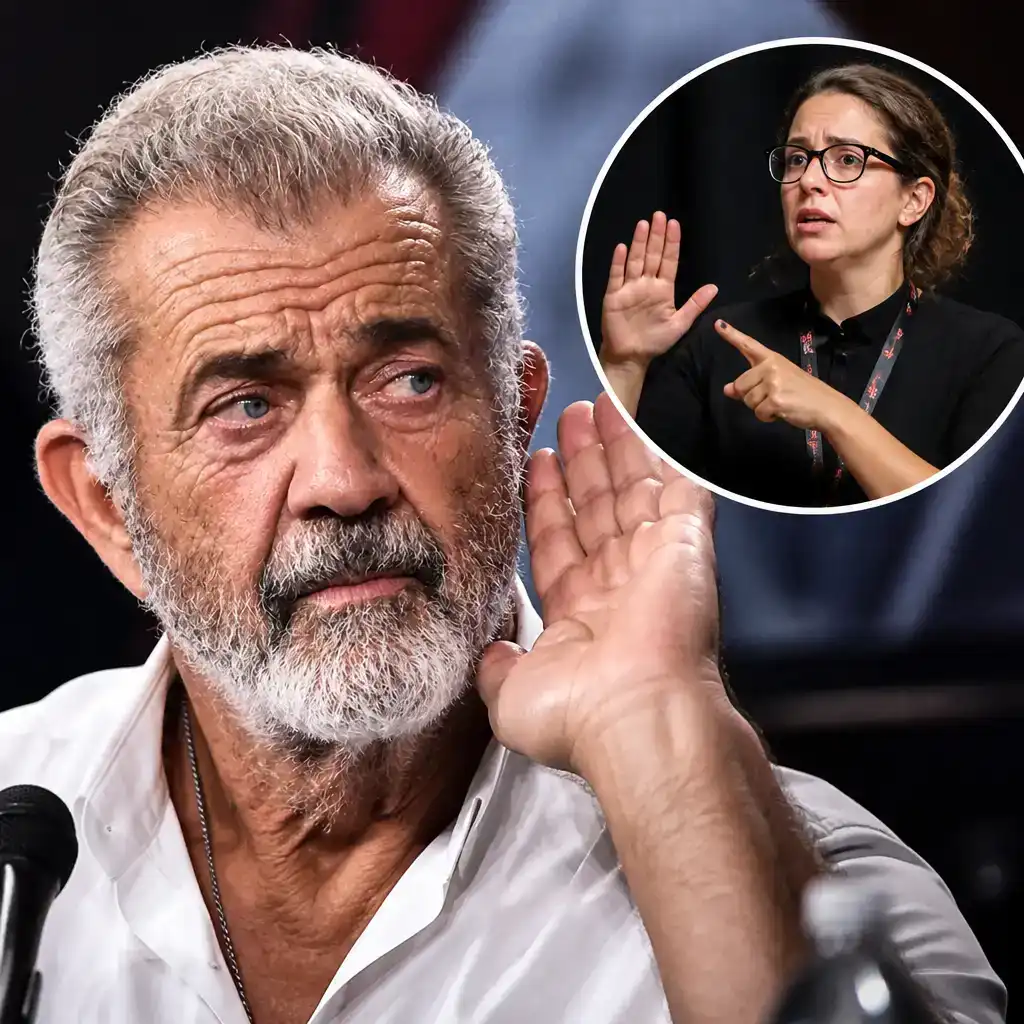
Was Gibson definitely mocking the interpreter?
The footage establishes what Gibson did, but not why he did it. Several social media users urged caution, suggesting he may have been joking with the audience, gesturing toward event staff or trying to encourage applause.
No identified witness, organizer or member of Gibson’s team has publicly supported those explanations. Gibson, his representative, Fan Expo Canada and the interpreter had not issued a response following the first reports on August 31.
That absence matters because short clips are excellent at showing movement and rather less capable of supplying motive. Still, critics noted that Gibson made the gestures immediately behind an interpreter who was actively signing, which is why many viewers did not treat the episode as harmless stage business.
One report from BroBible incorrectly placed the incident at Fan Expo Chicago in parts of its coverage. Fan Expo’s official schedule confirms Gibson appeared in Toronto. The geography is settled, then, even if the intent remains disputed.
Why the reaction extends beyond one gesture
The criticism also reflects a wider frustration over how accessibility workers are treated at public events. ASL interpreters are not decorative additions to a stage. They provide access to panels, announcements and live discussions for audience members who might otherwise be excluded.
Statistics Canada reported that more than 1.6 million Canadians aged 15 or older had a hearing disability in 2022, representing 5.6% of that population. Among those people, 81% encountered at least one accessibility barrier. Against those numbers, dismissive treatment of signing can land as more than an awkward joke, even when it lasts only seconds.
A separate clip shared during the controversy showed actor Alan Ritchson acknowledging and thanking an interpreter. One social media user described his interaction as “a master class” in engaging both interpreters and Deaf audience members. The contrast was not complicated: one celebrity visibly treated accessibility work as part of the event, while another produced a clip that left viewers debating whether he was ridiculing it.
Fan Expo charged premium prices for Gibson access
Gibson was one of the convention’s major celebrity bookings. Fan Expo offered standard autographs and photo opportunities with him for C$275 each, while premium autographs cost C$325. Those prices placed his appearance firmly in the convention’s top-tier attractions.
His inclusion had already generated objections before the event. Attendees posting online in April and August criticized Fan Expo for booking him, pointing to his history of racist and misogynistic remarks and controversies. After the interpreter footage circulated, one critic said the conduct “kind of tracks” with that record.
The earlier objections do not prove what Gibson intended on stage. They do explain why many viewers were unwilling to extend much benefit of the doubt. Reputation is not evidence for a specific allegation, but it does shape how ambiguous conduct is received.
Until Gibson or someone directly involved offers an account, the central question remains unresolved. The broader point is less mysterious: accessibility staff are working, Deaf audience members are paying customers, and acknowledging both without turning the moment into a spectacle is not an especially demanding standard.