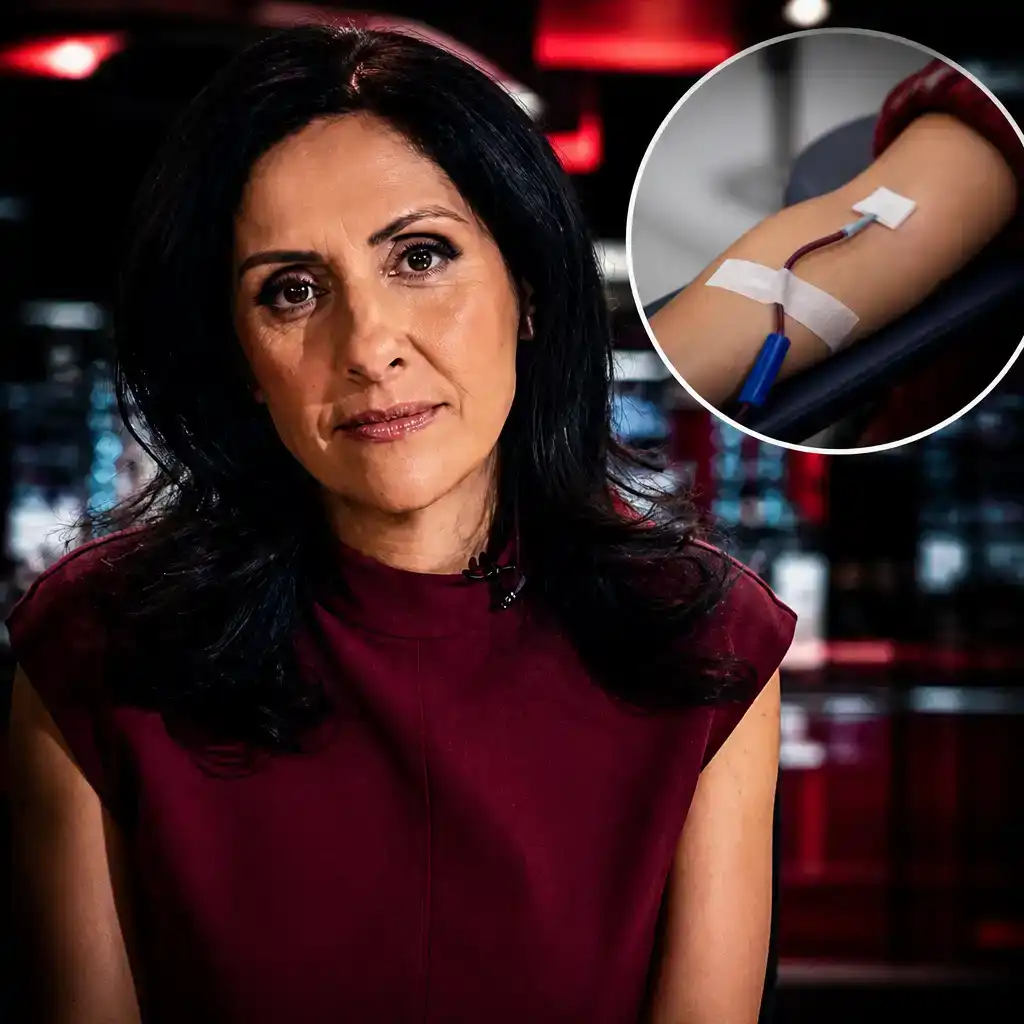
Telling her children proved particularly difficult. Moshiri has three children, Iris, 13, Vivienne, 11, and Caspian, nine. Their immediate question was whether she was going to die.
PV cannot currently be cured, but treatment can control blood cell levels and reduce the danger of thrombosis. Moshiri said accepting a life “punctuated by hospital appointments and loads of medication” had been difficult, while acknowledging that it was better than dying “of a horrible cancer”.
“But it’s something that you have to get your head around,” she added.
What treatment has she received?
Moshiri initially underwent seven or eight venesections over five months. Also known as phlebotomy, the procedure removes about half a litre of blood through a vein, lowering the number of circulating red blood cells.
She later received interferon, an immunotherapy used to reduce blood cell production and lessen the need for repeated blood removal. It helped on that front, but the side effects were severe.
Moshiri described insomnia, persistent fatigue and intense itching that felt as though it came from inside her body.
“I was itching until I was bleeding through to my clothes,” she told The Times. “I have scars all over my stomach from the itching.”
Doctors eventually moved her to another medication with less severe side effects. She said her health had improved in recent months and expressed hope that research would produce better treatments.
Other approaches to PV can include low-dose aspirin to reduce clotting risk, hydroxycarbamide and medicines that suppress excess blood cell production. Treatment depends on a patient's symptoms and wider risk factors.
How did she continue working through treatment?
Moshiri remained on air while dealing with chronic fatigue and regular medical care. Her assignments included leading coverage of Pope Francis' death and the papal conclave, reporting on JD Vance's visit to Greenland and working from Qatar during the US-Israeli war with Iran.
During the coverage following the pope's death, she worked 14-hour days while frequently appearing live.
“I was working 14-hour days, constantly on air, constantly having to think on my feet, and holding it together, despite the fact that I had this chronic tiredness and fatigue,” she said.
“When you’re doing live news, you have this rush of adrenaline, and you just have to get on with it.”
Her experience highlights the less visible burden of chronic cancer, particularly for working parents. A patient may appear composed at a desk or on camera while managing exhaustion, medication and hospital appointments elsewhere. The disease does not need to be visible to be disruptive, although workplaces and public understanding have not always absorbed that fairly basic point.
How rare is polycythaemia vera?
Blood Cancer UK estimates that around 1,140 people are diagnosed with PV each year in the United Kingdom, while approximately 8,810 people are living with it. The condition accounts for about 3% of blood cancers nationally.
The wider figures are considerably larger:
- More than 40,000 people receive a blood cancer diagnosis in the UK each year.
- Blood cancer is the country's fifth most common cancer.
- It is the third biggest cause of cancer death.
Moshiri is supporting Blood Cancer UK's Here for This campaign, which draws attention to events patients miss because of difficult treatments, side effects and time in hospital. It also recognises the milestones made possible by research and improved care.
Helen Rowntree, chief executive of Blood Cancer UK, said public disclosures such as Moshiri's “cut through the silence” surrounding the disease. She called for government and public funding to support treatments that produce fewer side effects.
Could newer drugs reduce repeated blood removal?
A recent development in the United States may eventually offer another route for some patients. On August 28, the US Food and Drug Administration approved rusfertide, sold under the brand name Mimrylo, for adults whose PV was not adequately controlled by existing treatment.
In a clinical trial involving 293 patients, 76.9% of those receiving rusfertide avoided phlebotomy during the measured period. Among participants given a placebo, the figure was 32.9%.
The drug is not a cure, and the approval applies to the United States. Still, the results matter because repeated venesection can be physically exhausting and time-consuming, adding another appointment to lives already organised around medical care.
For Moshiri, the immediate focus remains managing the condition rather than pretending it has disappeared. Her health has improved, her broadcasting career has continued and she remains hopeful that research will make the future easier for people diagnosed after her. PV may be permanent, but the burden of treating it does not have to remain fixed.