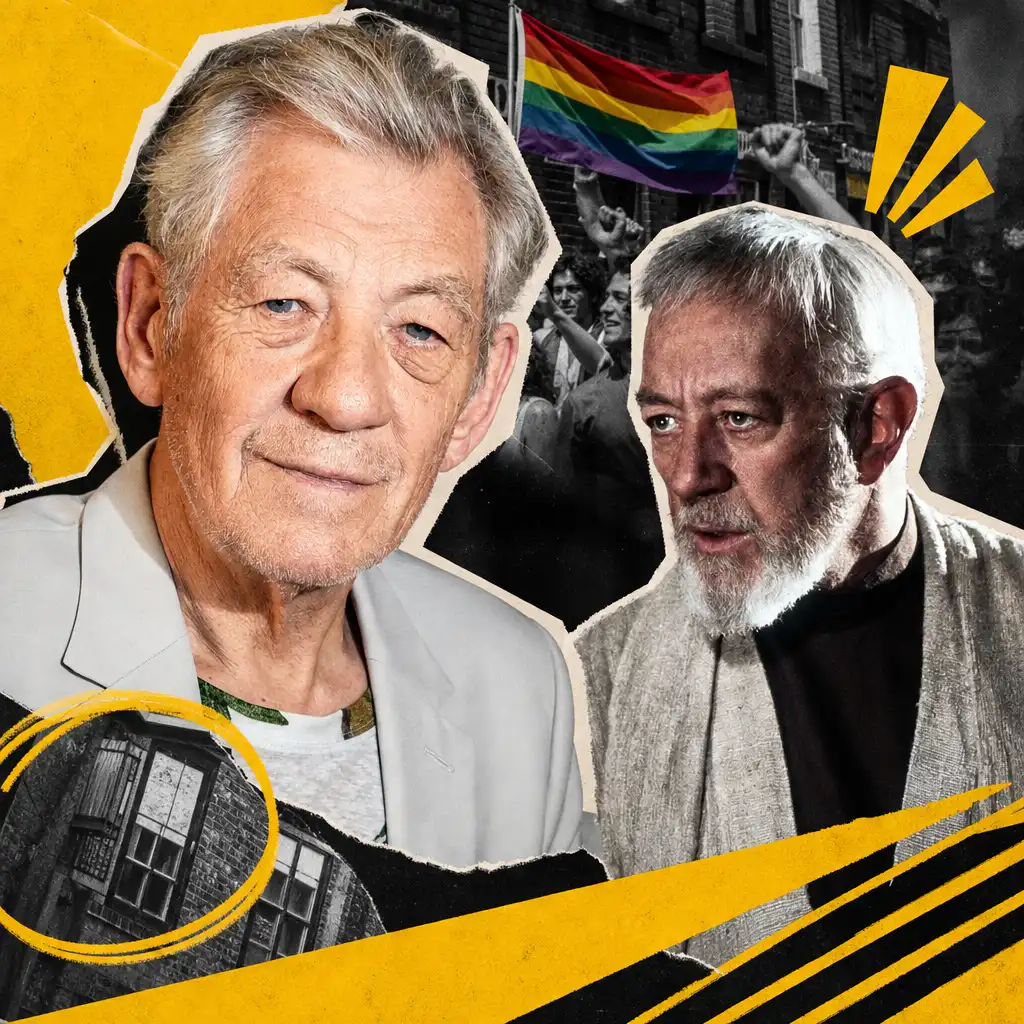
“He thought it somewhat unseemly for an actor to dabble in public or political affairs and advised me, sort of pleaded with me, to withdraw,” McKellen said. “Advice from an older generation, which I didn’t follow.”
That last part is doing a fair amount of work. McKellen, of course, did not withdraw. He became one of the most visible openly gay actors of his generation and a prominent voice for LGBTQ+ rights.
Why the memory resurfaced now
McKellen said the encounter came back to him after he saw the touring play “Two Halves of Guinness,” a solo show starring Zeb Soanes as Guinness.
The “Lord of the Rings” and “X-Men” actor said the production “hints at Sir Alec’s latent bisexuality in a way that would have upset him, I suppose.”
That detail gives the story a sharper emotional edge. Guinness, as McKellen frames it, was part of a generation that often treated public sexuality and political activism as dangerous territory, especially for performers whose careers depended on public approval and industry gatekeepers.
McKellen’s account also lands differently now, in an entertainment culture where actors are often expected to take public positions, then criticized for either saying too much or not enough. The machinery changes. The anxiety, apparently, is quite durable.
McKellen’s own coming out shaped his public life
McKellen publicly came out as gay in 1988, at age 48, during a BBC radio interview. His comments about Guinness fit into a longer history of his speaking plainly about the personal and professional cost of staying closeted.
Last year, he told The Times of London that he feels sorry for actors who believe they cannot come out. He also urged closeted public figures to reconsider the advice they are receiving.
“I have never met anybody who came out who regretted it,” McKellen said. “I feel sorry for any famous person who feels they can’t come out. Being in the closet is silly — there’s no need for it. Don’t listen to your advisers, listen to your heart. Listen to your gay friends who know better. Come out. Get into the sunshine.”
His position is not complicated, which may be why it has remained so forceful: visibility matters, and secrecy often protects everyone except the person living inside it.
The wider point McKellen keeps making
McKellen has also pointed to areas of public life where coming out still appears unusually difficult. He noted that there has never been an openly gay Oscar winner for best actor, an openly gay U.K. Prime Minister, or an openly gay Premier League footballer.
“In women’s sport it’s not an issue,” he said. “I would imagine young footballers are probably, like actors, getting very bad advice from agents who are worried about their own incomes. But the first Premier League footballer to come out will become the most famous footballer in the world, with all the agencies begging for his name on their products.”
The argument is partly moral and partly practical. McKellen is saying the fear around coming out is often reinforced by people whose financial interests depend on caution, even when public attitudes may have moved further than they assume.
What McKellen is doing now
McKellen most recently appeared in “The Christophers,” the latest feature from director Steven Soderbergh.
But his comments about Guinness are less about reopening an old disagreement than about showing how much pressure used to sit behind silence. For McKellen, the lesson from that lunch in Pimlico seems clear: respect the elders, perhaps, but do not let their fear write your life.