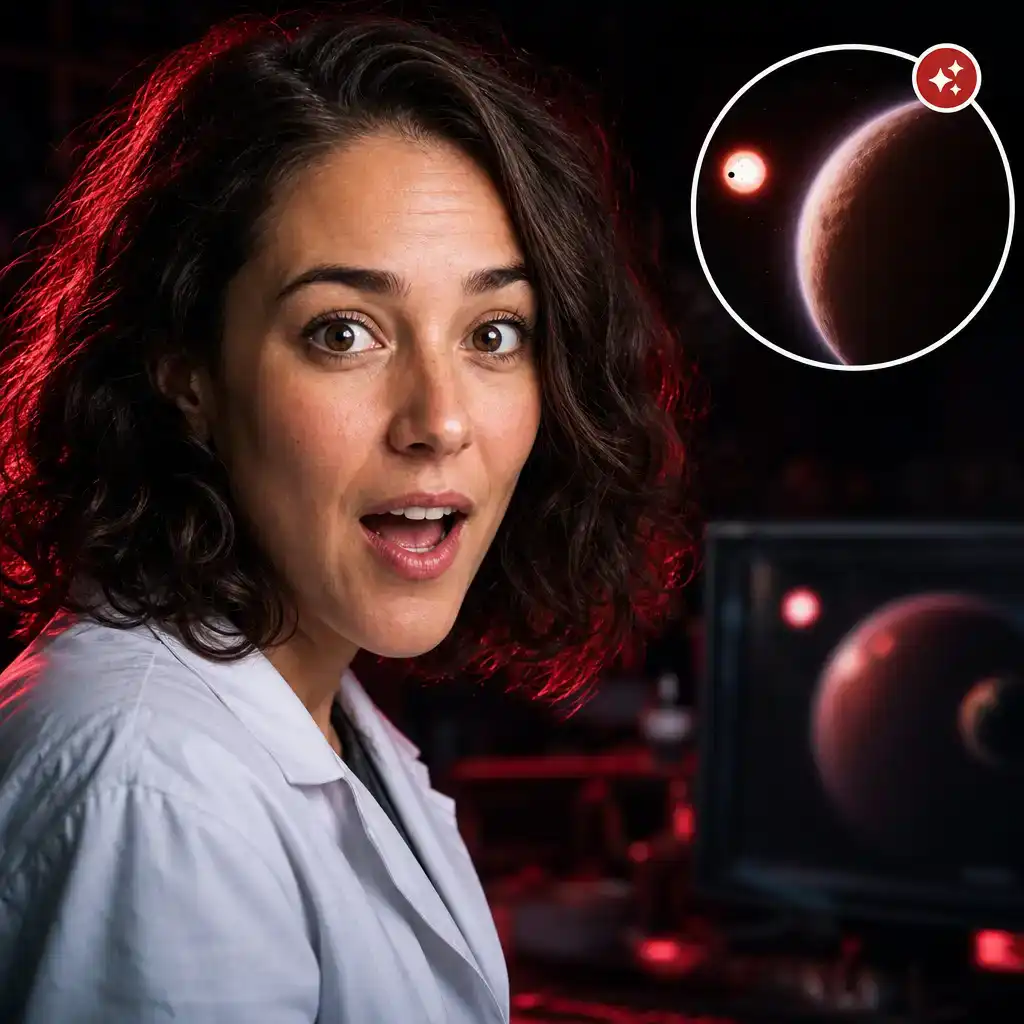
The detection does not mean scientists have found life. It does not even mean they have found a planet that is definitely habitable. It does, however, give researchers a better target for the next round of observations, which is often how astronomy advances: less trumpet, more spreadsheet.
Why the habitable zone matters, and why it is not enough
A planet’s habitable zone is the orbital region where temperatures could allow liquid water to exist on the surface, assuming other conditions cooperate. Too close to the star, and water may boil away. Too far, and it freezes. The popular shorthand is the “Goldilocks zone,” from the fairy tale, because apparently even planetary science cannot resist porridge-based branding.
For life as we understand it, water is a central requirement. A rocky surface also helps, since gas giants are not ideal places to stand, let alone build biology. LHS 1140 b checks several of those early boxes: it is rocky, it is in the right broad orbital region, and it is close enough to Earth for detailed study by modern telescopes.
But the habitable zone is not a guarantee. A planet may have no atmosphere, the wrong atmospheric pressure, intense radiation from its star, or chemistry that is hostile to life. The discovery adds one crucial piece, not the whole picture.
Why helium is useful, even if it is not life-friendly
The only gas reported in the atmosphere so far is helium, likely in the upper layers. On its own, helium would not support life. It is chemically inert, meaning it does not readily react with other elements, which is not exactly the stuff of a thriving biosphere.
The key point is that helium may not be the whole story. Other gases could be present deeper in the atmosphere, including molecules more relevant to climate, water stability, or biology. Detecting those will require more observations and careful separation of the planet’s signal from the light of its host star.
Dr David Charbonneau, also of Harvard University, said The broader importance lies in the type of planet being studied.
“People are generally interested in the big questions: Are we alone? Is there life beyond the Earth or beyond our solar system? To that end, this study reveals the first atmosphere discovered on a rocky planet in the habitable zone of a star outside of our solar system,” he said.
That is a measured claim, and usefully so. The finding opens a door. It does not announce what is behind it.
How this compares with K2-18b and TRAPPIST-1
LHS 1140 b is not the only exoplanet drawing attention in the search for habitable environments. K2-18b, a sub-Neptune planet that may have a water-rich interior, previously made headlines after scientists reported possible signs of dimethyl sulphide, a gas associated with marine life on Earth.
That signal has since been treated with caution. A NASA-led reanalysis in 2025 found it too weak to confirm and showed the gas can also form without biology. In other words, chemistry remains quite capable of creating confusion without needing help from aliens.
The TRAPPIST-1 system also remains a major target. Its seven rocky planets orbit a nearby red dwarf, and several have been considered promising for atmospheric study. The James Webb Space Telescope has ruled out an Earth-like atmosphere on TRAPPIST-1d, while the data on TRAPPIST-1e remain inconclusive.
Against that backdrop, LHS 1140 b stands out because scientists say they have detected an atmosphere on a rocky world in the habitable zone. The next test is whether that atmosphere contains gases that make the planet more than merely interesting.
What comes next in the search for life
The immediate task is to look for additional atmospheric components. Researchers will want to know whether LHS 1140 b has gases linked to surface conditions, climate regulation, or the possible presence of water. They will also need to test alternative explanations for the helium signal and refine their understanding of the planet’s star.
That caution matters. Exoplanet atmospheres are difficult to study because the signal is tiny. Scientists infer the composition by examining how starlight changes as it passes through or reflects from a planet’s atmosphere. The method is powerful, but it is also sensitive to noise, stellar activity, and interpretation.
For now, the discovery is a significant step, not a final answer. A rocky planet in the right region around another star appears to have an atmosphere. That makes LHS 1140 b one of the strongest candidates yet for deeper study in the search for Earth-like conditions beyond the solar system.