Asked whether the field could expand again to 64 teams, Infantino said FIFA would review the proposal.
He also said the World Cup should be organised “for the whole world”, not just for countries with long football histories and convenient trophy cabinets. “If you don’t give smaller countries a chance to participate in the World Cup, they’ll lack the incentive to keep improving,” he said.
How could a 64-team format work?
FIFA has not published a model for how a 64-team tournament would operate. The most obvious structure would be a larger version of the old 32-team format.
That could mean:
- 16 groups of four teams
- Three group matches for each nation
- The top two teams in each group advancing
- A 32-team knockout stage
That system would likely produce 128 matches. For comparison, the 32-team World Cups had 64 matches, while the 2026 edition has 104.
So the maths is not subtle. More teams mean more matches, more travel, more ticket sales, more broadcast inventory and more strain on everyone involved. FIFA tends to notice at least some of those categories with enthusiasm.
The central question is whether the tournament can grow again without making the group stage feel diluted or the calendar even more overloaded than it already is. Clubs, leagues and player unions are unlikely to treat an extra layer of fixtures as a charming administrative detail.
Who is pushing the 2030 proposal?
The strongest support has come from South America, where officials argue that the centenary World Cup in 2030 is the right moment to widen access.
CONMEBOL is promoting the idea. The South American football confederation represents 10 national associations, including Argentina, Brazil and Uruguay, all former World Cup winners.
The proposal was first raised in March 2025 by Uruguayan Football Federation President Ignacio Alonso during a FIFA Council meeting. CONMEBOL President Alejandro Dominguez later presented it formally, arguing that the 100-year anniversary should be marked with a more inclusive tournament.
“We are convinced that the centennial celebration will be unique because 100 years are celebrated only once,” Dominguez said when announcing the proposal.
There is also a symbolic hook. The first World Cup was held in Uruguay in 1930, and the 2030 edition is already built around that history. Expanding the field would let backers frame the tournament as a global celebration rather than just a larger commercial event, though those two things are rarely kept in separate rooms for long.
Who is against a bigger World Cup?
The proposal has met resistance from senior officials in Europe and Asia, who argue that 64 teams would make the World Cup too large and would damage qualifying competitions.
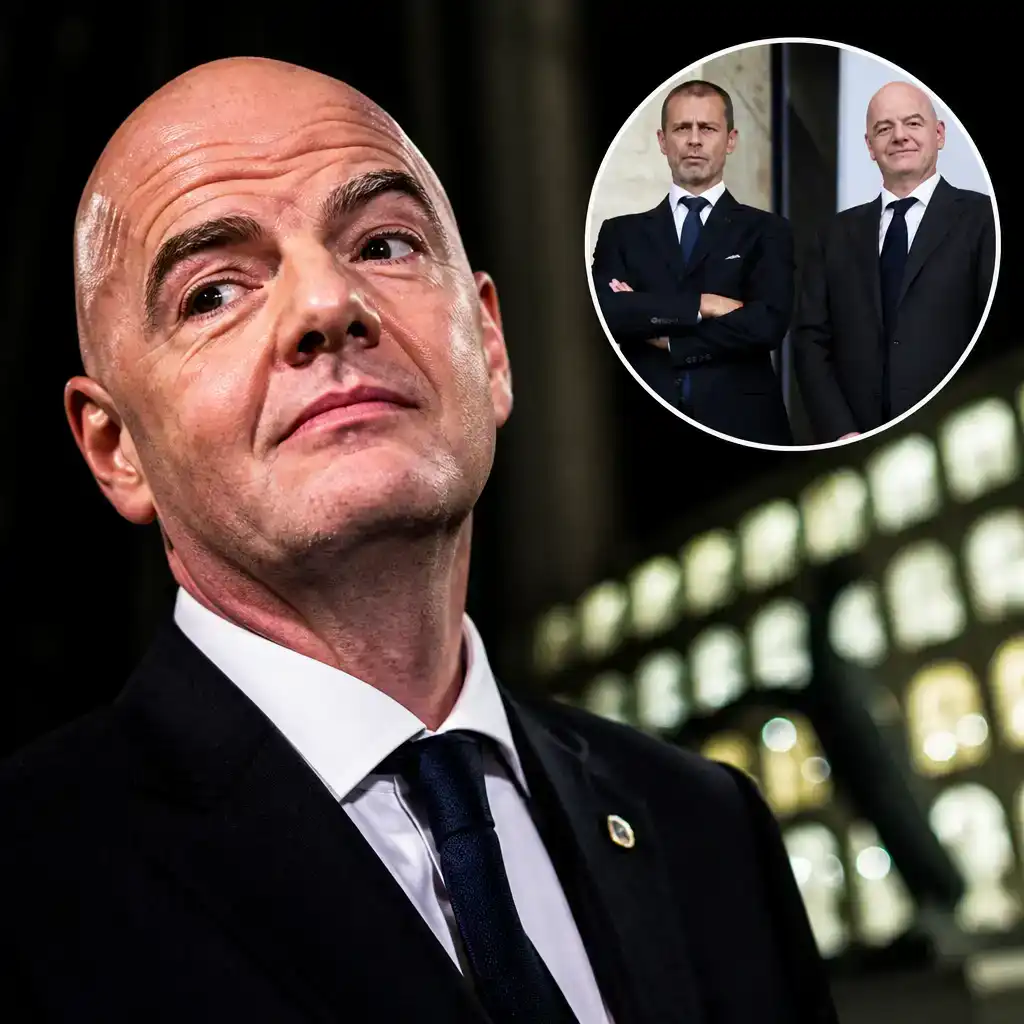
UEFA President Aleksander Ceferin called the idea “a bad idea” after it was raised at a FIFA Council meeting.
“It is not a good idea for the World Cup itself, and it’s not a good idea for our qualifiers as well,” Ceferin said.
Asian Football Confederation President Sheikh Salman bin Ibrahim Al Khalifa has also rejected the proposal.
“Personally, I don’t agree,” Sheikh Salman said last year. “If the issue remains open to change, then the door will not only be open to expanding the tournament to 64 teams, but someone might come along and demand raising the number to 132 teams. Where would we end up then? It would become chaos.”
Critics say another expansion would create several problems at once:
- A more crowded international calendar
- A weaker group stage if qualification becomes less demanding
- More pressure on players already facing heavy club and national-team schedules
- Bigger logistical demands for host nations
- Less sporting tension in regional qualifiers
The calendar point matters because the World Cup does not exist in isolation. Every extra match affects clubs, domestic leagues, broadcasters, players and national federations. That is the less glamorous part of tournament design, also known as the part that determines whether the thing works.
Where will the 2030 World Cup be played?
The 2030 World Cup is scheduled for June and July 2030, with Spain, Portugal and Morocco serving as the main cohosts.
Three centenary matches will be played in Uruguay, Argentina and Paraguay before the event moves to its main host countries.
That makes the 2030 edition the first World Cup spread across six countries and three continents. Even without extra teams, it is already the most geographically spread-out version of the tournament in its history.
That layout is part celebration, part logistical puzzle. Adding more teams would increase the complexity around venues, travel, training bases, security, accommodation and match scheduling. None of that rules out expansion, but it does raise the cost of turning a slogan about inclusion into an actual fixture list.
When could FIFA decide?
FIFA has not set a deadline for deciding whether the 2030 tournament will expand.
Infantino said the matter would be reviewed after the 2026 World Cup by FIFA’s relevant committees. Any formal change would need approval from the FIFA Council, the organisation’s main decision-making body.
For now, FIFA has not endorsed the proposal. The governing body has said it must consider ideas submitted by council members, which is not the same as backing them.
In practical terms, the 64-team concept is now inside FIFA’s machinery. Whether it comes out as a future format, a bargaining chip or a quietly shelved idea will depend on politics, money, scheduling and how well the 48-team World Cup is judged to have worked.