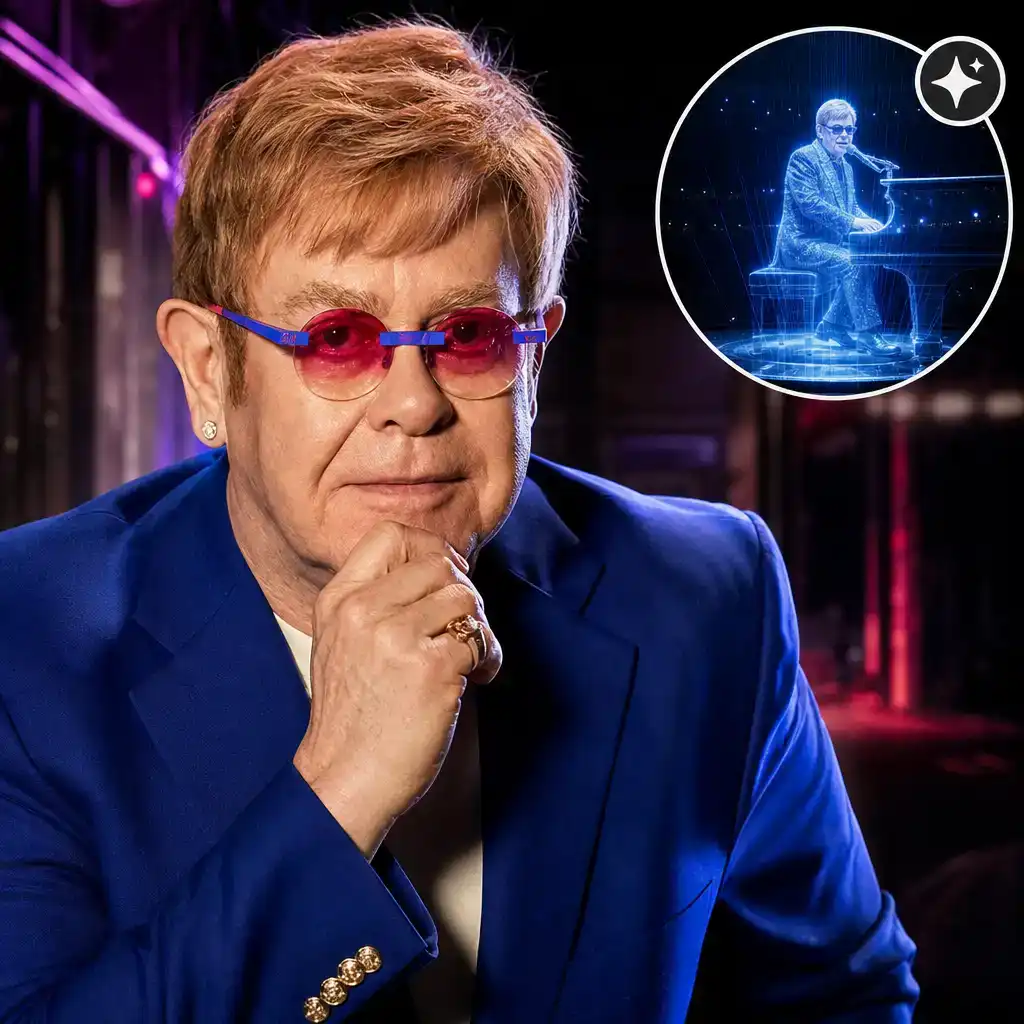
Elton is expected to film performances later this year at Pinewood Studios before those recordings are transformed into a realistic hologram for the residency.
He may not be the only familiar face on the digital stage. Dua Lipa, who collaborated with him on the 2021 hit Cold Heart, is also expected to appear as a hologram. Kiki Dee, Elton’s longtime collaborator on Don’t Go Breaking My Heart, is reportedly set to feature too, nearly 50 years after that duet was released.
How much is Elton John reportedly being paid?
A source told The Sun that Elton had signed a seven-figure deal with Hard Rock for the project.
“Elton, Dua and Kiki will be holograms. It’s similar to the ABBA Voyage show in London, but far more advanced as the technology has come on so much,” the source said.
The insider added: “Elton signed a seven-figure deal with Hard Rock. It’s a shift away from a traditional residency and is billed as a fully immersive experience.
“It’s going to look phenomenal.”
If accurate, the deal would place Elton among the most prominent living artists to embrace a concert format that once sat closer to science fiction than standard entertainment planning. Las Vegas, of course, has never been shy about spectacle. Subtlety was not expected to be harmed in the making of this residency.
Why the reported deal is surprising
The project would mark a notable turn for Elton, who officially retired from touring in 2023 after completing his record-breaking Farewell Yellow Brick Road tour.
He has still appeared at occasional one-off performances, but he has become more selective about live work. That shift has been especially understandable after he revealed he had been left with severely limited vision following an eye infection.
The emotional weight here is not just about technology. Elton’s farewell tour was framed as a real goodbye to the road, a chance for fans to see him close that chapter on his own terms. A hologram show changes the shape of that farewell, even if the man himself is not physically commuting to Las Vegas in sequins and sunglasses.
It also appears to conflict with comments he made when hologram concerts still felt like a novelty act rather than a business model.
What Elton John said about holograms in 2018
In his 2018 NME interview, Elton said the thought of a digital version of himself touring after his death made him deeply uneasy.
“When Daddy dies,” he recalled telling Zachary, “promise me there won’t be a hologram going around the world doing concerts.”
He compared the idea to posthumous duet albums involving artists who are no longer alive, saying: “It’s like doing a duet album with someone who’s dead – it’s so spooky.”
Then he put it more bluntly.
“Who knows – they may go broke and then put me back on the f***ing stage, but I think that’s a bit freaky.”
At the time, hologram performances were largely associated with digital recreations of deceased artists, including Tupac Shakur. Since then, the field has changed quickly.
Why hologram concerts are becoming big business
ABBA Voyage has helped make the format feel less like a strange revival trick and more like a premium live entertainment product. Audiences have proved willing to pay for digital versions of beloved performers, especially when the production is polished enough to feel like an event rather than a screen saver with ambition.
For artists, the appeal is obvious:
- They can extend a stage career without the physical demands of touring.
- Fans can experience a show built around classic performances and high-end visuals.
- Venues get a long-running attraction that does not depend on nightly live appearances.
For audiences, the calculation is more emotional. A hologram cannot replace the shared charge of seeing an artist in the room. But if the alternative is never seeing those songs staged again, many fans may decide the digital version is close enough to matter.
Representatives for Elton John have been contacted for comment.