From Yorkshire to the centre of 1960s art
Hockney was born in 1937 in west Yorkshire, in northern England. He studied at Bradford School of Art before moving on to the Royal College of Art in London, where he graduated with a Gold Medal distinction.
His early life also placed him outside the expected path of post-war Britain. He was a conscientious objector and completed military service as a hospital orderly. He also understood early that he was gay and that he wanted to be an artist, two facts that shaped a life spent refusing the duller forms of convention.
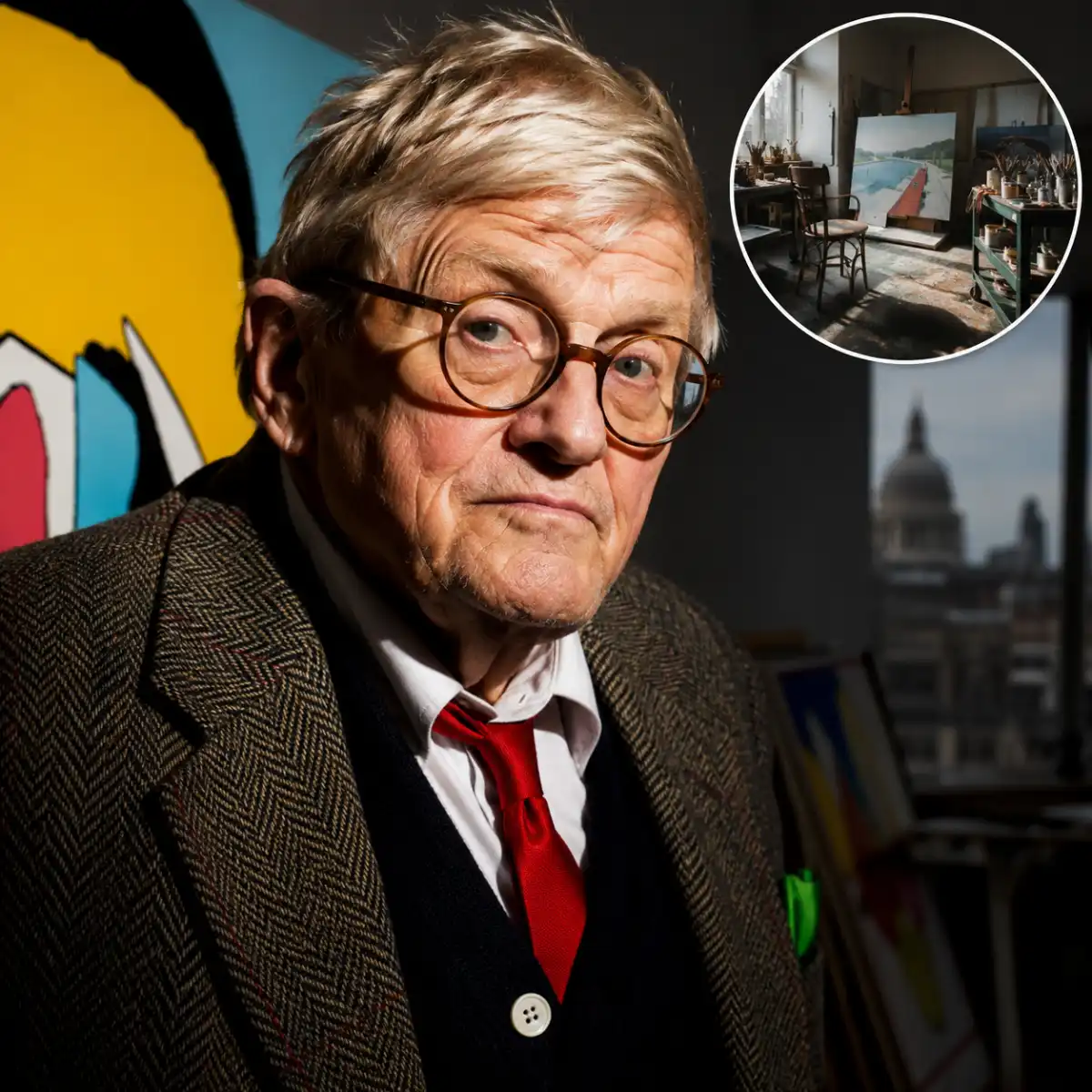
By the time he was still under 30, Hockney had become a familiar presence in British and American art circles. His round glasses and bleached-blond hair made him visually memorable, but the paintings did more of the heavy lifting.
The pools, the light, and the record sale
Hockney moved to California in 1964, and the state’s sharp light, relaxed surfaces, and swimming pools became central to some of his most famous work. His paintings often turned water, glass, and bodies into clean arrangements of pattern and colour, using flattened forms and matte acrylic paint to build scenes that felt both precise and dreamlike.
He also returned to the landscapes of his native Yorkshire, showing the same appetite for colour and structure in rural England that he brought to Los Angeles poolsides. The range was part of the point: Hockney could make a sunlit modern house and a country lane feel equally deliberate.
In 2018, his 1972 painting Portrait of an Artist (Pool with Two Figures) sold in New York for $90.3m. At the time, it set a new auction record for a living artist. Jeff Koons overtook that mark a year later with Rabbit, because the art market has its own very expensive sporting events.
He kept experimenting until the end
Hockney’s late career was not a tidy slide into legacy mode. He kept making and showing new work, and he embraced modern technology as it appeared.
According to a National Portrait Gallery profile, he began using iPads when they first came out in 2010 and worked with developers on custom-made apps. For an artist long interested in perspective, reproduction, and the mechanics of seeing, the tablet was not a gimmick. It was another surface.
That willingness to move between tools helped keep Hockney visible across generations. He was famous enough to belong to art history, but still active enough to avoid becoming only a chapter heading.
Who survives David Hockney
Hockney is survived by his longtime partner Jean-Pierre Goncalves de Lima; his great-nephew and studio assistant Richard Hockney; his brothers Philip and John; and many nieces, nephews, great-nieces, and great-nephews.
His death closes a career that stretched from post-war Britain to the digital studio, with plenty of California blue in between. Few artists made looking at the world feel so studied, so bright, and so deceptively simple.