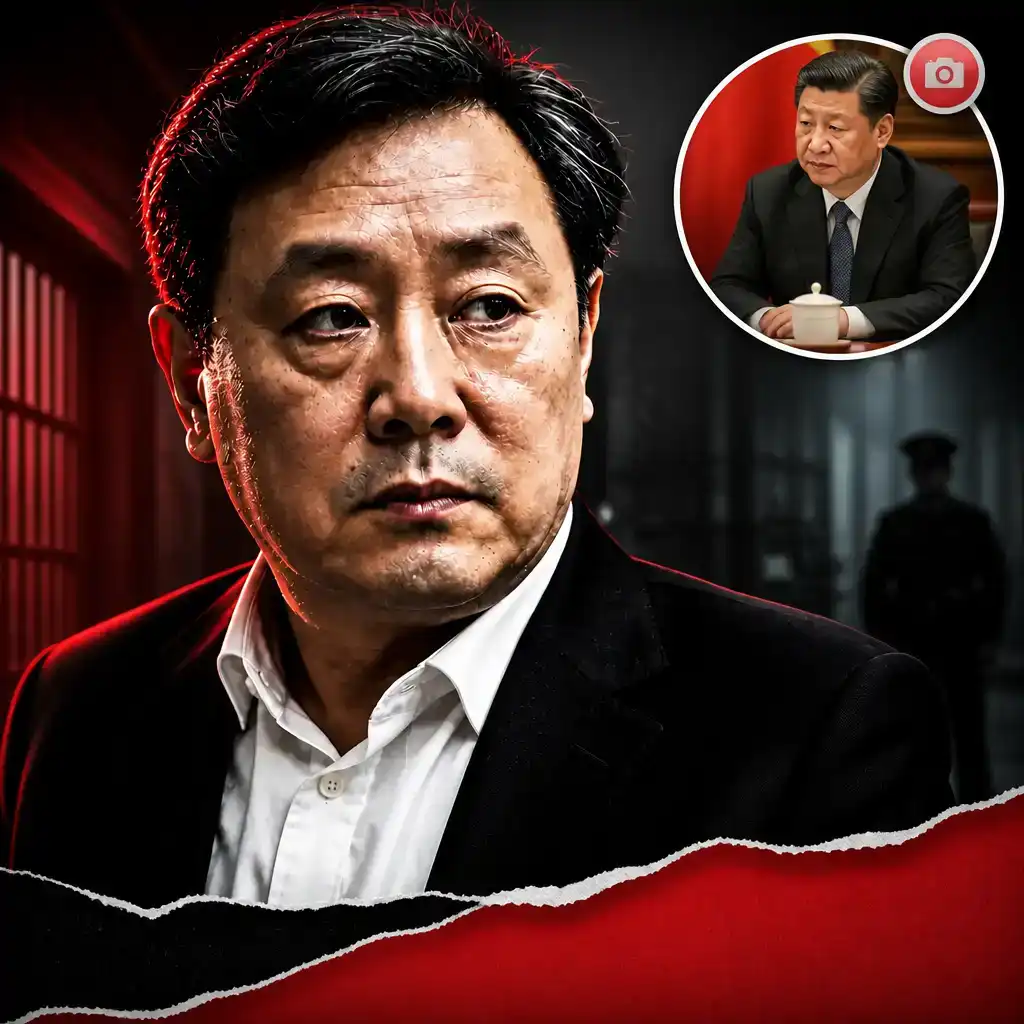
Yang was not convicted only of taking bribes. The court also found him guilty of embezzlement, offering bribes, misappropriation of public funds, abuse of power and money laundering.
Court officials released photos showing Yang in a dark jacket, standing between two uniformed police officers. The court said he gave a final statement in which he “expressed his guilt and remorse”.
Reuters said it could not reach Yang or his lawyer for comment.
How the case moved through court
Public hearings in Yang’s case were held over two days in March and April, according to the Changzhou court. More than 30 people attended.
The court said Yang’s personal property would be confiscated. The court also said authorities would try to recover the full amount he received in bribes — a tidy line for the much messier work of tracing three decades of illicit payments.
The ruling places Yang among the officials who have received China’s harshest criminal penalty for corruption. Death sentences in financial crime cases are rare, but they remain part of the state’s enforcement toolkit, especially when a case is framed as exceptionally serious.
Xi Jinping’s anti-corruption drive is the backdrop
Yang was investigated as part of President Xi Jinping’s long-running anti-corruption campaign. Since taking power, Xi has made the campaign central to political control and public messaging.
The official logic is straightforward: punish corruption, restore discipline and signal that even senior figures are not untouchable. Critics argue the campaign has also helped remove political rivals and tighten Xi’s grip over the party-state system.
Both things can be discussed at once. China’s corruption problem is real, and the political value of choosing who gets investigated is also real. Conveniently for those in power, anti-corruption campaigns also tend to look very good on camera.
Other officials have faced death sentences
Yang is the latest Chinese official to receive a death sentence for corruption in recent years.
In 2021, Lai Xiaomin, a party secretary at a state-owned company, was sentenced to death and executed after being convicted of accepting bribes, embezzlement and bigamy.
In 2024, Li Jianping, a local official in Inner Mongolia, was executed after being found guilty of embezzlement and bribery.
Another prominent case involved Zhang Zhongsheng, an official from Shanxi province. He was sentenced to death in 2018 for accepting more than 1 billion yuan in bribes. After an appeal, his punishment was changed in 2021 to a suspended death sentence and life imprisonment.
Yang’s sentence now adds another major case to the list, and another warning to officials inside China’s local governments: the state may tolerate many things slowly, but when it chooses to move, it can move with maximum force.