Why predictions will not appear during live hands
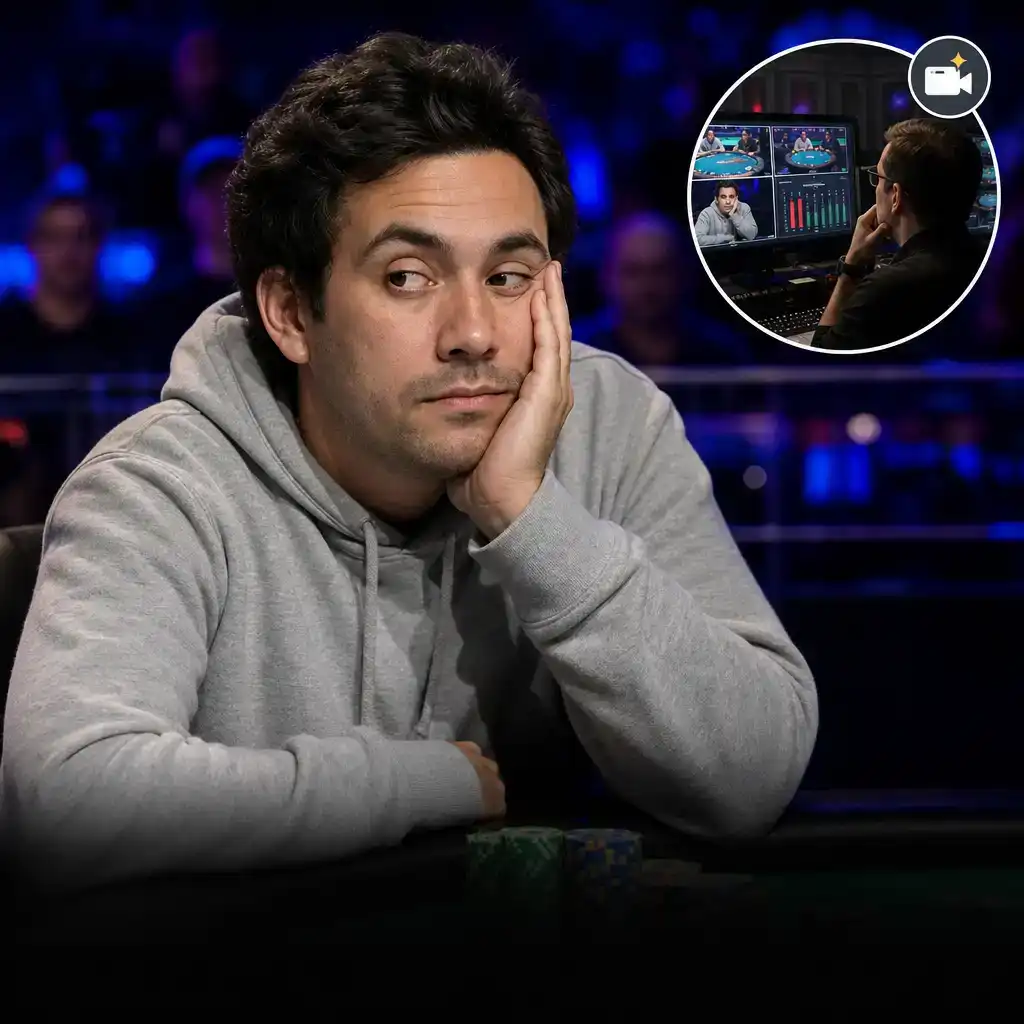
Omaha Productions said the AI tool will not make predictions while a hand is still in progress. Viewers will only see its analysis after a player has folded or has been knocked out of that hand.
That boundary matters. Showing a bluff estimate too early could influence the competition, especially in a game where information is the entire sport and sunglasses have somehow become equipment.
Dan Gati, head of content at Omaha Productions, said the goal is to recapture some of poker’s earlier television pull while also reflecting where the game is now.
“We’re trying to bring back some of what was great about the World Series during the Chris Moneymaker boom and some of what’s been great about poker in the last 5-to-10 years,” Gati said.
“A lot of people think that because poker is not on mainstream television, it’s not doing as well. Live poker is as robust as it’s ever been. And I think the next step is bringing it back to ESPN for the mainstream to see it again.”
Building the model was not as simple as uploading clips
Geel said the project turned out to be more difficult than he expected.
“It was significantly more difficult than I had initially hoped,” he said. “I can’t just, like, upload a YouTube URL and say, ‘find their tells.'”
That makes the feature interesting for viewers. Poker has always sold itself on the gap between what a player knows and what everyone else can infer. The AI adds another observer to that tension, one trained to notice patterns humans may miss, or at least patterns humans like to argue about loudly afterward.
Players are already thinking about scouting
Geel said several players have asked whether the system could be used beyond broadcasts. Some want to know if it could help scout future opponents. Others are curious whether it could identify their own unconscious habits at the table.
For now, Geel is not claiming the model can crack the best professionals. He said elite players, including someone like Daniel Negranu, have likely spent years removing obvious physical tells from their game.
“Some people have asked, ‘why don’t you run this on a top professional poker player, like Daniel Negreanu?’ He’s not going to have any tells. He’s probably worked hard to remove them. I just don’t see any reason to do that yet. Maybe in the future, when AI becomes even better.”
He also suggested later versions could become more advanced if broadcasts gain access to richer camera data. Future systems might be able to study signals such as heart rate or changes in skin color, assuming the technology is available and the players agree to that particular level of being watched.
For now, the feature is mainly a broadcast experiment: part entertainment, part analytics, and part reminder that the most famous poker face in the room may soon have a machine staring back at it.