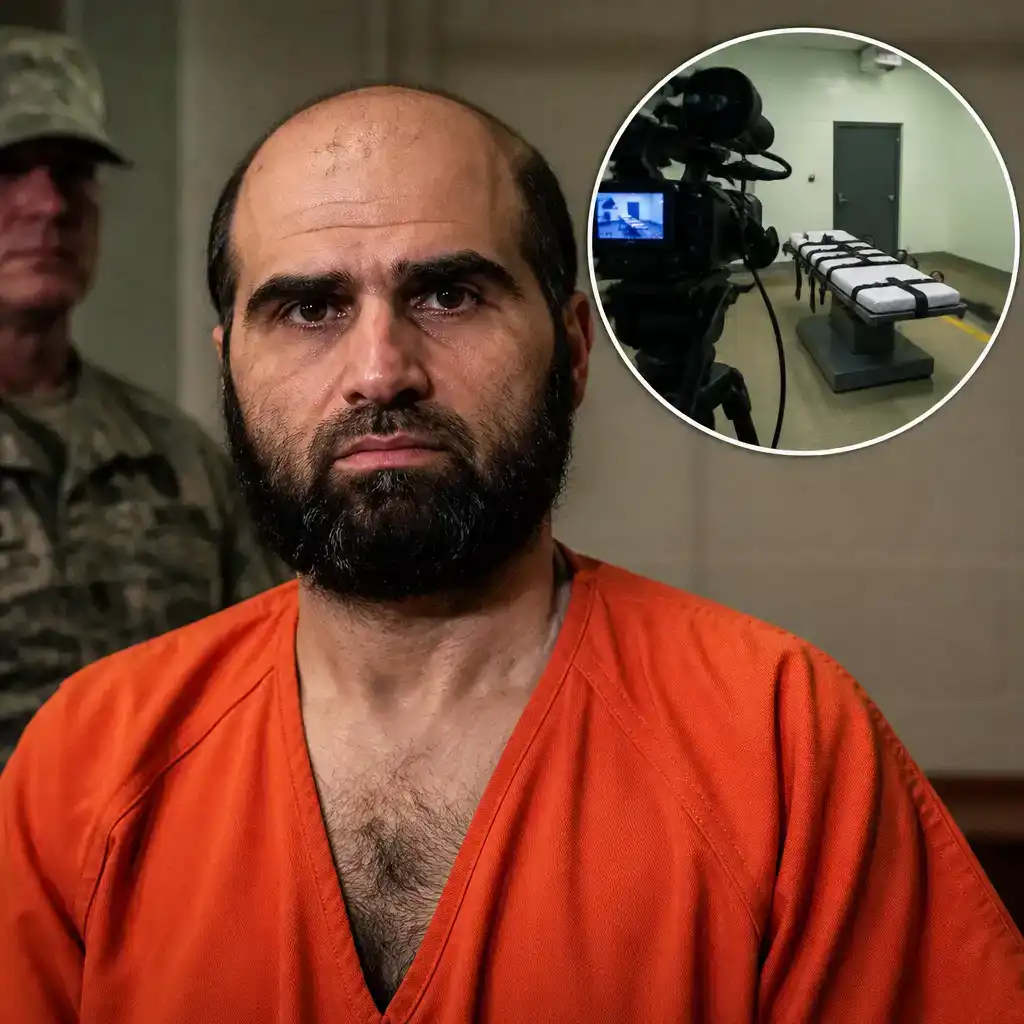
The proposed Nidal Hasan execution livestream is looking less certain after President Donald Trump reportedly developed reservations about broadcasting the convicted Fort Hood gunman’s death worldwide. The execution itself remains scheduled for December 3, but the administration appears to be reconsidering whether it also needs to become online programming.
Hasan, a former United States Army major, was convicted of killing 13 people and wounding 32 at Fort Hood in Texas. A military jury found him guilty on all 42 counts in 2013 and sentenced him to death.
Why is Trump reconsidering the broadcast?
Secretary of Defense Pete Hegseth announced the public livestream plan, and Trump initially appeared fully supportive. Asked whether he approved, the president replied: “Absolutely, I approve.”
He later said he had not participated in the decision and would make the final call. Axios reported on October 12 that Trump had since received extensive negative feedback from Republican and Democratic lawmakers, advisers and others. He reportedly told one confidant the livestream “might not happen.”
Vice President JD Vance has also said he doubts the broadcast will proceed.
The change does not affect the punishment already authorized. According to the Army, Trump approved Hasan’s death sentence on October 2. Acting Secretary of the Army Adam Telle then scheduled the execution for 1 p.m. Central time on December 3 at Fort Hood.
The United States Supreme Court declined to review Hasan’s case on March 31, 2025, clearing an important legal obstacle. Another may still appear, because Hasan could file a federal habeas corpus petition. Legal experts told the Associated Press that such a challenge could delay the execution substantially.
What are officials saying about the risks?
Department of Homeland Security Secretary Markwayne Mullin defended the broadcast during an appearance on CBS’s Face the Nation. He rejected warnings that it could turn Hasan into a martyr or provide material for extremist propaganda.
“I don’t see an elevated risk,” Mullin said. “I think people need to understand that if you attack America, we will come after you, and we will make sure that the punishment fits the crime.”
Mullin said officials had considered the security concerns but remained unmoved by them.
“[Hasan] killed 13 individuals on Fort Hood,” he told host Margaret Brennan. “I have no sympathy for him, and I give absolutely zero thought to the way that this man dies.”
That position has not persuaded critics in either party. Republican Senator Lisa Murkowski of Alaska called the proposal “gruesome” and said a televised execution was something she would expect “from terrorists and dictators, but not here in America.”
She argued that broadcasting Hasan’s death could give him “the martyrdom he seeks,” adding that “how we carry out justice matters just as much as the justice itself.”
Democratic Senator Mark Warner of Virginia warned that the stream could become a recruiting tool. He said it might “hand terrorist organizations a propaganda victory, fuel radicalization, and put American service members, diplomats, and citizens overseas at greater risk.”
What do Fort Hood survivors want?
The dispute is not simply between supporters and opponents of capital punishment. It also separates the right of victims and survivors to witness the sentence from unrestricted public access to the killing.
Alonzo Lunsford, who was shot seven times during Hasan’s attack, told ABC News that he wants to attend the execution and “lock eyes” with Hasan. He opposes offering the same view to anyone with an internet connection, however, because he fears the event would become a “spectacle.”
That distinction matters. Military authorities can provide controlled access to survivors and victims’ families without broadcasting the proceedings across the world, where recordings could be copied, edited and redistributed indefinitely.
Retired Admiral William McRaven also objected to the plan. Writing in The Atlantic, he argued that a public broadcast would place the United States alongside governments such as Iran and Afghanistan. Amnesty International recorded 17 public executions in those countries during 2025.
Fordham University law professor Deborah Denno offered a different view. She told the Associated Press that broadcasting an execution could improve transparency around capital punishment, allowing the public to see what the government does in its name rather than relying on an official account afterward.
Has the military ever broadcast an execution?
Army regulations govern who may witness military executions, but they do not address worldwide broadcasting. The rules also prohibit anyone under 18 from attending, creating further questions about how an unrestricted stream would comply with existing limits.
If carried out, Hasan’s sentence would be the first United States military execution since Army Private John Bennett was hanged in 1961. It would also be the military’s first execution by firing squad since World War II.
A global broadcast would go further still. It would effectively become the first public execution in the United States in nearly a century, although delivered through screens rather than a physical crowd. Technology has changed the seating arrangements, if not the underlying issue.
For now, the Army is preparing for the December 3 execution while the White House considers whether the public should be allowed to watch. Hasan’s legal options could alter the timetable, and Trump’s final decision could reduce the audience from potentially millions to a tightly controlled group of witnesses.