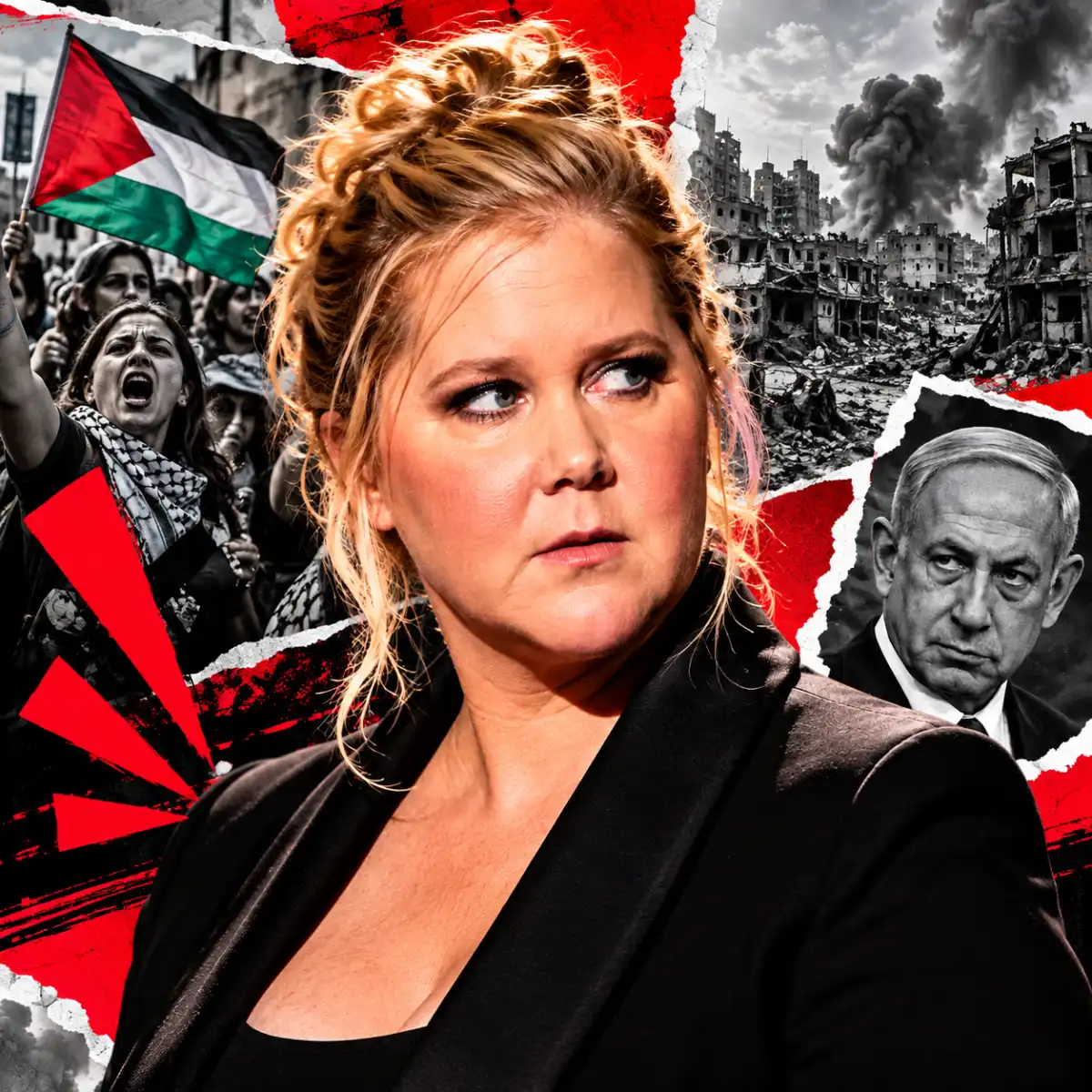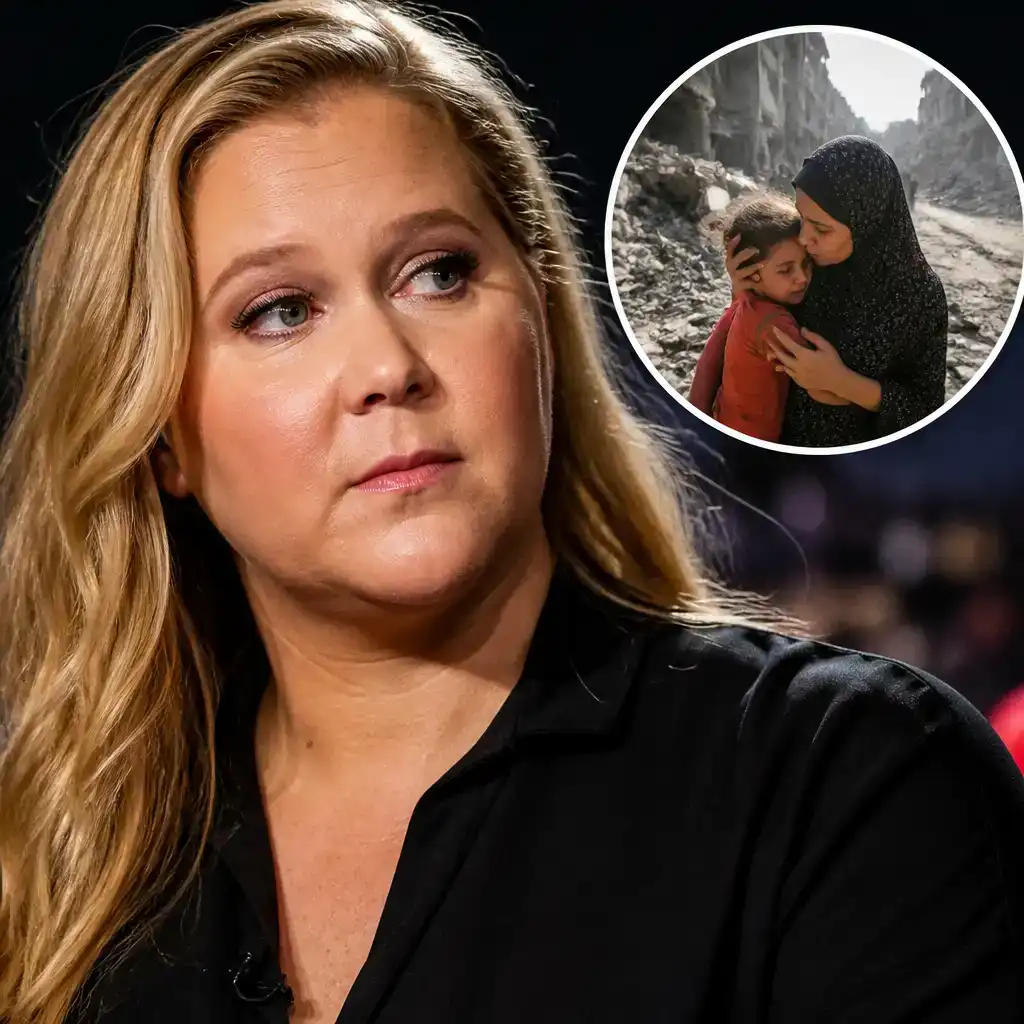
Amy Schumer has directly addressed the backlash over her comments on the Israel-Hamas conflict, condemning the humanitarian crisis in Gaza and distancing herself from Israeli Prime Minister Benjamin Netanyahu.
The comedian and actress, best known for films including Trainwreck and I Feel Pretty, has faced fierce criticism over her social media commentary on the conflict. Now, in an interview with Variety, she has made her position on the suffering in Gaza unmistakably clear.
“What’s going on in Gaza is sickening, horrifying and unacceptable,” Schumer said.
Her remarks come with another revealing admission: public confrontations over her political views have become so routine that being shouted at while working on set barely registers anymore.
Amy Schumer condemns the crisis in Gaza and distances herself from Netanyahu
Schumer's comments to Variety address one of the central controversies surrounding her public statements on the conflict: how her views on Israel relate to her position on the humanitarian suffering in Gaza.
In the interview, she explicitly rejected the actions of Israeli Prime Minister Benjamin Netanyahu, making clear that her views should not be interpreted as an endorsement of his leadership.
“I don’t agree with anything that Netanyahu is doing, and neither do the Israelis I know,” she said.
The distinction is central to her latest remarks. Schumer is separating her position on the conflict from support for the Israeli government's decisions, while emphasizing her opposition to the situation unfolding in Gaza.
Her statement also challenges the idea that criticism of Netanyahu and concern for Israel must necessarily be opposing positions. At least in Schumer's account, the Israelis she knows do not support the prime minister's actions either.
That is her description of their views, rather than evidence of wider Israeli public opinion. Nevertheless, it provides important context for understanding the position she is now presenting.
Why Schumer's comments on Israel and Gaza sparked a backlash
Schumer's social media commentary about the Israel-Hamas conflict has placed her at the centre of an increasingly heated public debate.
Her remarks have attracted substantial criticism, turning her political statements into a source of controversy beyond her work as an entertainer.
The backlash illustrates a difficult reality for public figures discussing the conflict: audiences may interpret statements about Israel, Hamas, Israeli leadership and Palestinian suffering as expressions of a single political position, even when the speaker intends to distinguish between them.
Schumer's latest interview attempts to clarify precisely those distinctions.
Her condemnation of the situation in Gaza is direct, and her criticism of Netanyahu leaves little ambiguity about her stated opposition to his actions.
However, the comments do not establish that she has reversed every position expressed in her earlier social media posts. The information available does not identify which previous statements she might now reconsider, if any.
That distinction matters when evaluating whether the interview represents a change of opinion or a clarification of views that have already attracted criticism.
Schumer says strangers regularly shout at her while she is filming
Beyond the political controversy, Schumer described how the reaction to her comments has spilled into her everyday professional life.
According to the actress, pedestrians frequently shout at her while she is working on set, confronting her over her views on the conflict.
She suggested that these encounters have become so familiar that they no longer produce much of a physical reaction. Being shouted at, she told Variety, does not even raise her heart rate anymore.
It is an unusually matter-of-fact description of public hostility, particularly from someone whose career has been built partly on confronting uncomfortable subjects through comedy.
The comments suggest that Schumer has grown accustomed to facing criticism in person rather than exclusively through social media.
They also reveal how a controversy originating in online political commentary can follow a celebrity into an entirely different environment, including a film set.
Schumer did not, in the information provided, identify particular confrontations or describe threats associated with these encounters. Her account establishes that she experiences frequent verbal criticism, not that every confrontation has involved the same behaviour or level of hostility.
Why her latest statements may not end the controversy
Schumer's interview raises a broader question about what audiences expect from celebrities who publicly engage with politically divisive issues.
Her condemnation of the humanitarian situation in Gaza is explicit. So is her rejection of Netanyahu's actions. Yet neither statement automatically resolves the criticism surrounding her previous online commentary.
Those who objected to her earlier remarks may want a more detailed explanation of those statements, while others may regard her latest comments as sufficient clarification.
Both reactions are possible, but the available information does not establish how her critics have responded to this particular interview.
In my view, the most important aspect of Schumer's remarks is her willingness to distinguish between concern for people affected by the conflict and approval of a government's conduct. That distinction deserves to be assessed on its own terms. At the same time, a clear condemnation of suffering does not necessarily answer every criticism of someone's previous statements. Judging whether Schumer has meaningfully changed her position would require examining those earlier comments alongside what she has now said.
For a public figure facing intense scrutiny, that may be the more difficult part of the conversation. Clarifying a position is one thing; persuading an audience that has already formed an opinion is another.
What Schumer's interview leaves unanswered
The Variety interview provides Schumer's clearest position in the material available on two issues: the humanitarian crisis in Gaza and her opposition to Netanyahu's actions.
It also offers a glimpse of the personal consequences she says she has experienced as a result of speaking publicly about the conflict.
What remains unresolved is how these statements relate to the specific social media comments that generated the backlash in the first place. Without a fuller examination of those posts, it would be premature to describe her interview as a comprehensive reversal or apology.
Schumer has nevertheless placed two statements firmly on the record: she considers the situation in Gaza unacceptable, and she rejects the conduct of Israel's prime minister.
Whether those remarks change the public conversation surrounding her is uncertain. For Schumer, meanwhile, the controversy has already become familiar enough that strangers shouting at her on set are apparently just another part of the working day.