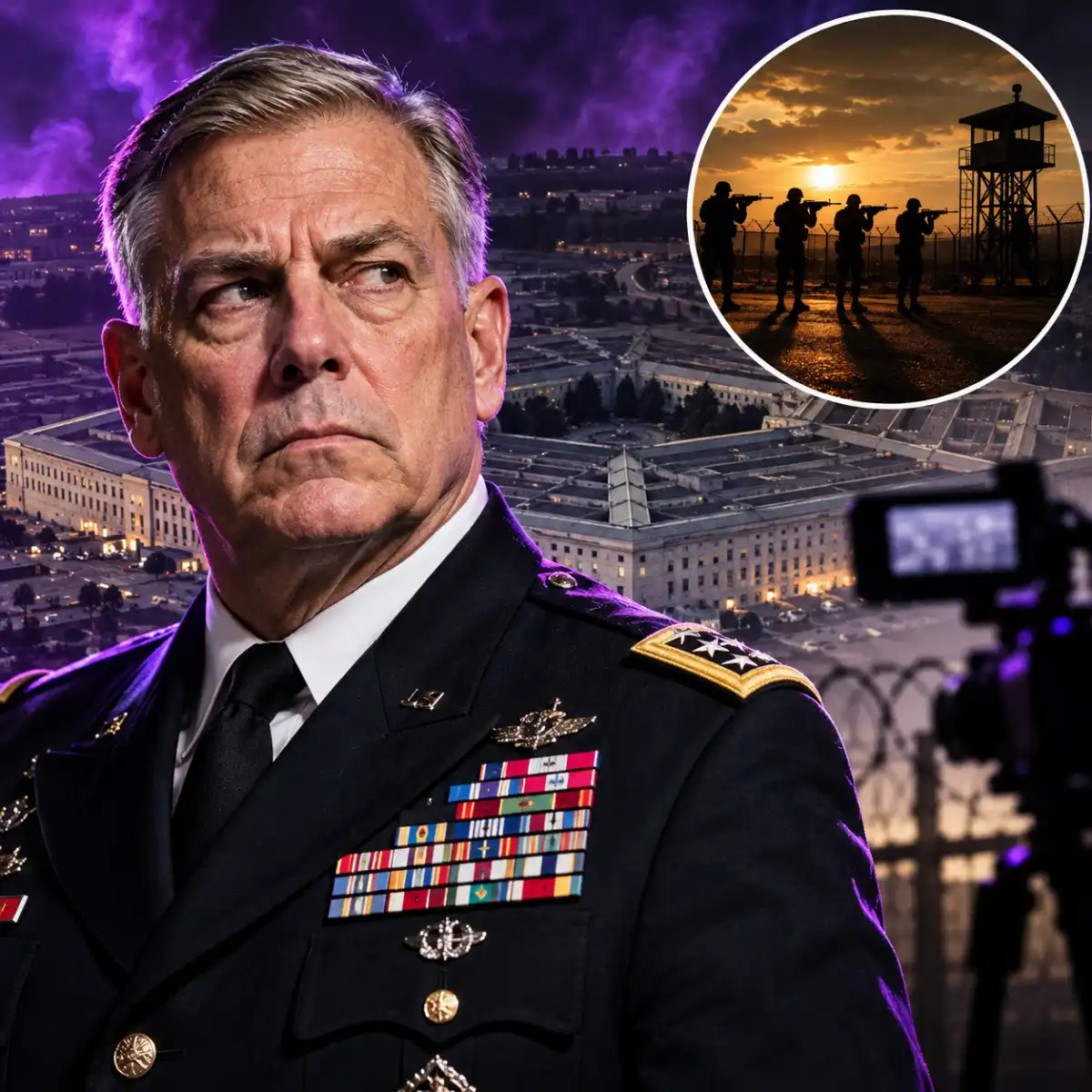
The Pentagon is facing questions over claims that military officials have considered livestreaming firing squad executions at Fort Hood, a controversial idea that would raise serious concerns about military justice, public accountability and the limits of government transparency.
According to information referencing reporting by The Guardian, the alleged proposal has attracted criticism over the prospect of broadcasting military executions to the public. However, no official policy document or attributable Pentagon statement has been provided to establish that such a plan is under active consideration.
That distinction matters. The prospect of publicly broadcasting an execution is controversial enough. Establishing whether the US military has actually proposed doing so is another matter entirely.
What is the Pentagon accused of considering?
The allegations centre on the possibility of allowing firing squad executions to be livestreamed from Fort Hood, the major US Army installation in Texas.
The reported idea would represent a striking departure from the conventional understanding of public oversight in capital punishment, potentially making executions accessible to audiences far beyond authorised witnesses.
Yet several fundamental details remain unclear, including who allegedly proposed the measure, whether military lawyers have examined it and whether any formal recommendation has reached Pentagon leadership.
There is also no verified information identifying a particular execution, condemned prisoner or scheduled broadcast connected to the claims.
Without those details, the alleged proposal cannot be treated as an established Pentagon policy or an imminent change to military justice procedures.
Why livestreaming executions would spark legal and ethical concerns
Capital punishment within the US military operates under a distinct legal framework, with procedural safeguards, judicial review and requirements that differ from those governing civilian criminal cases.
Introducing livestreamed executions would create a separate set of questions concerning privacy, human dignity, public access and the purpose of allowing people to witness state-administered punishment.
There is an important difference between permitting designated witnesses to observe an execution and making the event available to an unrestricted online audience.
The former can serve an oversight function. The latter could transform a solemn exercise of government authority into widely distributed public content.
Any proposal would also need to address the interests of victims' families, the rights of condemned individuals and the legal authority under which such broadcasts could be permitted.
Whether livestreaming would violate specific legal protections would depend on the details of the proposed policy and the applicable law. Those details have not been established in the information currently available.
Political backlash claims need further verification
The account describes objections from lawmakers, defence officials and international legal observers, suggesting that the alleged proposal has generated considerable political pressure.
However, it does not identify the politicians involved, reproduce their statements or provide documentation of formal objections.
Nor does it establish which international organisations have examined the issue or what conclusions they may have reached.
References to The Guardian have also been made without a specific article or publication date, preventing the underlying reporting from being independently assessed using the supplied information.
These gaps do not establish that the allegations are false, but they prevent claims of widespread political condemnation from being presented as confirmed fact.
Would public executions really make military justice more transparent?
The broader debate concerns whether greater visibility necessarily produces greater accountability.
There are legitimate arguments for ensuring that the public can scrutinise how governments exercise their most severe powers, particularly when the death penalty is involved.
But transparency can take many forms, including independent observation, public judicial records, detailed reporting and scrutiny by legal institutions.
Broadcasting the final moments of a condemned person's life is a considerably different proposition.
In my view, livestreaming executions would be extremely difficult to defend as a necessary instrument of public accountability. Governments should be transparent about the decisions they make and the punishments they administer, but turning an execution into an event accessible to an unlimited audience risks crossing the line between oversight and spectacle. That judgement concerns the principle itself, rather than an assumption that the Pentagon has approved or even formally considered the alleged proposal.
Greater visibility is not automatically the same as greater justice. Sometimes the most meaningful scrutiny takes place long before a sentence is carried out.
What happens next for the Pentagon?
The most pressing issue is whether an authentic policy proposal exists.
Clarification from Pentagon officials would be necessary to determine whether military authorities have discussed livestreaming executions, whether any written proposals have been prepared and whether the matter has undergone legal review.
It would also be important to establish whether the claims concern a hypothetical discussion, an informal suggestion or an actual attempt to change military procedures.
At present, the supplied information does not establish that the Pentagon has authorised livestreamed firing squad executions at Fort Hood or that any such broadcasts are scheduled.
Until official documentation or independently verifiable reporting provides further evidence, the alleged proposal remains unconfirmed.
The questions it raises about capital punishment and government accountability deserve serious examination. But the first responsibility is to establish whether the extraordinary policy being discussed exists at all.