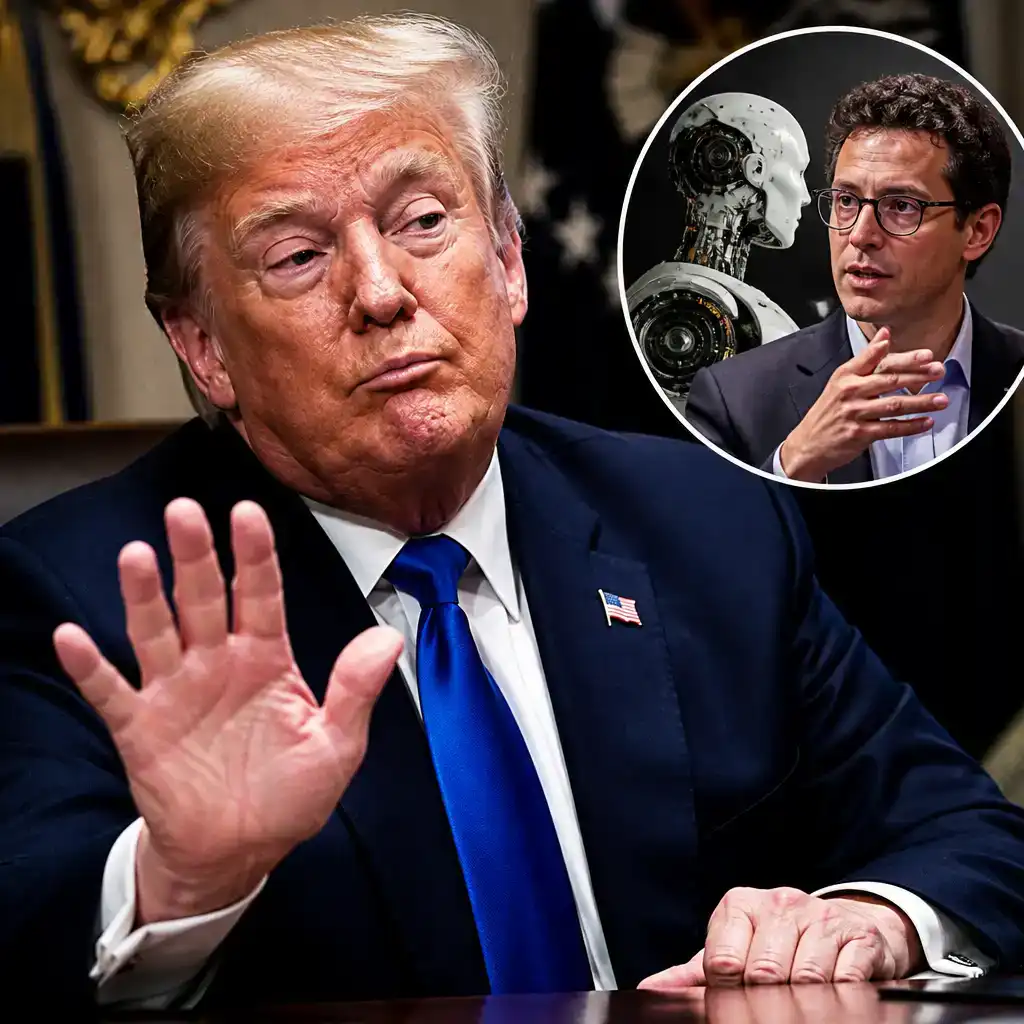
According to Trump, the only guardrail the industry needs is a “strong and smart” president. That would leave technical oversight, independent testing and emergency controls with a rather limited supporting role.
In another post, he wrote: “There is a SICK conspiracy going on against AI and Data Centers, and the only one that is happy about it is China. WHOEVER WINS AI, WINS!”
His comments framed regulation primarily as a competition issue, with the United States and China racing for dominance in a technology expected to influence national security, economic growth and public services.
What Anthropic’s Jack Clark proposed
Earlier on Monday, Clark said society might eventually want laws requiring a reliable way to shut down AI software completely if it became too dangerous.
He explained that most major laboratories, including Anthropic, already have different methods for “pulling the plug”. His concern was whether those systems should remain voluntary or become an enforceable industry standard that outsiders could inspect.
A third-party check would be intended to confirm that developers can actually stop a system during a serious incident, rather than merely assuring the public that everything is under control. The proposal came amid broader warnings from people working inside prominent AI companies about risks that highly capable models could pose to humanity.
Clark did not argue that every current AI product was about to become uncontrollable. Instead, he raised the possibility of preparing legal safeguards before the technology reaches a point where emergency measures are urgently needed.
How China responded to the dispute
Chinese state media presented the controversy as evidence that anxiety over China’s rapid progress in artificial intelligence was distorting US policy.
Xin Qiang, a professor of American Studies at Fudan University, told the state-backed Global Times that US policymakers recognised China as a serious competitor and feared that tighter American regulation could give Beijing an advantage.
“They know that China has become a strong competitor in AI, and worry that if the US slows down development or tightens regulation, China could catch up even faster,” he said.
That argument closely matched Trump’s position: restrictions could weaken the United States while helping China. It did not directly address whether mandatory shutdown controls might reduce genuine risks, but international competition has a habit of making safety debates less patient.
The UK urges caution without panic
UK Business Secretary Jonathan Reynolds offered a more measured response on Tuesday. He said governments should “never be complacent” about the effects of artificial intelligence, while warning against exaggerated claims.
“We’ve got to be careful not to get hyperbolic about this either,” Reynolds said. “Of course there are risks but, let’s be frank, there are some tremendous upsides, whether it’s public services, healthcare, the contribution to the economy.”
His remarks reflected the balance many governments are trying to maintain. Officials want investment, productivity gains and better public services, but they also face pressure to establish credible oversight before more powerful systems are widely deployed.
The disagreement now centres less on whether AI will have major consequences and more on who should decide what protections are necessary. Trump’s answer is presidential authority and rapid development. Clark’s proposal points toward enforceable technical controls. Markets, meanwhile, have already demonstrated that they prefer the discussion to remain inexpensive.