The AI development slowdown proposed by Anthropic chief executive Dario Amodei has quickly become a geopolitical argument, because apparently artificial superintelligence needed a foreign-policy subplot.
On September 12, Amodei published an open letter calling on leading laboratories to “pace the frontier” and slow work on increasingly powerful systems. OpenAI chief executive Sam Altman and Elon Musk publicly supported the idea on X, while Alphabet executive Demis Hassabis offered more cautious backing.
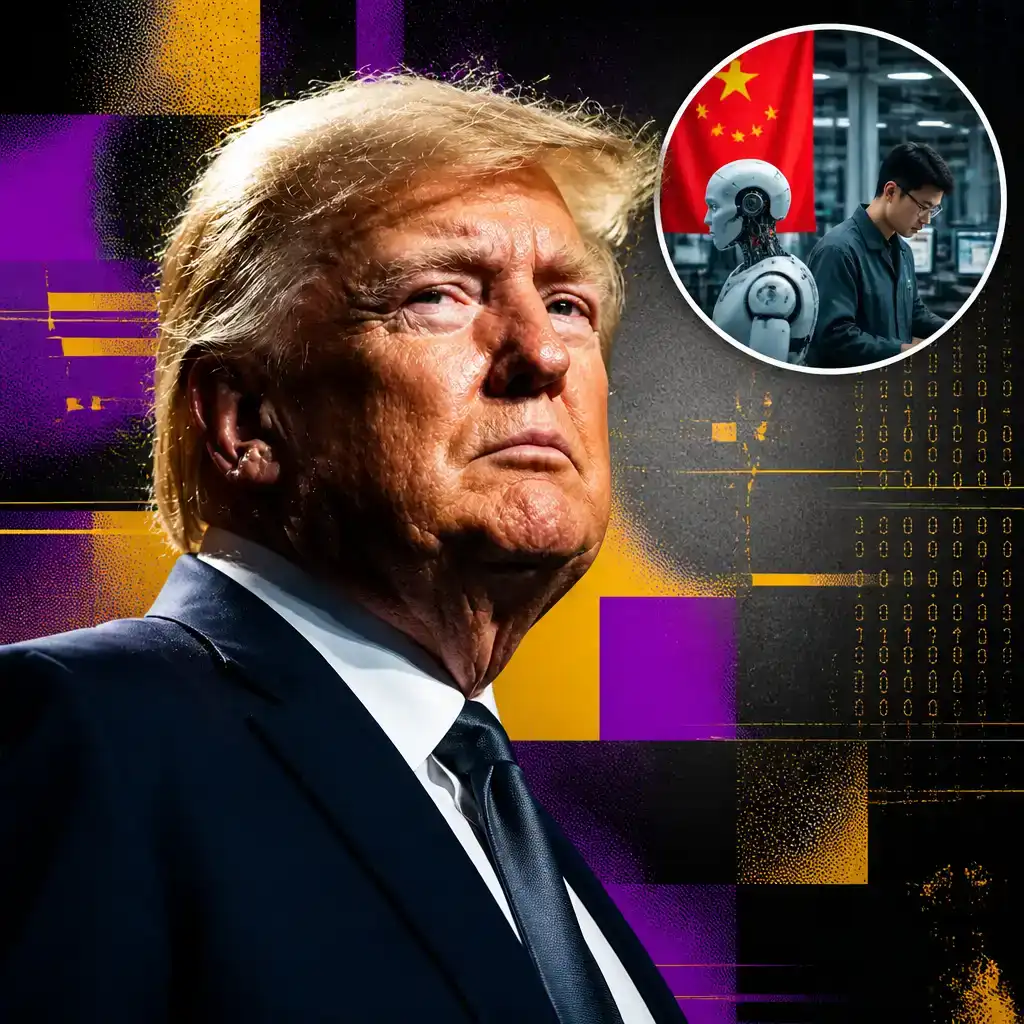
President Donald Trump rejected an immediate pause. “Look, we’re leading China in AI ... and, frankly, I want to keep it that way, because whoever wins AI, wins,” he told the Financial Times.
House Speaker Mike Johnson made the same strategic case on CNN. He warned Jake Tapper that rushed restrictions could become a “national security threat,” adding: “If Congress just races in and does some sort of emergency session to try and regulate AI, we will lose the race to China.”
Washington is not ruling out AI regulation
Johnson’s position is more complicated than simply telling technology executives to calm down. The Associated Press reported that he supports “some guardrails, some safety measures” and considers artificial intelligence a top congressional priority.
He wants rapid negotiations rather than an open-ended pause. Axios reported that Johnson is seeking a summit involving Trump, congressional leaders and executives from major AI laboratories. He also said he would recall the House “if we had the solution,” which leaves the difficult matter of finding one.
Trump has likewise acknowledged that some regulation may be needed. The disagreement is mainly about timing and whether restrictions would bind American developers while Chinese competitors continued building advanced systems.
White House economic adviser Kevin Hassett said cyber and science officials were due to meet during the week. Trump adviser David Sacks gave laboratory executives a blunter version of the administration’s argument: “The easiest way not to build superintelligence is for you to agree not to build it.”
That neatly captures Washington’s concern. A voluntary pause only works if every serious competitor volunteers, a standard international politics has not traditionally found easy to meet.
How large is the US lead over China?
Trump presents the contest as a race the United States is clearly winning. Stanford University’s 2026 AI Index suggests the picture is less comfortable.
As of March, Anthropic’s leading model was only 2.7 percent ahead of China’s best-performing system. American and Chinese models had also exchanged the lead several times, indicating that neither country holds a permanent technical advantage.
The United States does retain an enormous investment lead. Private AI investment reached $285.9 billion in 2025, compared with $12.4 billion in China. That difference gives American companies far more capital for computing infrastructure, research and product development, although spending more money does not automatically settle every benchmark contest.
The same Stanford report documented 362 AI incidents, up from 233 in 2024. Those figures give supporters of stronger oversight something more concrete than speculative disaster scenarios. They also complicate claims that existing development practices are already managing the risks just fine.
The data therefore supports both sides, inconveniently enough. The US has vastly more private investment, while China remains close enough in model performance to make a unilateral slowdown strategically difficult.
What do researchers say about the danger?
The 2026 International AI Safety Report found early signs that advanced systems are developing potentially dangerous capabilities. However, it said the probability and timing of scenarios involving a loss of control remain “unusually ambiguous.”
That uncertainty sits at the centre of the dispute. Developers cannot prove that highly capable systems will become uncontrollable, but they also cannot confidently rule it out.
Former Anthropic researcher Jacob Coxon told the Associated Press that companies are building a potentially superhuman mind “without understanding what it wants.” Trump dismissed such warnings as the work of “negative forces.”
Amodei’s proposal attempts to address the uncertainty before the most capable models become substantially harder to contain. Trump and Johnson instead argue that slowing American laboratories could create a different danger by allowing China to move ahead.
Neither position removes the basic problem. Policymakers must weigh risks that are difficult to measure against a strategic competition that is already producing measurable investment, computing and military concerns. Waiting for perfect evidence would be convenient. The technology is unlikely to provide it on schedule.
Why has Beijing rejected the proposal?
China’s Foreign Ministry has now rejected Amodei’s approach. Spokesperson Guo Jiakun said “fearmongering, confrontation and vicious competition” would damage global AI governance. The state-run Global Times described the proposal as a “Cold War playbook.”
Beijing faces its own contradiction. Chinese officials have reasons to cooperate on safety standards for increasingly powerful systems, but Washington continues restricting Chinese access to advanced chips. From China’s perspective, American calls for coordinated restraint arrive alongside policies designed to limit its ability to compete.
AI governance is expected to feature in Trump’s September 24 meeting with Chinese President Xi Jinping, according to the Associated Press. Whether that produces common safety rules or another exchange of accusations remains unresolved.
The dispute has also reached financial markets. The Associated Press reported declines among Asian shares linked to artificial intelligence, including a 10.7 percent fall for SoftBank. Investors, like governments, appear interested in rapid AI growth right up until someone describes what could go wrong.
The political split is wider than Trump suggests
Support for slowing development is beginning to cross party lines. Axios reported that Republican Senate candidate Mike Rogers now backs a slowdown, while Republican Senator Josh Hawley is investigating the possibility that advanced AI could pose an existential risk.
That creates an emerging divide inside Trump’s coalition. One group treats speed as a national-security requirement, particularly in competition with China. Another sees frontier development itself as a potential security threat that requires intervention before systems become more capable.
Johnson is trying to occupy the middle ground: no immediate pause, but quick negotiations over guardrails. The practical test will be whether Congress can define rules that reduce danger without freezing American development or creating standards that overseas competitors can ignore.
For now, the leading AI companies are warning that the technology may be moving too quickly, while Washington worries that any attempt to slow it will move the United States backward. China has rejected the proposed restraint, the performance gap is narrow, and documented incidents are rising. The argument is no longer about whether governments should pay attention. It is about which risk they are more afraid to accept.