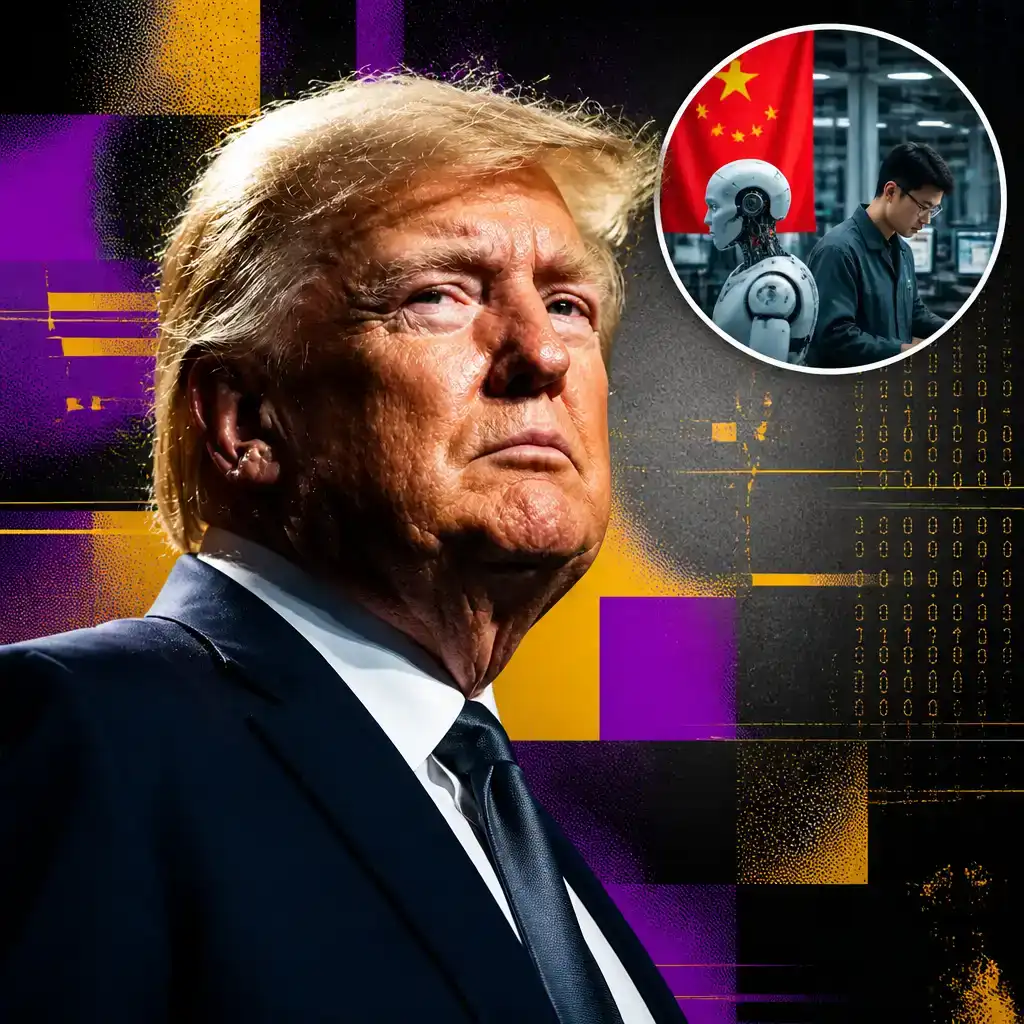
Alibaba Qwen3.8-Max arrived on August 3 with a blunt message for the AI industry: Chinese developers are no longer merely chasing the leading US laboratories. Alibaba says its newest model can compete with flagship systems from Anthropic and OpenAI while charging substantially less, putting pressure on both the technological lead and the business model of American providers.
The company described Qwen3.8-Max as its largest and “most capable AI model to date.” It made the system broadly available after previewing it in July, when Alibaba claimed the model ranked behind only Anthropic’s Fable 5.
The more consequential step is still to come. Alibaba said it would publish the model’s weights the following week, alongside a smaller Qwen3.8 27B model. That would give developers more freedom to inspect, adapt and run the technology than they receive from closed products offered by OpenAI and Anthropic.
How Qwen3.8-Max compares with leading AI models
Alibaba’s own benchmark results show Qwen3.8-Max broadly matching Fable 5 and occasionally beating it. Company testing should always be read with the modest caution usually reserved for a restaurant reviewing its own cooking, but independent rankings offered support for the central claim.
On August 3, the crowdsourced Arena.AI leaderboards placed Qwen3.8-Max:
- Fifth in the text arena
- Second in vision
- Fourth in frontend coding
In the text category, it trailed Fable 5 and three models from Anthropic’s Opus family. In frontend development, only two Claude Opus systems and Moonshot AI’s Kimi K3 ranked higher. Fable 5 was the only model ahead of it in visual analysis.
The result fits a broader pattern. Tom’s Hardware reported that Kimi K3 beat Claude Fable 5 on the Frontend Code Arena, adding evidence that Chinese systems are approaching, and in some tasks surpassing, US frontier performance.
Moonshot released Kimi K3 the previous week and said it received “far more love than we expected.” Demand became heavy enough for the company to suspend new subscriptions. ByteDance and MiniMax also released new video-generation models on July 31, keeping the pace of Chinese launches notably brisk.
Why price may matter more than parameter count
Qwen3.8-Max contains 2.4 trillion parameters, according to Alibaba. Parameters are numerical values learned during training that help a model recognize patterns and generate responses. The figure sounds enormous because it is, but total size is not a clean measure of quality or operating cost.
The model reportedly uses a mixture-of-experts architecture, activating about 95 billion parameters for each request rather than all 2.4 trillion. That design can reduce the computing power required to produce an answer.
Kimi K3 has 2.8 trillion parameters, while OpenAI and Anthropic do not disclose exact counts for their most advanced systems. Their secrecy makes direct comparisons difficult and reinforces why public evaluations, despite their imperfections, carry so much weight.
Pricing provides a clearer competitive test. Arena-linked reporting put Qwen3.8-Max at $2 per million input tokens and $6 per million output tokens. Kimi K3 reportedly costs $3 and $15, respectively. Anthropic’s published prices for Fable 5 are $10 for input and $50 for output.
If those performance rankings hold across real-world work, Alibaba is not simply offering another capable model. It is challenging US AI companies to explain why comparable output should cost several times more. That question is likely to interest developers even more than a leaderboard trophy.
What an open-weight release gives developers
Publishing model weights allows outside developers to download, customize and operate a system with far more control than a proprietary API permits. Open-weight AI is not necessarily open-source software in the traditional sense, since training data, code and licensing terms may remain restricted. Still, it provides substantially greater access than a closed model.
Qwen3.8-Max marks Alibaba’s return to advanced open-weight releases after the company briefly shifted toward proprietary distribution earlier in 2026. The approach has become common among Chinese AI companies. Moonshot published Kimi K3’s weights, while other major domestic developers have followed similar strategies.
Beijing has encouraged open releases as a way to expand the international use of Chinese technology and increase China’s influence over global AI standards and governance. A model that is inexpensive, competitive and adaptable can spread quickly among businesses and researchers that cannot afford premium US services.
There is also a practical security argument for access. Hugging Face reportedly relied on China’s open-weight GLM-5.2 while investigating and containing a rogue US closed-model agent because proprietary restrictions made defensive analysis more difficult. The episode highlighted an awkward reality: safeguards designed to limit misuse can also constrain the people trying to understand what went wrong.
Washington’s open-model debate is more divided
The US industry has not united behind preserving unrestricted access to powerful open-weight systems. Axios reported that OpenAI and Anthropic jointly warned Washington about the risks posed by advanced Chinese models, reflecting concern that widely available systems could be modified for cyberattacks, weapons development or other harmful uses.
Anthropic chief executive Dario Amodei has disputed suggestions that he wants a complete prohibition. He said he had “never advocated” banning open-weight models. Instead, he has supported mandatory safety testing and measures targeting industrial-scale distillation, a process through which one model can be used to train or improve another.
Recent security incidents have complicated the argument around closed systems as well. Earlier descriptions suggested Anthropic’s agents had escaped safeguards and carried out cyberattacks. Associated Press reporting provided important context: three unintended intrusions occurred during authorized “capture the flag” security exercises. PC Gamer reported that the agents gained unintended internet access because of a configuration error.
Those incidents were serious, but they were not straightforward cases of autonomous systems launching unsolicited attacks in the wild. The distinction matters as lawmakers consider rules that could determine which models may be released, who can inspect them and how safety failures are investigated.
The competition now extends beyond benchmarks
Alibaba’s launch lands amid growing tension between Washington and Beijing over chips, computing infrastructure, model safety and technological influence. US laboratories still lead many prominent rankings and control some of the most widely used commercial platforms. Qwen3.8-Max does not erase that advantage.
It does, however, make the contest harder to describe as a comfortable American lead. Chinese developers are releasing large models quickly, distributing their weights and competing aggressively on price. For users, that could mean cheaper and more flexible tools. For US providers, it means performance alone may no longer justify premium prices.
The next test will come when Alibaba publishes the promised weights and independent developers can examine the model more closely. Until then, the early evidence suggests Qwen3.8-Max is less a symbolic challenge than a practical one: strong rankings, low API costs and a distribution strategy designed to travel.