Lee also recalled the wider scale of Mötley Crüe’s substance use, saying members would consume handfuls of sleeping pills before continuing to party. By 1989, he said, the band had accepted that rehabilitation was necessary.
“We were zombies and people weren’t waking up,” Lee told Shepard. “We were like, someone’s going to die soon.”
That fear was hardly theoretical. Sixx had overdosed on heroin on December 23, 1987. Newsweek reported that he was revived after reportedly being clinically dead for two minutes.
Why have parts of the story changed?
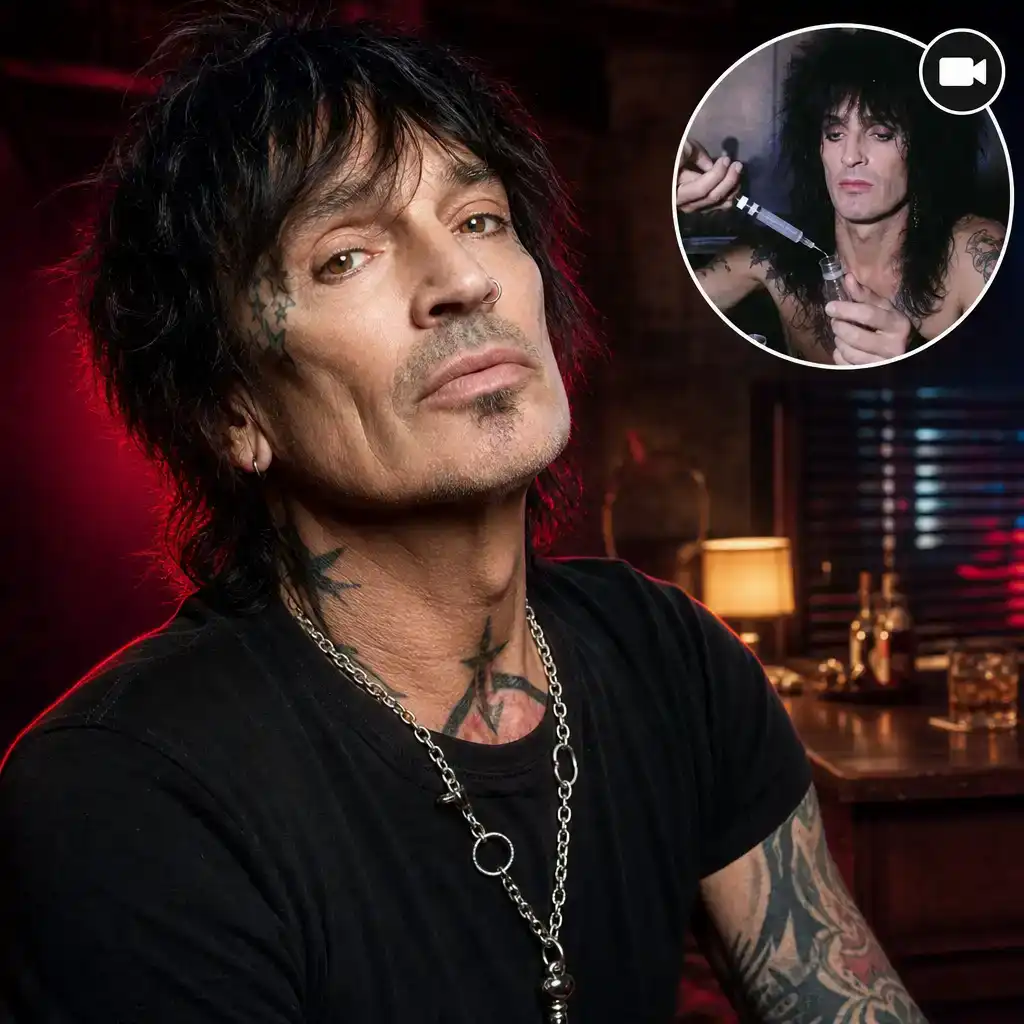
Lee gave a substantially similar account during a June 2, 2026, appearance on the Zach Sang Show. In that version, reported by Whiskey Riff, he said he and Sixx had run out of heroin and cocaine at around 2 or 3 a.m. He tentatively placed the incident in Houston, adding “or something.”
An earlier account published by The Guardian in 2007 placed the episode in Canada and said the pair had run out of cocaine. Lee was quoted as saying they “stayed up all night shooting up Jack Daniel’s.”
The differences are notable:
- The Armchair Expert version involved heroin and took place at about 3 or 4 a.m.
- The Zach Sang Show account involved heroin and cocaine, possibly in Houston, at about 2 or 3 a.m.
- The 2007 account involved cocaine and placed the incident in Canada.
Those discrepancies do not disprove the core episode, but they do limit how confidently its precise circumstances can be reported. Sixx separately acknowledged the incident in a 2011 CNN interview, according to Loudwire. “We thought it was a good idea,” he said, adding that he quickly lost consciousness and that it happened only once.
How did addiction affect Mötley Crüe?
Lee said all four band members entered rehabilitation in 1989 because they believed someone would otherwise die. Their attempt at sobriety coincided with Dr. Feelgood, Mötley Crüe’s biggest commercial album. Biography.com reports that the record spent 114 weeks on the Billboard chart.
The period did not produce permanent sobriety for Lee. He told Shepard that three years was probably his longest stretch without alcohol or drugs. He also described a recurring pattern in which reaching a sobriety milestone became an excuse to celebrate by drinking again.
“I get so excited that I’m like, ‘Oh my God, dude, I’ve been sober for a year,’ and I celebrate,” he said. “That’s the fucking problem.”
Lee recalled that he and singer Vince Neil drank again after the final concert of the Dr. Feelgood tour in 1990, celebrating at a local strip club. His most recently reported rehabilitation stay was in 2019 after a serious relapse involving alcohol. Lee later told Yahoo Entertainment that before entering treatment he had consumed as much as two gallons of vodka a day. That figure was his own estimate and was not independently verified.
Lee’s relapses remained public
In 2022, Lee addressed another drinking episode from a concert stage after posting a nude photograph of himself online. He said a two-week break from touring had turned into a “bender” and linked the post directly to his drinking.
Sixx, by contrast, has said that his overdoses ultimately pushed him to stop using drugs. Their experiences underline why Lee’s whiskey story matters beyond its shock value. It sits inside a long, publicly documented history of addiction, treatment and relapse involving one of heavy metal’s most commercially successful bands.
Injecting alcohol is also medically dangerous, not merely an unusually inefficient way to avoid using a glass. Medical literature indexed by PubMed has documented intravenous alcohol use among people who inject drugs, while U.S. Food and Drug Administration labelling warns that injected ethanol can cause systemic toxicity.
Lee’s latest interview therefore adds reflection rather than revelation. The story has been public for nearly two decades, and Sixx has independently discussed it. What remains uncertain is the exact setting. What remains consistent is Lee’s conclusion: the behaviour had reached a point where death felt close.