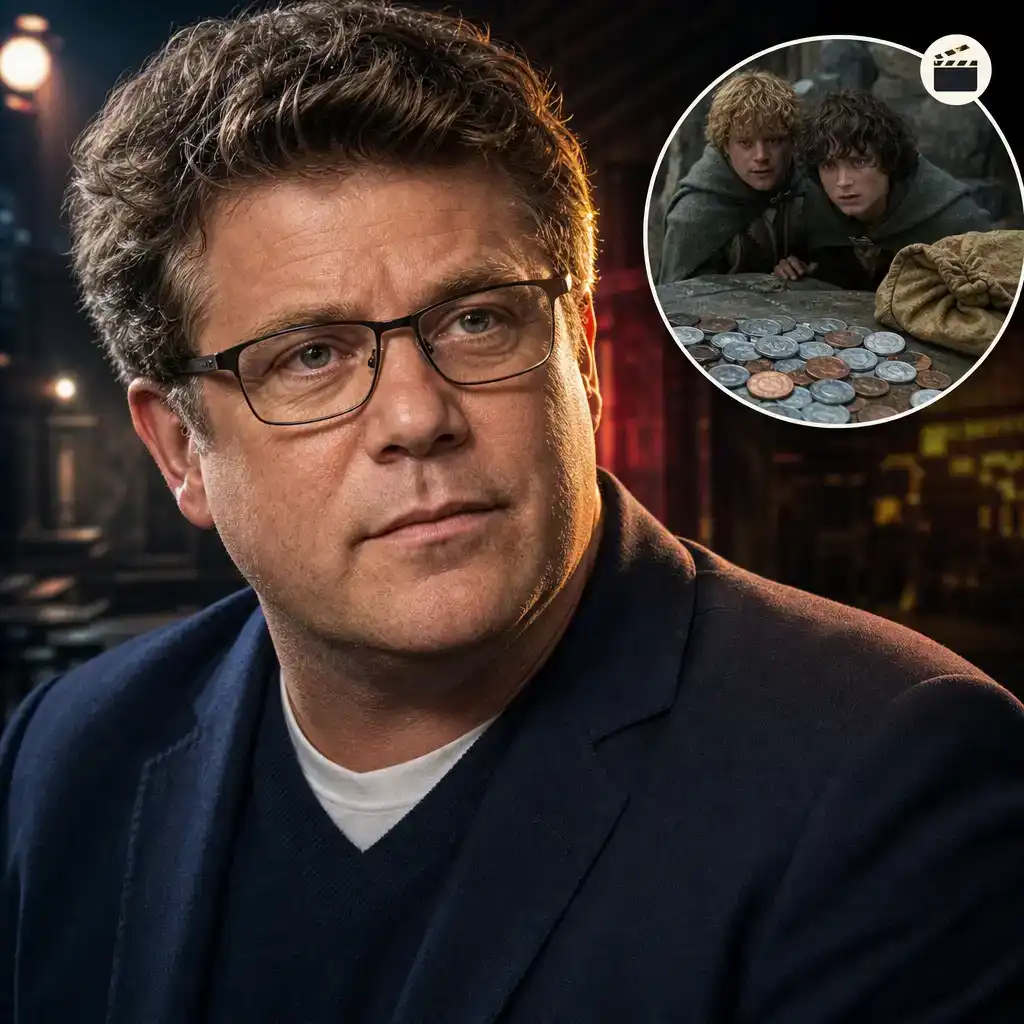
Sean Astin’s Lord of the Rings pay brought him global recognition, but not the financial security audiences might associate with a trilogy that earned billions. The actor says the long production limited his ability to take other work and eventually contributed to him selling his house.
“There was a disconnect between the attention I was getting and how much money we had,” Astin told The Guardian. “It was not a lot of money! In fact, I had to sell my house because I negotiated such a small amount on the trilogy.”
How much did Sean Astin earn for the trilogy?
Astin played the loyal Samwise Gamgee across The Fellowship of the Ring, The Two Towers and The Return of the King. A 2005 review of his memoir in The Spokesman-Review reported that he received $250,000 for all three films.
His latest comments are striking, though not entirely new. In a January 2007 interview with the San Francisco Chronicle, Astin also said the lengthy, relatively low-paid production disrupted his ability to keep working and forced him to sell his home.
The disparity became more conspicuous as the films grew into one of Hollywood’s defining commercial successes. The trilogy made roughly $2.9 billion worldwide against a reported combined production budget of about $281 million. The Fellowship of the Ring alone earned $868.4 million during its original worldwide run.
The films also won 17 Academy Awards. The Return of the King collected all 11 Oscars for which it was nominated, matching the record for the most wins by a single film.
Astin said the role nevertheless gave him “a level of visibility and access” he had not expected. Recognition, however, is not accepted as a mortgage payment.
Why could the cast not renegotiate between films?
Peter Jackson filmed the three movies together in New Zealand rather than treating each installment as a conventional sequel. That production model reduced costs and maintained continuity, but it also meant emerging cast members had less opportunity to renegotiate after the first film became a hit.
Elijah Wood, who played Frodo Baggins, later told Variety that the salaries were “not massive.” He explained that because the films were made at once, the actors could not return to the negotiating table between installments in the way stars often do for successful sequels.
Wood said the compensation was not enough to let the cast “rest easy for the rest of your life,” though he added that the experience mattered more to him than the salary.
Other cast members have offered similar accounts:
- Orlando Bloom told Howard Stern that he received $175,000 for the first film.
- Cate Blanchett told Bravo that “no one got paid anything,” joking that her rewards were free sandwiches and the elf ears she kept.
- Astin has consistently described the arrangement as financially modest despite the attention it brought him.
Reports that Astin received no residual payments have circulated widely, but that specific claim has not been verified in the available primary reporting. Celebrity Net Worth has separately claimed, without publishing documentation, that he receives merchandise royalties. The safest conclusion is less dramatic but still revealing: the initial deal was small compared with the franchise’s eventual value.
How did Samwise Gamgee change Astin’s career?
Astin was already familiar to audiences before entering Middle-earth. He played Mikey Walsh in the 1985 adventure film The Goonies and starred in Rudy in 1993. Samwise, however, introduced him to a much larger international audience and gave him one of the trilogy’s emotional anchors.
Sam begins the story as Frodo’s gardener and ends it as the person who keeps him moving when the burden of the One Ring becomes unbearable. Astin’s performance made that loyalty feel human rather than heroic by default, which helps explain why viewers still connect so strongly with the character.
The exposure led to further work, including Bob Newby in the second season of Stranger Things and the voice of Raphael in Teenage Mutant Ninja Turtles. Astin told The Guardian that he is now “very financially comfortable.”
That distinction matters. The trilogy did not leave him without a career. It gave him a durable one, just not the immediate blockbuster fortune many viewers might reasonably assume.
Astin now campaigns for stronger actor pay
Astin’s experience has gained added relevance because he now represents other performers facing similarly uneven economics. Members of the Screen Actors Guild-American Federation of Television and Radio Artists elected him national president on September 12, 2025.
When he was elected, Astin promised “fierce advocacy.” In February 2026, he told the Associated Press that he wanted streaming residuals to become as dependable as payments from broadcast television for working actors.
His history with The Lord of the Rings gives that campaign a personal foundation. A performer can appear in a cultural phenomenon, help generate billions of dollars and still face ordinary financial pressure while the work is being made. Astin eventually found stability, but his account offers a useful correction to the idea that visibility and wealth arrive together.
For audiences, Samwise Gamgee represented the person who carried on without glory or power. Astin’s experience behind the scenes was less fantastical, but the imbalance he describes is familiar across modern entertainment: enormous success at the top does not guarantee dependable income for the people on screen.