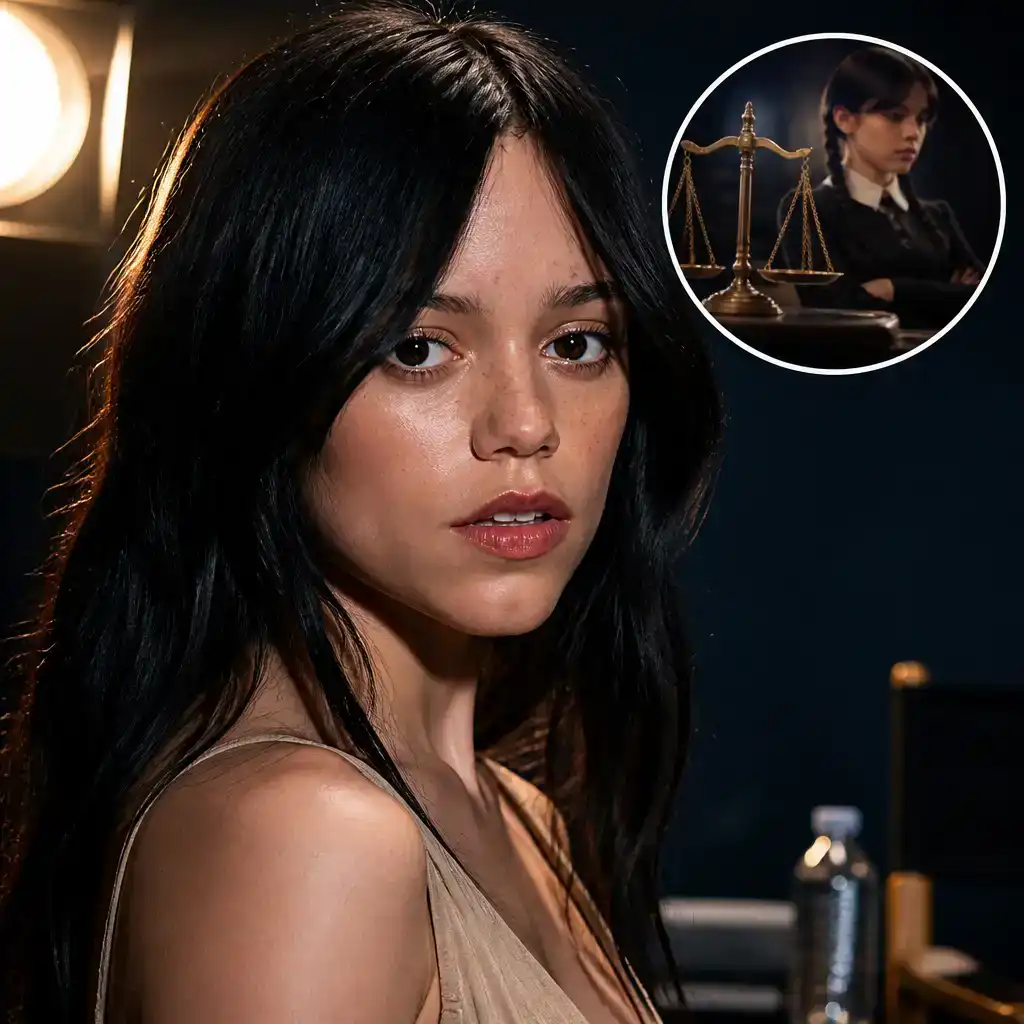
Jenna Ortega skipped food and water on set during her years as a child actor because she feared inconveniencing the adults around her. Now 23, the Wednesday star describes that determination to stay quiet and useful as one of the mistakes she made while growing up in the entertainment industry.
In a new Esquire interview, Ortega said she once believed she had handled childhood fame without putting a foot wrong.
“I really had it going for me as a child ’cause I can’t think of one mistake I made. Is that a terrible thing to say?” she said. “I feel like I make mistakes now all the time, but as a child, I was so grateful and so excited to be there that my game face was on.”
That professionalism came with a fairly significant problem: she was ignoring basic physical needs.
“I wasn’t asking for a sip of water,” Ortega said. “I would go all day without eating, drinking, whatever, because I wanted so badly to not be in the way of anybody.”
She quickly reconsidered her original claim. “Maybe that was my mistake. Not actually looking after myself.”
Did a production deny Ortega food or water?
Ortega did not accuse a studio, director or crew member of refusing her meals, drinks or breaks. She framed the behaviour as self-imposed, driven by her desire not to disrupt work or create extra demands for colleagues.
The interview also did not identify which production or period she meant. Follow-up coverage published on August 12 produced no independent reporting that clarified the set involved, and neither Ortega, her representatives nor any production had issued a further response that day.
That distinction matters. Her account is not an allegation that someone explicitly withheld food or water. It does, however, raise a less tidy question about workplace hierarchy: whether a child can meaningfully use formal protections when they are too worried about appearing difficult to ask for anything.
A break written into the rules offers limited comfort if the youngest person on set believes taking it will disappoint the room. Basic hydration should not depend on a child deciding they have become sufficiently convenient.
What protections exist for child performers?
US federal law exempts child performers from the standard child-labour restrictions in the Fair Labor Standards Act. As a result, much of the practical regulation governing young actors comes from state law and union agreements.
SAG-AFTRA says its rules for young performers cover areas including:
- Meal breaks and rest periods
- Limits and conditions on working time
- Schooling during production
- The general welfare of minors on set
Formal requirements do not guarantee flawless enforcement. In 2024, the Los Angeles Times reported that studio teachers and child-actor advocates considered enforcement of existing protections “hugely flawed.”
Ortega’s comments illustrate the gap between providing a break and ensuring a young performer feels able to take it. Adults supervising children still carry responsibility for enforcing workplace safeguards, regardless of whether the child asks. A nine-year-old staying silent to keep production moving is not a particularly convincing compliance system.
How has Ortega described growing up on set?
Ortega began acting at nine, with early appearances in series including Rob, CSI: NY and Jane the Virgin, alongside smaller film roles. Her mainstream breakthrough came with the fifth Scream film and Netflix’s Wednesday.
She was 19 when Scream opened in January 2022, not 18 as some coverage has stated. Born on September 27, 2002, she later became one of the most recognisable young actors working in Hollywood.
In a 2024 interview with The New York Times, Ortega said children “aren’t supposed to be working like that,” describing child acting as entering a workplace built for adults. She has also acknowledged that she sometimes regrets starting so young.
Her mother worked to preserve some normality. Ortega said she was watched “like a hawk,” remained in public school, earned straight A grades, got enough sleep and continued spending time with friends. Even that level of parental oversight could not remove every pressure created by being a child in a professional environment.
Ortega has also spoken publicly about obsessive-compulsive disorder. Last year, she said exhaustion could intensify repetitive thoughts, counting and repeated actions, sometimes leaving her walking up and down the stairs six times because she felt it was necessary to prevent someone entering her home.
Why comments about health require care
Ortega’s disclosure arrives amid continuing arguments over how audiences discuss celebrities’ bodies and health. Ariana Grande has faced years of public speculation about her appearance and has announced plans to step back from public-facing work after completing her Eternal Sunshine tour.
Grande addressed the commentary directly in 2023, explaining that the body some fans considered her healthiest reflected a period when she was taking antidepressants, drinking while using them, eating poorly and experiencing what she called the lowest point of her life.
“There are many different ways to look healthy and beautiful,” Grande told fans, asking people to become “gentler and less comfortable” commenting on other people’s bodies.
The two accounts concern different experiences, but both expose the hazards of outsiders drawing confident conclusions about a person’s health. Appearance does not provide a medical record, and visible productivity does not prove that someone is eating, resting or coping well.
What is Ortega filming next?
Ortega is back as Wednesday Addams for the third season of Wednesday. Netflix, which calls the show its most-viewed English-language series, confirmed that production began near Dublin on February 23, 2026. Winona Ryder is among the new cast members joining the series.
Her next scheduled film is Klara and the Sun, director Taika Waititi’s adaptation of Kazuo Ishiguro’s bestselling novel, due in cinemas in October. Ortega is also attached to three films planned for 2027: the gymnastics drama Nasty, dystopian road film Lily Mae B and science-fiction fantasy The Great Beyond.
Her workload remains substantial. The difference now is that she can identify the cost of treating silence as professionalism, particularly when silence meant spending an entire day without food or even water.