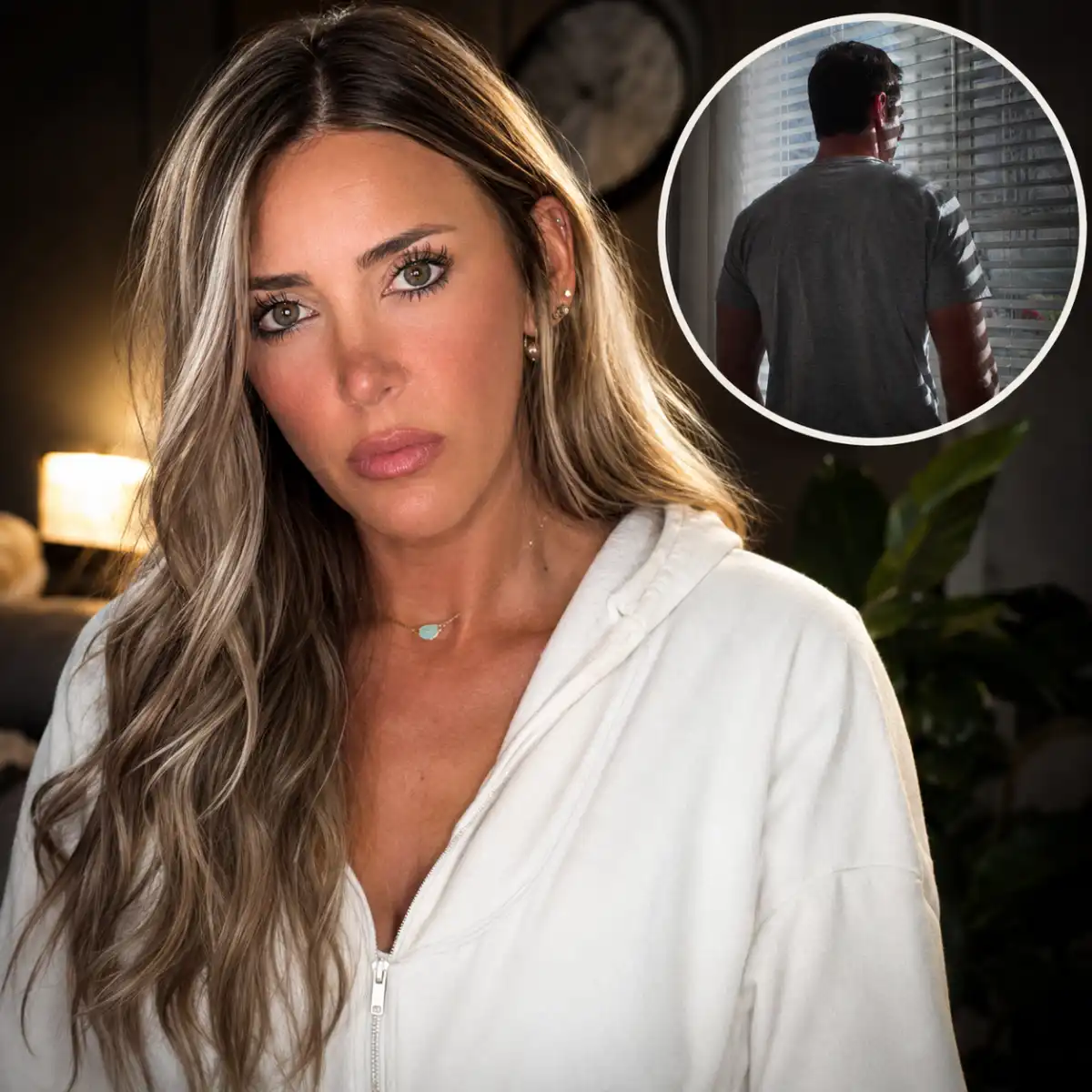
Oklahoma influencer Sara Gilson had obtained a protective order and publicly accused her estranged husband of sexually abusing a minor. Police now believe he killed her before taking his own life.
A TikTok video intended to expose a deeply disturbing allegation has become one of the final public records left behind by Oklahoma influencer Sara Gilson.
On July 11, the 43-year-old content creator joined a popular social media trend in which users imagine themselves being interviewed for a future Netflix documentary. Gilson’s version, however, was not presented as fiction or harmless internet humour. She wrote that she was preparing for a documentary about her soon-to-be former husband, Jeremiah “Shawn” Duffey, whom she accused of being a paedophile.
“I wish I was joking,” she added in the caption.
Twelve days later, Gilson was dead.
A 911 call followed by a gunshot
Shortly after 11.15pm on July 23, police were sent to a residence in the Owasso and Collinsville area following a disturbing emergency call. Dispatchers reportedly heard a woman screaming before a sound believed to be a gunshot interrupted the call.
Attempts to reconnect with the caller went unanswered. Moments later, a boy contacted emergency services from a neighbour’s home and told authorities that his stepfather had shot his mother.
Officers arriving at the property found Gilson and 48-year-old Duffey with fatal gunshot wounds to the head. Investigators believe Duffey shot his estranged wife and then turned the weapon on himself, although the case remained under investigation following the initial police statement.
Gilson’s son was temporarily placed in protective custody before being released to a parent who was not involved in the shooting. She is survived by a son and a daughter.
The allegations that emerged in June
The events leading to Gilson’s death had begun unfolding publicly more than a month earlier.
On June 9, a teenage girl and one of her parents reported Duffey to police. He had been coaching the girl on a travelling youth basketball team and was accused of touching her inappropriately during an event held at an elementary school.
According to investigators, another coach witnessed the alleged conduct, intervened and informed the girl’s parent. Police later said they had received information suggesting that similar behaviour involving the same player may have taken place over an extended period and across several jurisdictions and states.
Duffey left after the allegation surfaced and was not located by Owasso officers during the weeks that followed.
The claims against him had not been tested in court before his death. No criminal conviction was recorded, and the allegations must therefore remain described as allegations.
Why the investigation moved to federal authorities
The location of the alleged incident created an additional layer of legal complexity. Police said the elementary school was situated on tribal land and that Duffey was a member of the Osage Nation.
Serious offences committed in Indian Country can fall under federal or tribal jurisdiction depending on the alleged crime, the location and the status of the people involved. Owasso police consequently submitted the child-molestation investigation to the US Attorney’s Office for consideration, ending the local department’s jurisdiction over that specific allegation.
The referral did not mean the accusation had been dismissed. It meant responsibility for deciding whether federal charges should be pursued had moved from the local police department to federal authorities.
Gilson had already sought legal protection
After learning about the allegation involving the young basketball player, Gilson applied for an emergency protective order against Duffey on June 10.
Court filings reported by US media said she warned that Duffey had access to a firearm, had threatened suicide and had fled after the allegations came to light. A judge ordered him to leave the home and remain at least 100 yards away from both Gilson and her residence.
The protective order was subsequently extended through August 24. A separate request for protection was also filed on behalf of the teenage player who had accused Duffey of inappropriate conduct.
Records further indicate that Gilson had sought protective orders against him on two occasions in 2021. Those earlier petitions were later dismissed after she did not appear for the scheduled court proceedings.
None of that prevented Duffey from allegedly returning to the home on the night Gilson was killed.
Two legal processes, one unresolved danger
The case reveals how separate parts of the justice system can be operating simultaneously without necessarily providing immediate physical protection.
One process concerned Gilson’s emergency civil order, which legally prohibited Duffey from approaching her. Another involved the criminal allegation concerning a minor, which had been transferred to federal authorities because of jurisdictional rules governing tribal land.
Those procedures served different purposes and moved on different timelines. Meanwhile, Duffey’s location was reportedly unknown to local investigators.
A protective order establishes legal boundaries and gives police grounds to act when those boundaries are violated. It is not, however, a physical barrier. Its effectiveness can depend on whether the subject complies, whether authorities can locate that person and whether access to weapons is successfully restricted.
Domestic abuse organisations also warn that separation can be an especially dangerous period. When an abusive partner believes control is being lost, threats, stalking or violence may escalate. In Gilson’s case, the combination of an estrangement, reported suicide threats, alleged access to a gun and an unresolved criminal investigation represented a particularly alarming set of circumstances.
The TikTok post was a warning, not the cause
Gilson’s video has become central to coverage of the case because of its timing and its unsettling mock-documentary format. It should not, however, be treated as proof that her decision to post the allegation caused the shooting.
Police have not publicly established that the TikTok video directly motivated Duffey. The more significant timeline began before the post: an allegation involving a child had already been reported, Duffey had allegedly fled, Gilson had requested protection and the couple was separating.
The video was therefore less the beginning of the story than a public glimpse into a crisis that was already developing away from social media.
A mother remembered beyond her online following
Gilson had built an audience of more than 30,000 TikTok followers, but friends and relatives have stressed that her identity extended far beyond her online presence. She worked as a hairstylist and regularly shared parts of her family life with her audience.
An online fundraiser established for her children described her as a devoted mother who worked to provide for them and wanted to give them the best possible future.
Her former husband and the father of her children, Lyle Landers, said he had encouraged Gilson for years to leave Duffey. He described her as someone who appeared unable to fully escape the relationship despite repeated attempts to seek help.
The tragedy has consequently prompted questions that extend beyond one viral TikTok post: how alleged offenders are monitored while cases move between jurisdictions, how protection orders are enforced and what additional safeguards are needed when threats of suicide and access to firearms are reported together.
For Gilson’s children, those wider questions follow a much more immediate and permanent loss. A warning had been placed in court records and, eventually, in front of thousands of people online. It was seen, shared and discussed — but it was not enough to keep their mother alive.