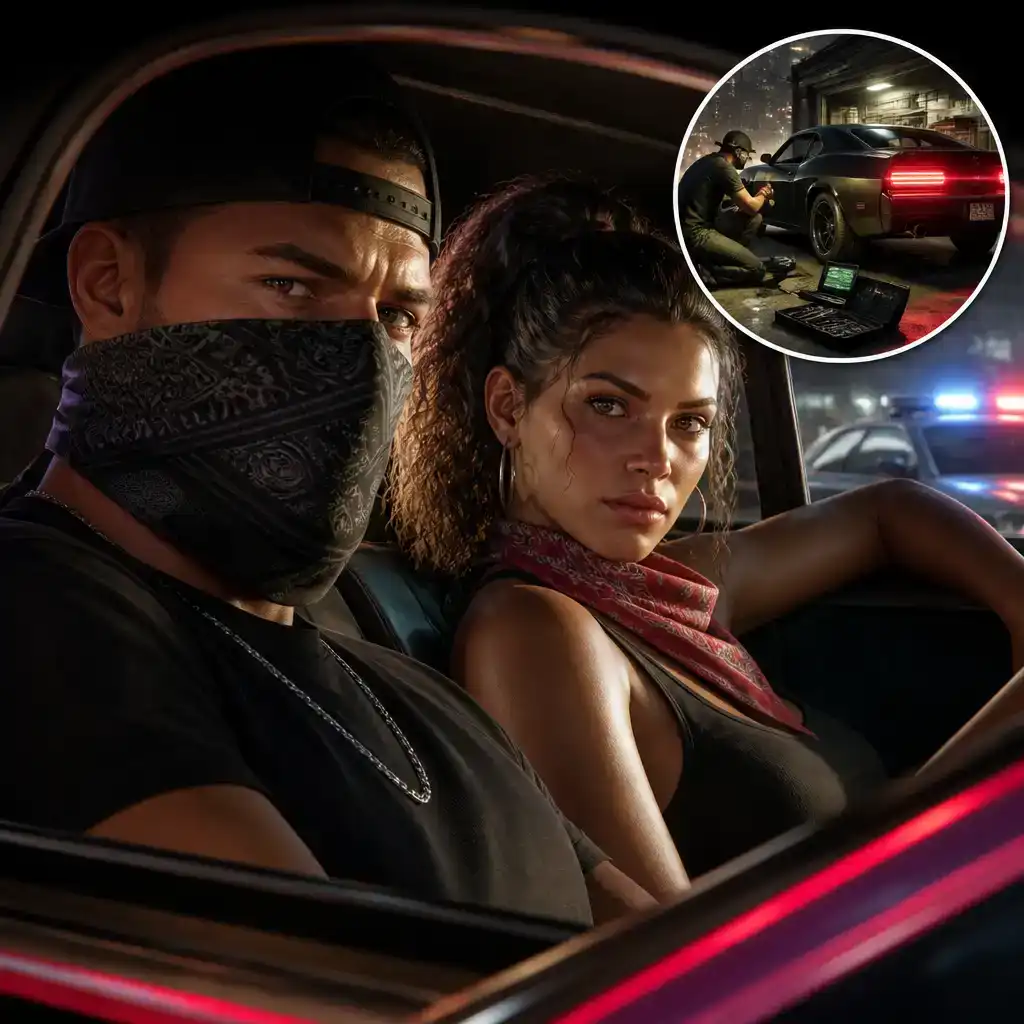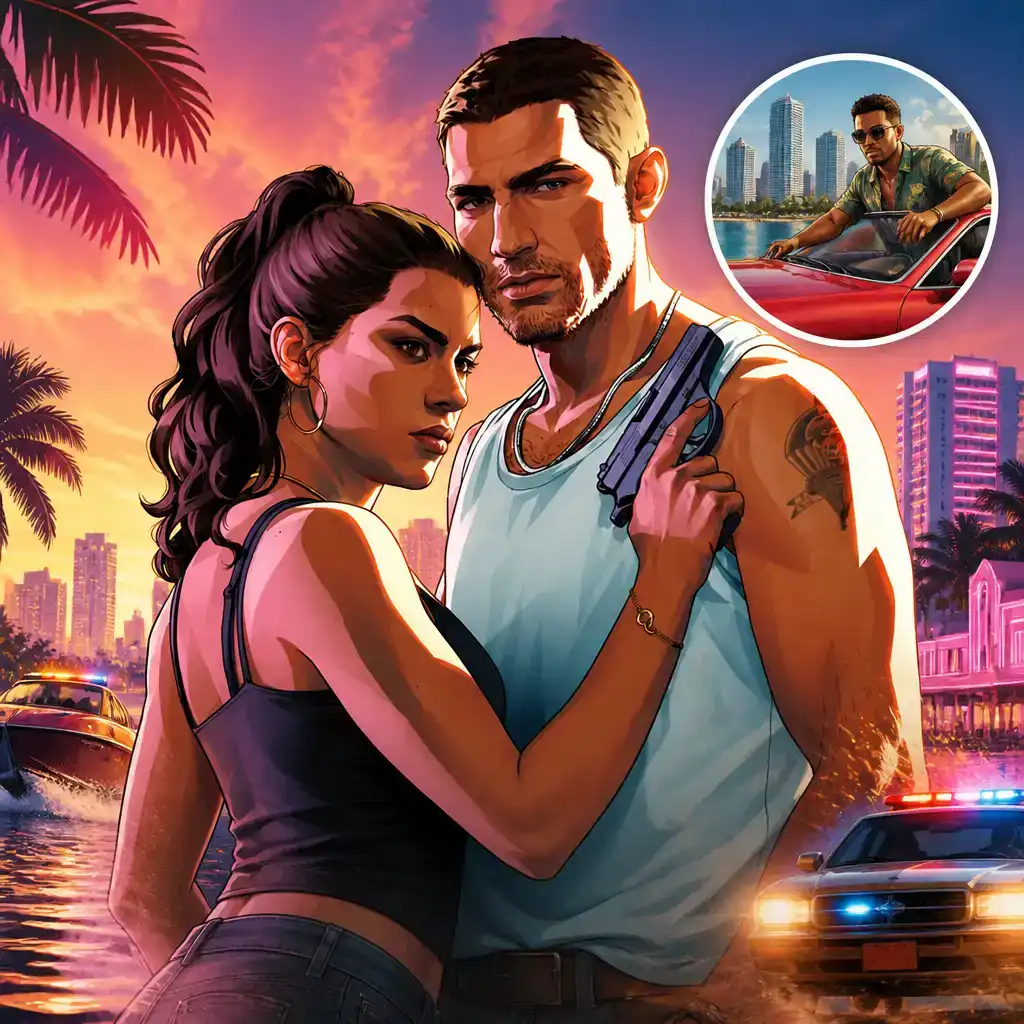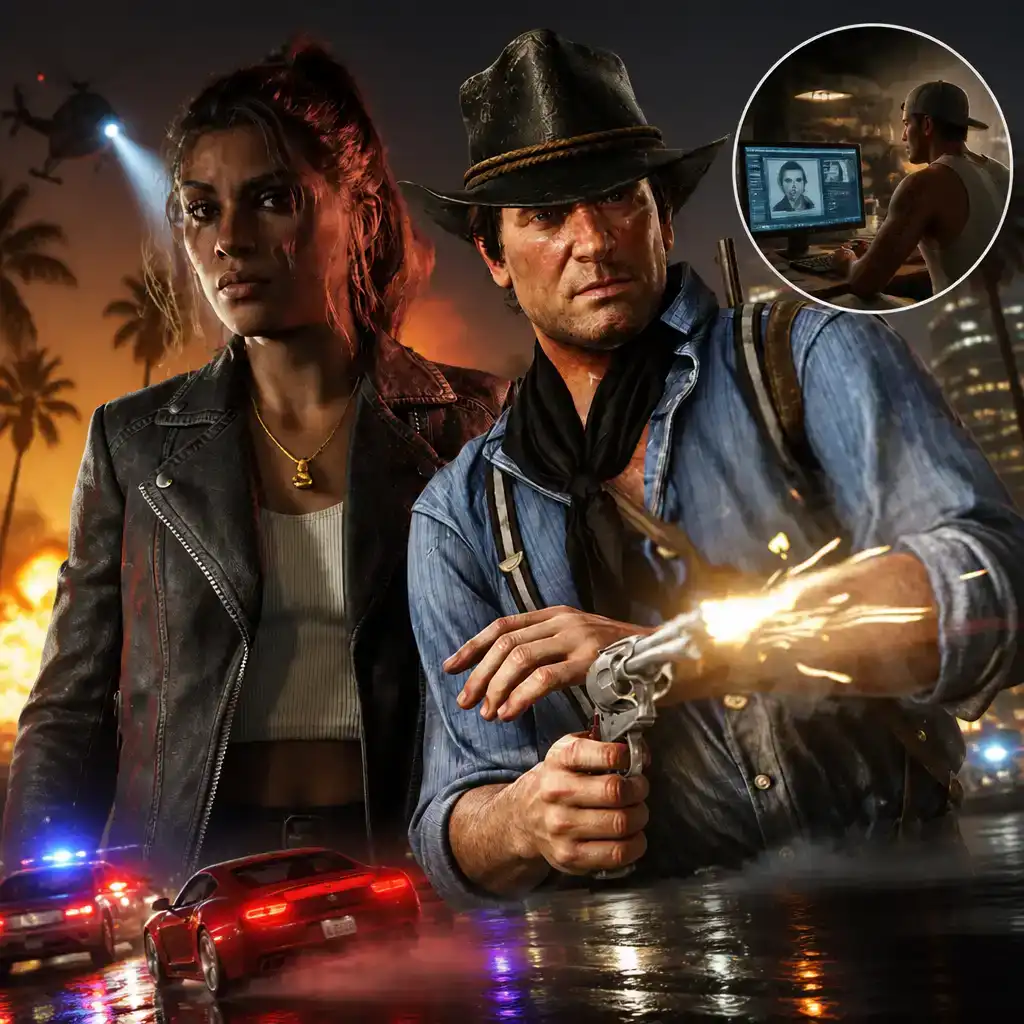
The Red Dead Redemption 2 features in GTA 6 suggest Rockstar Games wants more than a larger city and better explosions. Grand Theft Auto VI keeps the series’ modern criminal chaos, but adds the slower, more reactive systems that made Arthur Morgan’s world feel unusually alive. Apparently, stealing a sports car now requires a little personal reflection.
Rockstar revealed the changes in a 26-minute Extended Look, supported by previews from outlets including IGN, El País and MeriStation. The presentation first appeared through Netflix before Rockstar released it free on YouTube and its own website, briefly turning access to videogame advertising into a subscription benefit. PC Gamer questioned why the gameplay montage needed Netflix at all. A fair question, since marketing usually works best when people can see it.
How much does GTA 6 borrow from RDR2?
Rockstar North co-studio head Rob Nelson told The New York Times that GTA VI represents an evolution of the studio’s work on Red Dead Redemption 2. The comparison is particularly clear in how players interact with the world.
Grand Theft Auto V generally moved quickly between missions, shootouts and increasingly expensive vehicles. RDR2 preferred deliberate movement, detailed animations and systems that reacted to minor choices. GTA VI appears to sit between those approaches, preserving the speed and disorder of Grand Theft Auto while making crime more methodical.
The story will also use chapters, following the structure of Red Dead Redemption 2 rather than GTA V’s more seamless progression between major missions. Rockstar has not detailed how many chapters there will be or exactly how they divide Jason and Lucia’s story.
That extra structure will operate inside a much larger world. The New York Times reported that GTA VI’s map is three times the playable area of RDR2. El País said its preview included more than an hour of gameplay running on PlayStation 5.
What does the Criminal Profile system change?
The clearest successor to RDR2’s Honor system is the new Criminal Profile. It does not simply sort every action into honorable or dishonorable categories. Instead, it tracks how Jason and Lucia behave while committing crimes, including whether they use more violence than the situation requires.
“It’s when you go beyond what is necessary on a consistent basis, or you do completely unnecessary stuff consistently, that you may start to sway your Criminal Profile in a certain direction,” Nelson told IGN.
Repeated cruelty can therefore shape the player’s reputation. Smaller acts also matter, including feeding stray animals or placing rubbish in a bin. GTA has finally reached the point where responsible waste disposal may influence how the criminal underworld views you.
Players can also pet or scold animals, an interaction available in RDR2 but absent from GTA V. Those choices appear capable of affecting the Criminal Profile. In the wilderness and at the zoo, animals can be studied and added to a checklist, closely resembling Red Dead Redemption 2’s wildlife catalogue.
IGN, El País and MeriStation all described the system as a form of karma or reputation mechanic, although Rockstar’s version is tied specifically to criminal conduct rather than a broad moral score.
Is Dead Eye actually returning?
The Extended Look showed Jason using a meter-powered ability that slows time during gunfights and highlights different parts of an enemy’s body. Targets included the head, heart, hands and knees, allowing players to choose between lethal and non-lethal shots.
Some coverage called the mechanic Dead Eye because it closely resembles Red Dead Redemption’s signature targeting system. Other reports, however, identified it as Focus Mode. Rockstar has not confirmed Dead Eye as the official name, so the comparison is more useful than the label.
The system supports more precise combat options. Players can shoot a weapon from an opponent’s hand or target an arm or leg to incapacitate them without killing them. Stylish or important kills may also trigger a slow-motion camera that zooms in on the action, echoing RDR2’s cinematic kill sequences.
Together, these features make gunfights less purely arcade-driven than those in GTA V. Players can still cause extensive damage, naturally, but Rockstar is giving them more specific ways to decide how that damage happens.
How will stolen goods and safehouses work?
The influence extends beyond combat. Stolen jewellery and vehicles must be taken to a Fence, reviving another familiar Red Dead system for a modern criminal economy. Fences can also provide information, including tips about vehicles sitting in police impound lots and waiting to be stolen again.
Safehouses are becoming more interactive too. Nelson told IGN they function more like RDR2’s camps “in terms of how interactive they are and how much they feel like your home.” Rockstar has not fully explained what players can do inside them, but the comparison points to spaces with more character interactions and practical uses than GTA V’s properties.
Phones will also be handled differently. Instead of presenting the device mainly as a flat interface over the screen, GTA VI uses a first-person inspection view. When Jason or Lucia checks a phone, the camera moves toward the device in their hand, similar to Arthur Morgan examining maps, letters or his journal.
It is a small presentation choice, but it fits the broader design. Objects are meant to exist in the characters’ physical space rather than simply appearing as menus. Even checking messages now receives an animation budget.
Why is Rockstar adding so much detail?
The scale of production helps explain the density. El País reported that nearly 4,000 people across Rockstar contributed to GTA VI, including about 900 at Rockstar North. MeriStation put the game’s animation count above 600,000, compared with roughly 300,000 in Red Dead Redemption 2 and 55,000 in Grand Theft Auto V.
Those numbers support what the previews describe: a world built around unusually detailed movement, environmental interaction and responses to player behaviour. The challenge is whether all that simulation remains useful during ordinary play rather than becoming an impressive collection of animations for opening drawers.
Rockstar has also had to reveal the game under difficult circumstances. Before the showcase, the company described recent unauthorised gameplay leaks as “heartbreaking for our team.” The official presentation finally provided controlled footage and direct explanations from developers, although its Netflix-first release created a separate argument about who could initially watch it.
The footage is now available free through Rockstar and YouTube, removing the access issue after the premiere. The unusual rollout did at least give Netflix subscribers the rare privilege of seeing a promotional montage slightly earlier.
What does all this mean for performance and release?
The heavier simulation appears to come with a technical trade-off. Video Games Chronicle reported that Nelson said current console builds run at 30 frames per second. Rockstar has not confirmed a 60fps performance mode for PlayStation 5 or Xbox Series X|S.
That does not establish every final performance option, but it shows where the studio’s priorities currently sit. A map reportedly three times larger than RDR2’s playable area, hundreds of thousands of animations and deeper world simulation place substantial demands on console hardware.
Rockstar says Grand Theft Auto VI will launch on November 19, 2026, for PlayStation 5 and Xbox Series X|S. No PC release date has been announced in the material covered by the presentation.
The result looks less like GTA V with a new coastline and more like a merger of Rockstar’s two major design traditions. GTA supplies the cars, cities and rapid criminal escalation. Red Dead provides the deliberate interactions, reputation systems and insistence that every action should have a carefully rendered animation. Whether players wanted moral consequences for scolding zoo animals remains unclear, but Rockstar has built them anyway.