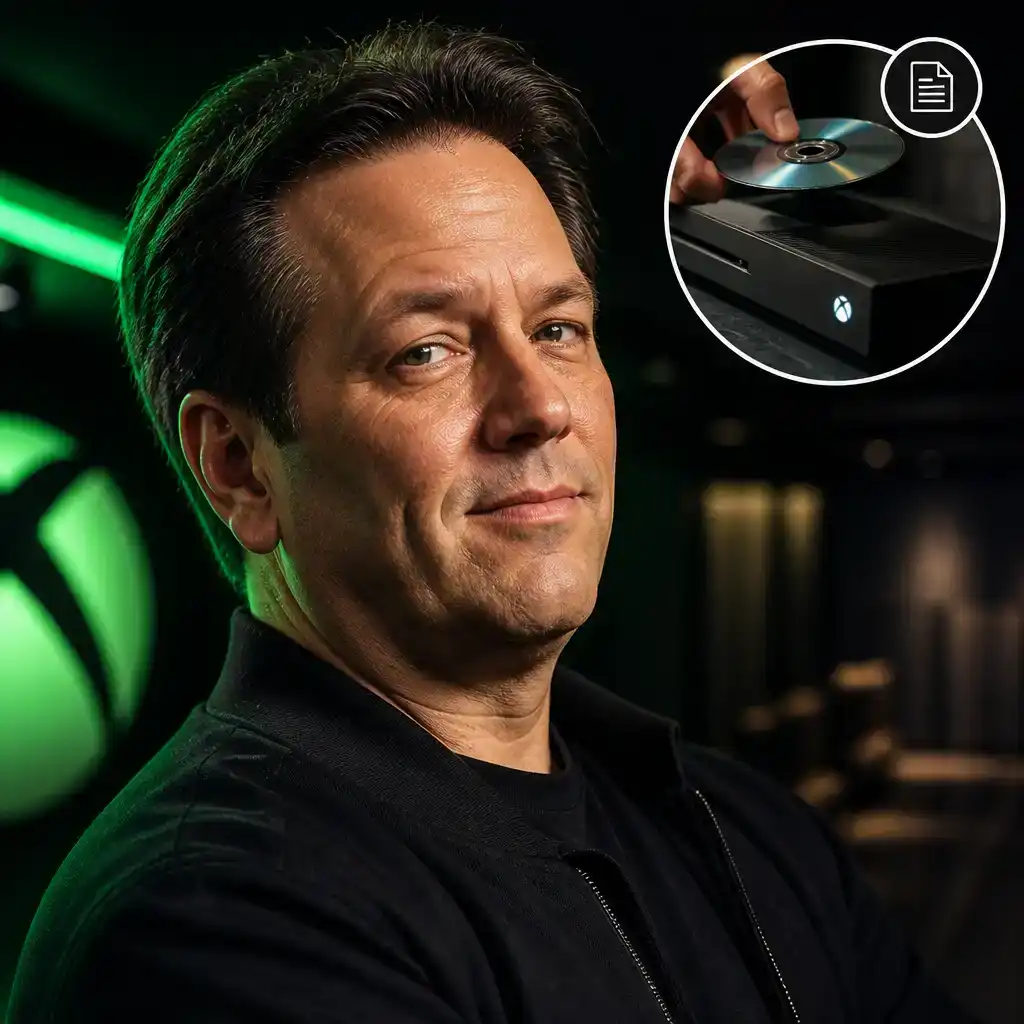
For players who have spent 25 years building an Xbox library, Xbox backward compatibility is less a technical feature than a question of whether their purchases will survive another hardware change. A leaked Microsoft memo suggests Project Helix, the company’s next-generation system, is being designed to span every Xbox era. The important caveat is substantial: that does not mean every game will work.
The plan depends on publishers approving individual titles, while disc support appears narrower and less settled than the broad promise might suggest. Microsoft has the emulator. It does not automatically have every license.
What does the leaked Project Helix memo promise?
The internal presentation, reported by The Verge and titled “Why Publishers Win,” pitches a system capable of supporting games from the original Xbox, released in 2001, through Xbox 360, Xbox One, Xbox Series consoles and new Helix releases.
Microsoft argues that publishers could use its emulator to revive dormant games, fill gaps in franchise collections and reach players on current hardware with “zero engineering” on their part. Xbox would handle engineering, certification and support, while publishers would retain control over rights, pricing and branding.
The company also promises that older releases would operate within its modern ecosystem and behave “like 2026 games, not 2006 games.” That includes the broader “play anywhere” strategy, which is intended to make purchases available across consoles, PCs and handheld devices where supported.
PC Gamer corroborated that publishers could opt Xbox 360 games into an emulator-based program covering Xbox PCs, handhelds and Helix. Digital purchases could then carry between compatible devices. TechRadar reported that publishers would also decide whether participating games appear in Game Pass.
In other words, Microsoft is offering the infrastructure. Publishers still hold the keys.
Why Helix will not run every Xbox game
The phrase “every generation” describes the range of hardware eras, not a complete catalog. Participation would be controlled title by title, and Microsoft’s existing compatibility program shows why that distinction matters.
Microsoft currently describes its legacy offering as including “select” original Xbox and Xbox 360 games. In 2019, Xbox said the program covered more than 600 older titles. Another 76 games were added in November 2021, when compatibility lead Peggy Lo said licensing, legal and technical barriers prevented the company from adding more.
Those same barriers do not vanish because a newer emulator exists. Music licenses can expire, publishers can disappear, ownership can change and rights may be split across several companies. A technically functional game can therefore remain unavailable for reasons entirely unrelated to whether Helix can run it.
The leaked presentation is aimed at persuading publishers to reopen those catalogs. Its selling points include new revenue from older releases and a chance to reconnect players with long-running series. For audiences, the emotional appeal is simpler: a favorite game does not become less meaningful because its contract paperwork aged badly.
How limited is the Disc2Digital proposal?
The memo also describes a Disc2Digital system under which compatible Xbox One and Xbox Series discs could be converted into digital entitlements. Those digital versions would then follow a player to “any Xbox device,” potentially including Helix.
The wording needs careful handling. Tom’s Hardware reported that the proposal does not cover original Xbox or Xbox 360 discs, and some Xbox One and Series discs may also be ineligible. A collection spanning five generations would therefore rely heavily on digital purchases and publisher approvals, not simply on inserting every old disc.
Ownership may come with another complication. According to Tom’s Hardware, a converted digital entitlement could disappear if the linked physical disc is sold or loaned. That would make the feature closer to verification of continued disc ownership than a permanent digital copy.
TechRadar reported that a planned Disc2Digital beta had been delayed, leaving its proposed August 2026 release uncertain. Reporter Tom Warren has also said Microsoft has not finalized whether Helix itself will contain a disc drive. That is a fairly important detail for a feature with “Disc” in its name.
When could older games reach new Xbox devices?
The leaked roadmap reportedly places the expansion across several years rather than at a single Helix launch:
- Original Xbox games are scheduled for a wider PC release in October 2026.
- Xbox 360 support is expected to roll out gradually across next-generation devices in 2027 and 2028.
- Helix alpha hardware is scheduled to reach developers in 2027.
No substantive development reported since the memo’s publication has established a final launch date, complete game list or confirmed disc-drive configuration.
Microsoft has publicly supported the larger direction. Xbox chief executive Asha Sharma told Fortune Conversations that Helix would play PC games, provide compatibility with older releases and offer “leading-end performance.” She also acknowledged that “material work” remained to make the system accessible.
Xbox strategy chief Matthew Ball said Microsoft was reconsidering elements of Helix to ensure the device is “affordable” and “flexible.” Those priorities could affect its hardware, price and final form, particularly if Microsoft is trying to serve console players and PC users with one platform strategy.
Helix is part of a bigger Xbox shift
The compatibility pitch matters because Microsoft increasingly presents Xbox as an ecosystem rather than one box beneath a television. Xbox Play Anywhere already covers more than 1,500 games from 500 development teams, allowing supported purchases and progress to move between Xbox consoles and Windows PCs.
Helix appears intended to extend that idea by combining PC gaming, console libraries, handheld access and emulated classics. That could make the next Xbox unusually flexible, but it also shifts more control toward digital accounts, publisher permissions and continuing platform support.
For players, the best version of the plan would preserve purchases and make neglected games easier to find. The less generous version would offer a complicated patchwork in which some digital titles travel, some discs can be verified and large parts of older libraries remain unavailable.
The leaked memo shows that Microsoft wants five generations represented on Helix. Whether players actually see their own five-generation collection there will depend on publishers, licenses, eligible formats and hardware decisions that are still unresolved.