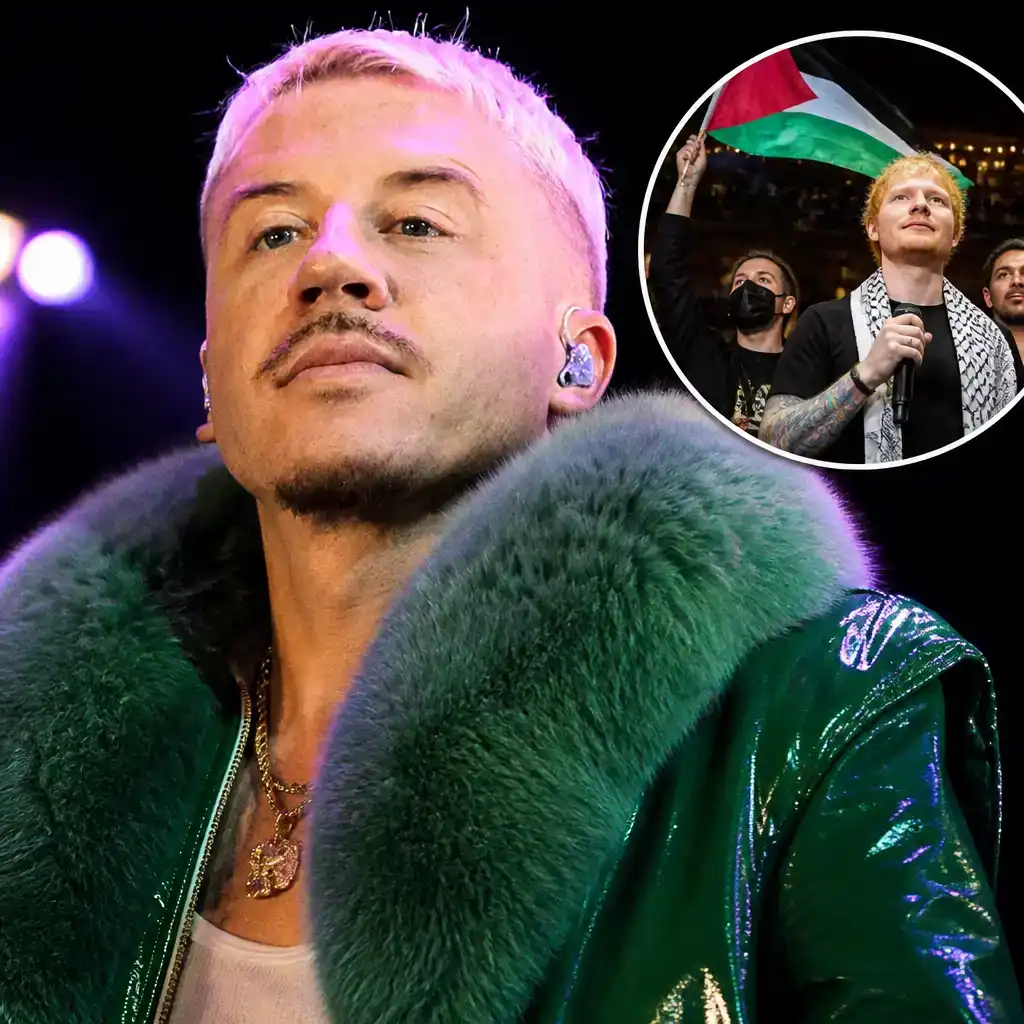
The performance was therefore broader than a single-issue intervention, though Gaza remained its most prominent and contentious element.
Why is the Israeli-American Council demanding his removal?
The Israeli-American Council, which says it represents more than 150,000 Israeli Americans, directed its petition at Sheeran and the organizations behind the tour. Its message was blunt: “Your show. Your stage. Your responsibility.”
Chief executive Ran Alkalay said Sheeran’s lack of a public response was becoming “impossible to ignore.” The petition does not display its signature total, making its actual level of support difficult to assess.
As of September 7, Sheeran, Macklemore, promoter AEG and Messina Touring Group had not publicly responded to requests for comment reported by the Jewish Telegraphic Agency and other outlets. Sheeran had also made no public statement about the performances.
His official website and Ticketmaster still listed Macklemore as a supporting act, including for the next scheduled show in Philadelphia on September 19. Nine Macklemore dates reportedly remained, with listed stops including Philadelphia, Foxborough, Atlanta, Indianapolis, Charlotte, Arlington and Tampa.
Who could actually remove an opening act?
The petition places responsibility directly on Sheeran, but removing a support act from a major stadium tour may not be his decision alone. Promoters, management teams, venues and private contracts can all determine how a lineup change happens.
No details of Macklemore’s touring agreement have been made public, so claims about who has final authority remain speculative. AEG and Messina Touring Group have not said whether they are reviewing his appearances or considering any action.
That leaves a gap between the petition’s demand and the less dramatic reality of concert administration. Public pressure can influence a tour, but contracts and commercial arrangements generally require more than an angry post and several capital letters.
For now, the practical evidence is the published schedule. Macklemore remains listed, tickets remain on sale and the tour is proceeding without an announced change.
What is the history behind “Hind’s Hall”?
“Hind’s Hall” takes its name from Columbia University’s Hamilton Hall, which pro-Palestinian protesters temporarily renamed in memory of Hind Rajab, a Palestinian child killed in Gaza. Variety reported that proceeds from the song support the United Nations Relief and Works Agency for Palestine Refugees.
Macklemore was also among the first 55 signatories of the Artists4Ceasefire letter. That campaign called for a ceasefire, humanitarian aid for civilians and the release of Israeli hostages.
The rapper has explicitly rejected accusations that his position is hostile to Jewish people. Addressing Jewish listeners, he said his criticism of Israel and opposition to what he described as “apartheid” and “genocide” were “in no way” criticism of them.
That distinction has not ended the dispute. In 2024, Jewish singer-songwriter Matisyahu called “Hind’s Hall” antisemitic and argued that it worsened an already bitter divide. Macklemore caused further controversy later that year when he chanted “f*** America” at a pro-Palestinian festival in Seattle.
The current argument is therefore not a sudden detour in his career. Macklemore has made Palestinian advocacy a sustained part of his public work, and the MetLife shows brought that politics onto one of pop music’s largest touring stages. Whether organizers decide that crosses a contractual line remains unknown. At present, the petition has generated headlines, but not a dismissal.