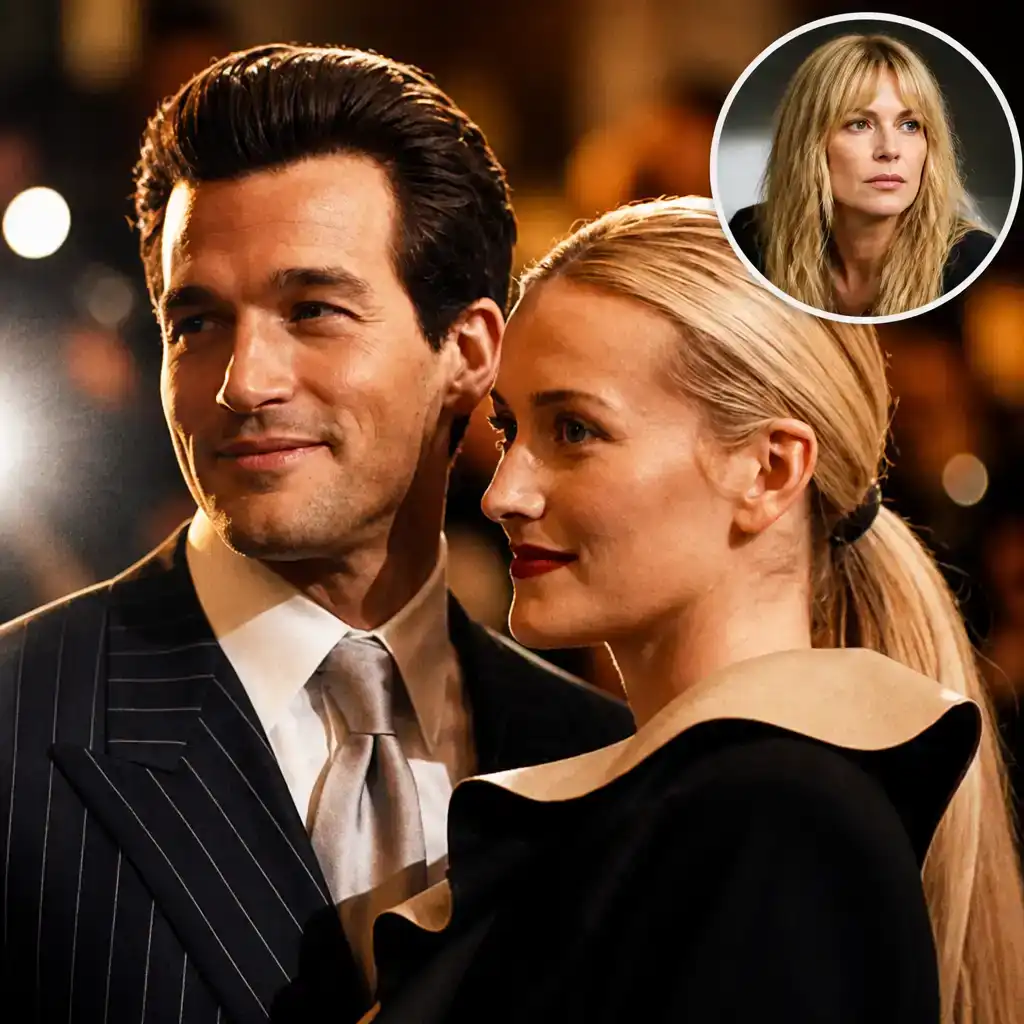
The final episode instead spends time with the relatives left waiting for news. That choice gives the story a human ending beyond the crash itself, even if viewers already know that hope will not last.
What did investigators actually find?
The National Transportation Safety Board recorded the crash at 9:41 p.m. on July 16, 1999. Its investigation concluded that Kennedy lost control of the aircraft after becoming spatially disoriented during a nighttime descent over water.
Kennedy did not hold an instrument rating, a significant factor when a pilot cannot rely on visible external references. The federal report, however, complicates the simplified claim that he simply ignored every warning and flew recklessly into known bad weather. Investigators found that he had obtained forecasts predicting conditions suitable for visual flight.
The official finding is less dramatically tidy than a morality tale about celebrity confidence. It describes a pilot confronting conditions in which the horizon can become difficult to distinguish, then losing control. The series conveys his disorientation but does not turn the finale into a technical reconstruction.
That restraint protects the victims from a lurid reenactment. It also leaves viewers needing outside context to understand why the accident occurred, rather than treating a brief cockpit scene as a complete explanation.
Which parts of the romance came from real events?
Inspired by Elizabeth Beller’s 2024 biography, Once Upon a Time: The Captivating Life of Carolyn Bessette-Kennedy, the series returns to 1992 and follows Carolyn’s movement from Calvin Klein public relations executive to one of the most photographed women in the United States.
Reporting by E! and People found historical foundations for several prominent incidents, including:
- The Central Park accident involving the couple’s dog
- John and Carolyn’s public argument
- Their secret wedding
The production also compresses timelines, invents dialogue and combines people or encounters for narrative convenience. Its opening disclaimer acknowledges that the story is inspired by real events but contains fictional elements. Sensible, although disclaimers rarely follow viewers into social media clips presented without context.
Some gaps cannot be closed. Jacqueline Kennedy Onassis left no public account confirming every private conversation the drama gives her. Caroline Kennedy and her husband, Edwin Schlossberg, have not supplied a scene-by-scene family record either. Carolyn also avoided on-camera interviews during her years as a public figure, leaving other people unusually free to define her.
Sarah Pidgeon, who plays Carolyn, described that commitment to privacy as “badass.” She also observed that the lack of recorded comments made it easier for outsiders to project narratives onto Carolyn and the marriage. The series inevitably does some projecting of its own.
Why did Daryl Hannah reject her portrayal?
The most direct challenge came from Daryl Hannah, whose intermittent relationship with Kennedy preceded his marriage to Bessette. Hannah said the series’ version of her was not remotely accurate and accused it of “textbook misogyny.”
According to Hannah, the production reduced her to a “narrative device,” manufacturing romantic hostility between her and Carolyn so the central couple would have an obvious obstacle. It is efficient television machinery: place two women in competition, simplify everyone’s motives and wait for viewers to choose a side.
The objection exposes a larger problem than an incorrect line or shifted date. A dramatization can preserve public milestones while distorting a living person’s character to make those milestones flow more neatly. Hannah can publicly contest that portrayal. Carolyn cannot.
Critics raised similar concerns about the project’s broader approach. The Washington Post argued that the series reconsidered Kennedy mythology but made the couple feel “banal.” The Los Angeles Times questioned whether inventing their private moments merely recreated the invasion of privacy that the show condemned.
That tension is built into the concept. The drama asks audiences to sympathize with two people overwhelmed by public curiosity, then satisfies that curiosity with bedroom conversations and family exchanges no camera recorded.
How did the Kennedy family respond?
John’s nephew Jack Schlossberg opposed the project before it aired, calling it a “grotesque” attempt to profit from his uncle’s life. He later sparred publicly with producer Ryan Murphy, who suggested Schlossberg was too young to remember Kennedy clearly.
In April, Schlossberg said neither he nor Caroline Kennedy watched the complete series. He did show his mother a clip of Grace Gummer portraying her, and said they were “laughing so hard.” His advice to viewers was less ambiguous: treat the program as “fiction with a capital F.”
The criticism also points to the unusual legal position of dramas about dead public figures. Under United States defamation law, deceased people generally cannot bring claims over damage to their reputations. Their estates and relatives have limited power to stop fictionalized portrayals solely because they consider them false or offensive.
That gives producers wide creative room, but legality and accuracy are separate questions. A scene may be legally defensible, emotionally convincing and entirely invented at the same time. Television has managed this combination before.
Did the Emmys validate the production?
The Television Academy gave the FX drama six Emmy nominations, not seven. Those included Outstanding Limited or Anthology Series, Sarah Pidgeon for lead actress and Constance Zimmer for supporting actress. Paul Anthony Kelly, who plays Kennedy, did not receive a nomination.
A separate behind-the-scenes short-form series earned another nomination, which helps explain why the larger production was sometimes credited with seven. The drama won the Creative Arts Emmy for casting before the September 14 main ceremony.
Its technical recognition is understandable. The production paid close attention to 1990s Manhattan, period makeup, clothing and Carolyn’s enduring minimalist style. Even her hair became a pre-release dispute when her former colorist, Brad Johns, criticized early photographs of Pidgeon’s one-tone ash-blonde look.
The visual precision makes the invented material feel more authoritative. That is both the show’s strength and its central problem. The clothes can be reconstructed from photographs. The secret wedding can be documented. A private dinner, a romantic argument or a rivalry between two women requires much more caution, because perfect tailoring is not evidence.