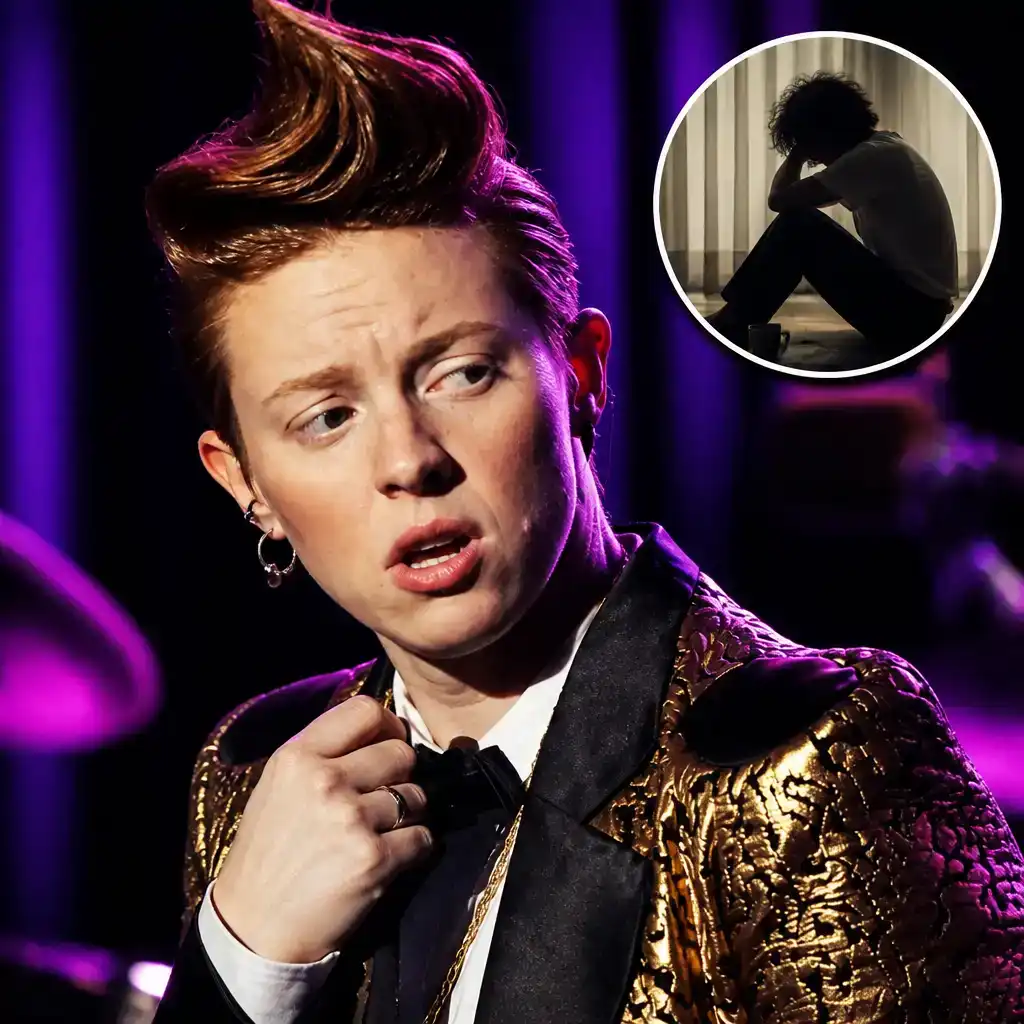
The post mixed humour with a serious admission, and fans responded with sympathy, nostalgia and considerable enthusiasm about her return.
One person wrote: “I had no clue! Ironically, your music got me through some rough times also. Thank you.”
Another declared: “CERTIFIED BANGER. WELCOME BACK.”
A third joked: “Appreciate you postponing the breakdown so I could enjoy this song for a decade.” Others recalled being obsessed with her music or being nicknamed La Roux because they also had short hair.
Jackson later added her own comment, writing “this time baby” with a folded-hands emoji. The phrase referenced the opening lyric of “Bulletproof” and suggested she intends to return with rather more protection than she had the first time around.
What changed during her years away?
Jackson discussed the difficult period more fully in an August interview with Another. She said she had been “slowly morphing” over the years, both personally and creatively.
That evolution also involved retiring the signature quiff. According to Jackson, the “engineering involved to actually make it stay up was so intense”. Pop careers are demanding enough without beginning every morning in what sounds like a wind-tunnel test.
Her mental health worsened near the end of the Covid pandemic. Looking back, she believes she had entered a “state of stasis” and acknowledged that her mental health was “possibly not the best”.
At the same time, she was processing the end of a relationship that had lasted for most of 20 years. Jackson described the separation as “very long, drawn-out and painful”, and it became the emotional foundation of her next record.
The break from public life, then, was not one dramatic exit followed by ten quiet years. It was a prolonged period shaped by health problems, emotional upheaval and the slow work of deciding what La Roux should become next.
What is the new album Old Flames about?
Jackson’s forthcoming album, Old Flames, is scheduled for release in November after several years in development. Its title refers both to relationships and to “letting go of the previous version of La Roux”.
The record explores the end of her long-term relationship and the complicated freedom that followed.
“It’s about being free of something that I never really wanted to be free from,” she explained.
Despite those heavier themes, Jackson has no intention of turning the album into required emotional homework. She said listeners can simply treat it as an enjoyable pop record without studying the personal history behind every track.
“But if you don’t know any of this stuff, if you’re just listening to it as a fun pop record, that totally works too,” she said. “You don’t have to know the deep undertones. It’s pop, not emo.”
That distinction is useful. There is heartbreak underneath, but apparently no exam at the end.
How does La Roux view her early fame now?
Jackson also addressed how audiences perceived her when she first entered the music industry. Her confidence, reserve and anxiety were often interpreted as hostility.
“I think people think I’m really harsh,” she said. “When I first started, I think people thought I was a b**ch. But I was actually just really nervous and quite shy.”
She admitted that arrogance was part of the mix too, describing herself as simultaneously frightened and highly self-assured. That combination made her public image harder to read, particularly during the intense attention surrounding her early career.
“It was a messy blend of being terrified but also really sure of myself,” Jackson said. “Now people are like, ‘Oh, you’re really nice and grounded!’ And I’m like… yeah.”
Seventeen years after her breakthrough, Jackson is returning with a different look, a clearer account of what happened and a record built from major personal change. The quiff may be gone, but the voice behind “Bulletproof” is back, following a decade in which being bulletproof proved considerably more complicated than the chorus suggested.