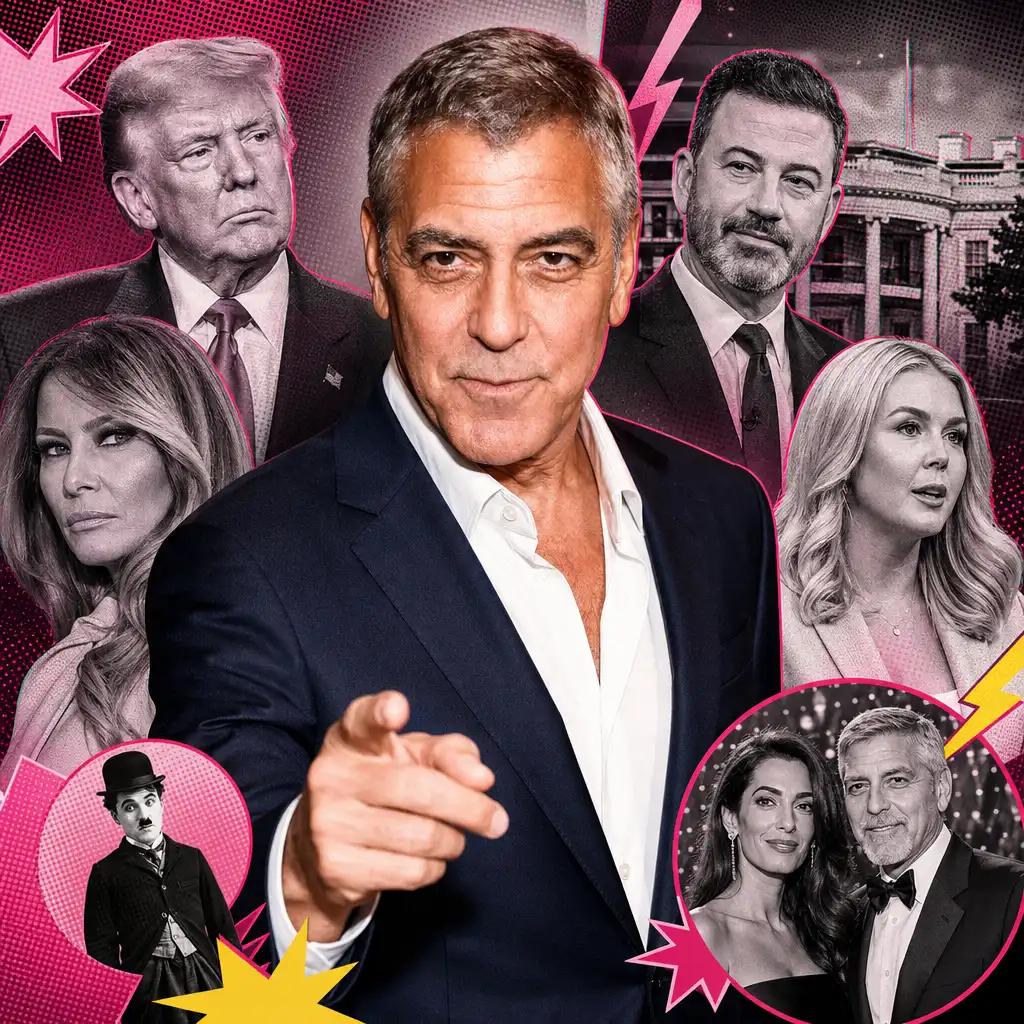
Jimmy Kimmel did not need a new feud with Donald Trump. He already had one. But the president’s royal welcome for King Charles III gave the late-night host fresh material, and Kimmel used it to argue that the fight over one joke has become something larger: a pressure campaign against satire, broadcasters and political critics.
On the latest episode of Jimmy Kimmel Live!, in a monologue posted to YouTube as “Trump Visits with King Charles, Wants Us to Pay for Ballroom & Did He Joke About His Own Death!?,” Kimmel replayed Trump’s remarks from the state visit and accused the administration of treating late-night comedy as a regulatory matter. That is a heavy upgrade from the usual political punchline economy.
The segment arrived after Trump and first lady Melania Trump pressed ABC to fire Kimmel over a recent joke about the first lady. It also landed as the Federal Communications Commission moved to review ABC station licenses, putting Disney, ABC’s parent company, in a more serious position than simply fielding angry posts from Washington.
A royal visit becomes late-night ammunition
The immediate setup was King Charles III and Queen Camilla’s four-day state visit to Washington, scheduled from Monday, April 27, through Thursday, April 30, 2026. The White House framed the visit as a celebration of the U.S.-U.K. relationship as Americans approach 250 years of independence. The itinerary included a state arrival ceremony, a White House dinner and other official events designed for maximum protocol and minimum improvisation.
Improvisation still found a way in.
During his welcome remarks, Trump referred to the long marriage of his parents, Fred Trump and Mary Anne MacLeod Trump. He then turned to Melania Trump and joked that he and the first lady would not be able to match that record.
Kimmel pounced on the comment, asking whether Trump had just joked about his own death. The point was not subtle: Kimmel had been criticized for joking that Melania had the “glow” of an “expectant widow,” a line he said was about the age gap between the president and first lady, not a wish for harm.
Kimmel presented Trump’s royal-visit remark as the contradiction at the center of the fight. In his telling, the president demanded consequences when a comedian joked about age and mortality, then made a similar joke himself in front of the British monarch. The Guardian’s late-night roundup described Kimmel as saying the administration had reached “peak ridiculous.” Other coverage noted that Kimmel used the clip to frame Trump’s outrage as selective and politically useful.
The earlier joke, and the violence that changed the stakes
The controversy over Kimmel’s earlier line intensified after the April 25 shooting at the White House Correspondents’ Association dinner in Washington.
According to the Justice Department, Cole Tomas Allen, 31, of Torrance, California, was arraigned on charges including attempting to assassinate the president, transporting a firearm and ammunition in interstate commerce with intent to commit a felony, and discharging a firearm during a crime of violence. Prosecutors alleged Allen approached a hotel security checkpoint with a long gun and that a Secret Service officer wearing a ballistic vest was shot once in the chest.
Kimmel has rejected any suggestion that his joke was connected to political violence. He has said the target was the age difference between Trump and Melania Trump, not the president’s safety.
That distinction has not cooled the political response. Trump and Melania Trump publicly called for Kimmel to be fired, according to reports about the FCC review and the late-night controversy. For a talk-show host, criticism from a president is familiar terrain. A president calling for a network to remove a host while federal regulators examine the network’s licenses is a different category.
Why the FCC review matters
Axios reported that the FCC ordered an accelerated review of ABC’s local station broadcast licenses as part of an inquiry into whether the stations violated rules barring unlawful discrimination tied to Disney and ABC diversity, equity and inclusion policies.
Broadcast licenses are the government permissions that allow local television stations to use public airwaves. Networks such as ABC rely on those local stations to reach viewers across the country. That makes any license review more than a paperwork exercise, especially when it unfolds near a public fight between the White House and one of the network’s highest-profile hosts.
The review came shortly after the Trumps condemned Kimmel’s joke, increasing pressure on ABC and Disney. The administration’s stated focus is DEI policy and anti-discrimination rules, not Kimmel’s monologue. Still, the timing has made the review part of the broader debate over whether federal power is being used to intimidate media critics.
Comey, seashells and the widening argument over speech
Kimmel also used the same monologue to connect his dispute to another Washington controversy: the renewed prosecution of former FBI Director James Comey.
Comey was indicted Tuesday over a social media post that showed seashells arranged as “86 47.” Officials said the image constituted a threat against Trump, the 47th president. The Associated Press reported that Comey said he understood the arrangement as a political message, not a call to violence, and deleted the post after realizing some people associated the numbers with violence.
For Kimmel, the Comey case fit the week’s pattern. He mocked the idea that the seashell image amounted to a threat and argued that the administration was treating ambiguous or satirical expression as dangerous when it came from critics. The comedy was doing what late-night often does: turning a legal and political argument into a digestible clip. The difference is that the legal and political argument is now very real.
The ballroom subplot enters the chat
Other late-night shows also used the week’s events to question the administration’s priorities. On The Daily Show, Josh Johnson criticized Republican support for funding Trump’s proposed $400 million White House ballroom after the correspondents’ dinner shooting.
Axios reported that Trump and congressional allies have argued the ballroom, planned above a large subterranean complex, is a national security need after the incident at the Washington Hilton. Supporters increasingly describe the project as a practical response to security concerns. Critics see it as an expensive attempt to reshape Washington according to Trump’s personal tastes.
Axios has described the $400 million plan as part of Trump’s broader effort to leave a visible imprint on the capital. It has also become another symbol of how quickly ceremony, architecture, security and politics can collapse into one argument.
Pageantry meets the punchline machine
The royal visit was designed to project steadiness: shared history, diplomatic warmth and the “special relationship” between the United States and the United Kingdom. The White House emphasized the approaching semiquincentennial of American independence and the symbolic weight of hosting King Charles III and Queen Camilla.
Late-night television focused on the seams. Kimmel and others highlighted Trump’s marriage remark and reports that Australian flags were mistakenly displayed in Washington ahead of the British monarch’s arrival. In the logic of statecraft, those are minor details. In the logic of television, they are gifts with a bow already attached.
Kimmel’s method here was familiar: play the politician’s own words, pause long enough for the audience to process the contradiction, then widen the frame. What makes this week different is the machinery around the joke. An attempted attack, demands that a host be fired, a federal review involving ABC licenses and a criminal case over a cryptic post have turned late-night satire into a proxy fight over political speech and government pressure.
The next steps now sit with institutions, not comedians. ABC and Disney must decide how to handle political and regulatory heat. The FCC review will test the limits of broadcast oversight. Courts will decide whether the Comey case and the correspondents’ dinner shooting prosecution meet the legal standards required.
Kimmel supplied the monologue. Washington supplied the escalation.