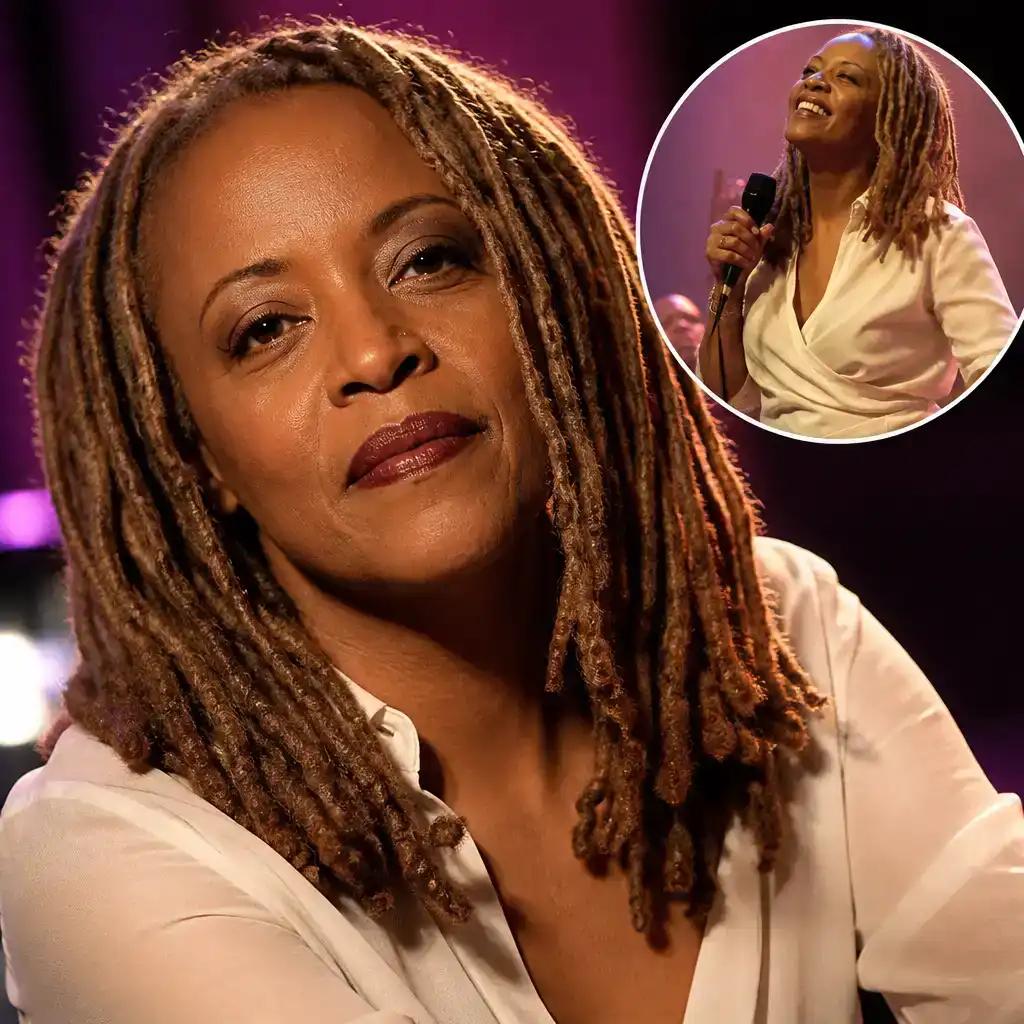
Her arrangements could be sparse, earthy and rhythmically unusual, while her Mississippi background remained audible even when the music travelled far beyond traditional blues or jazz. Pianist and bandleader Jon Batiste put it more simply in his tribute: Wilson sounded like the South.
WBGO host Gary Walker said, “There were no boundaries for Cassandra Wilson as to what she explored.” That range was not a late-career stylistic exercise. It shaped her work from the beginning and made her especially influential for Black women working across jazz and popular music.
Wilson was also more than an interpreter of other writers’ songs. Her work as a guitarist, composer and member of New York’s experimental M-Base movement placed her inside the construction of the music, not merely in front of the microphone.
Where did her musical career begin?
Born and raised in Jackson, Wilson was the daughter of musician Herman B. Fowlkes and teacher Mary Fowlkes. Her early listening included Motown, Miles Davis and Thelonious Monk, a combination that already suggested she was unlikely to stay in one musical department.
She began piano lessons at 6, played clarinet in marching bands and later performed in coffeehouses and cover groups. Wilson studied at Millsaps College and Jackson State University before spending time with established jazz musicians in New Orleans during the early 1980s.
After moving to New York City, she joined saxophonist Steve Coleman’s M-Base Collective and became its principal vocalist. The group’s experimental approach combined improvisation with complex rhythmic ideas, giving Wilson a setting in which her phrasing and low register could develop outside the conventions of standard jazz singing.
Her later recording career included more than 20 releases as a leader, according to the National Endowment for the Arts. She also appeared with Terence Blanchard, Bill Frisell, Charlie Haden, Angélique Kidjo and Luther Vandross, and performed on Wynton Marsalis’s Pulitzer Prize-winning work Blood on the Fields.
Which albums and awards defined her career?
Wilson’s long association with Blue Note Records ran from 1993 through 2010. That period produced the albums that established her as both a critical favorite and a major presence in contemporary vocal jazz.
The Recording Academy credited her with four Grammy nominations and two wins, both for Best Jazz Vocal Album:
- New Moon Daughter won in 1997.
- Loverly won in 2009.
Those records showed different sides of her approach. Wilson could reshape material from outside the standard jazz repertoire without making the selections feel like novelty covers. Country, blues and pop songs entered her musical language on equal terms, rather than arriving as guests wearing visitor badges.
Her other honors included the Montreal Jazz Festival’s Miles Davis Prize in 1999 and a Mississippi Blues Trail marker in 2010. Millsaps College, the New School and Berklee College of Music awarded her honorary doctorates.
In 2022, the National Endowment for the Arts named Wilson an NEA Jazz Master, one of the highest distinctions available to jazz musicians in the United States.
Why was Billie Holiday central to her later work?
Billie Holiday remained an important influence on Wilson, though she avoided simply reproducing Holiday’s phrasing or repertoire. In 2015, Wilson performed a special concert at the Apollo Theater marking what would have been Holiday’s 100th birthday.
That year she released Coming Forth by Day, a full album honoring the singer, who died in New York City in 1959 at 44. It became Wilson’s final studio album.
The project treated Holiday’s songs as living material rather than museum pieces. That distinction mattered throughout Wilson’s career. She respected tradition while declining to preserve it in glass, using older songs to examine memory, place and Black musical history through her own unmistakable sound.
Her connection to Mississippi remained equally central. Jackson Mayor John Horhn said the city had lost “an extraordinary native daughter” and the world had lost “a singular musical voice.” He added that Wilson carried the sound, spirit and history of Mississippi wherever her music reached.
How are fellow musicians remembering her?
Batiste said Wilson’s blend of folkloric, R&B, diasporic, experimental and popular music had “a major impact on me.” Sharing footage of the pair appearing on Brazilian television in 2009, he recalled that she was among the first artists to take him on tour internationally.
“Her Mississippi heritage was always present in everything no matter how expansive her artistry evolved,” he wrote.
That balance explains much of Wilson’s legacy. Her work reached across styles and continents, but its point of origin never became vague. The voice remained grounded in Jackson, blues history and the experimental curiosity that shaped her New York years.
Wilson leaves behind a catalogue that made jazz singing broader without making it less exacting. She did not abandon the tradition. She demonstrated that it had considerably more room than the industry sometimes imagined.