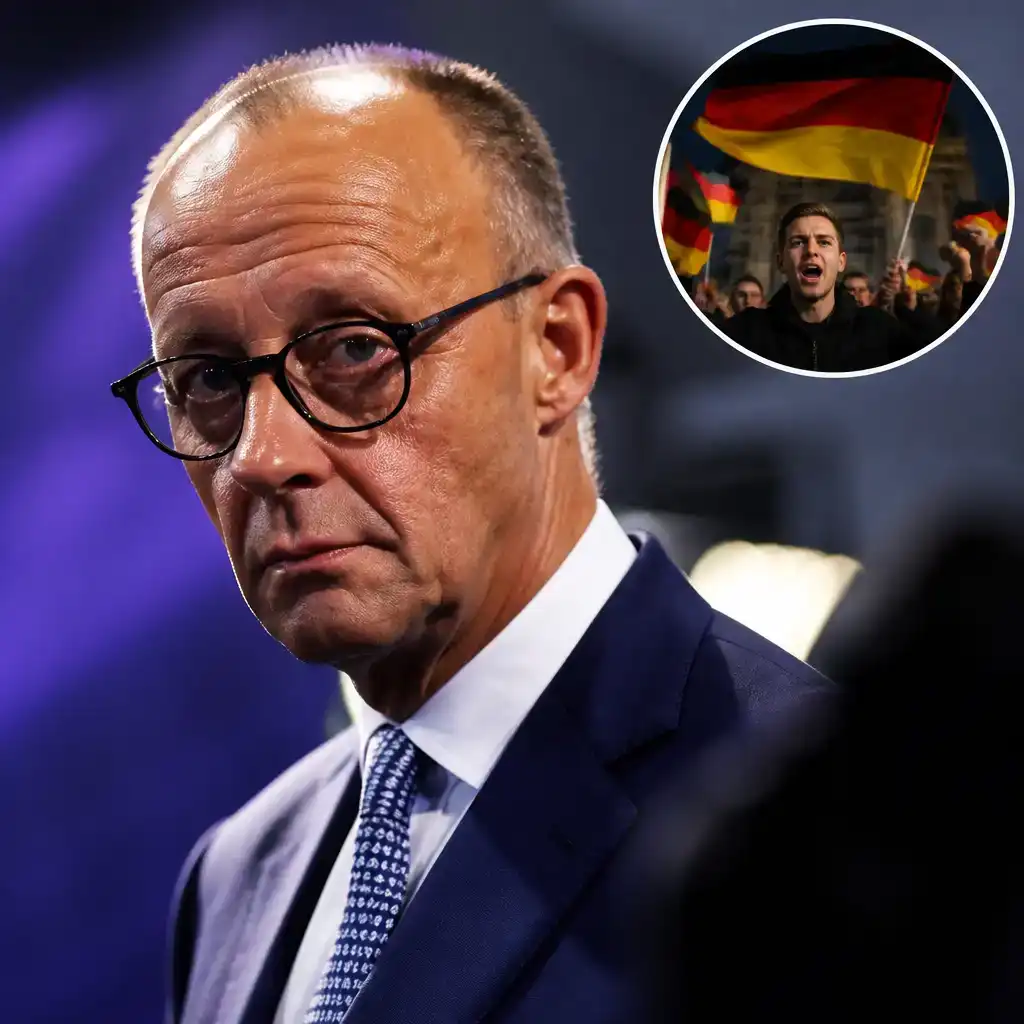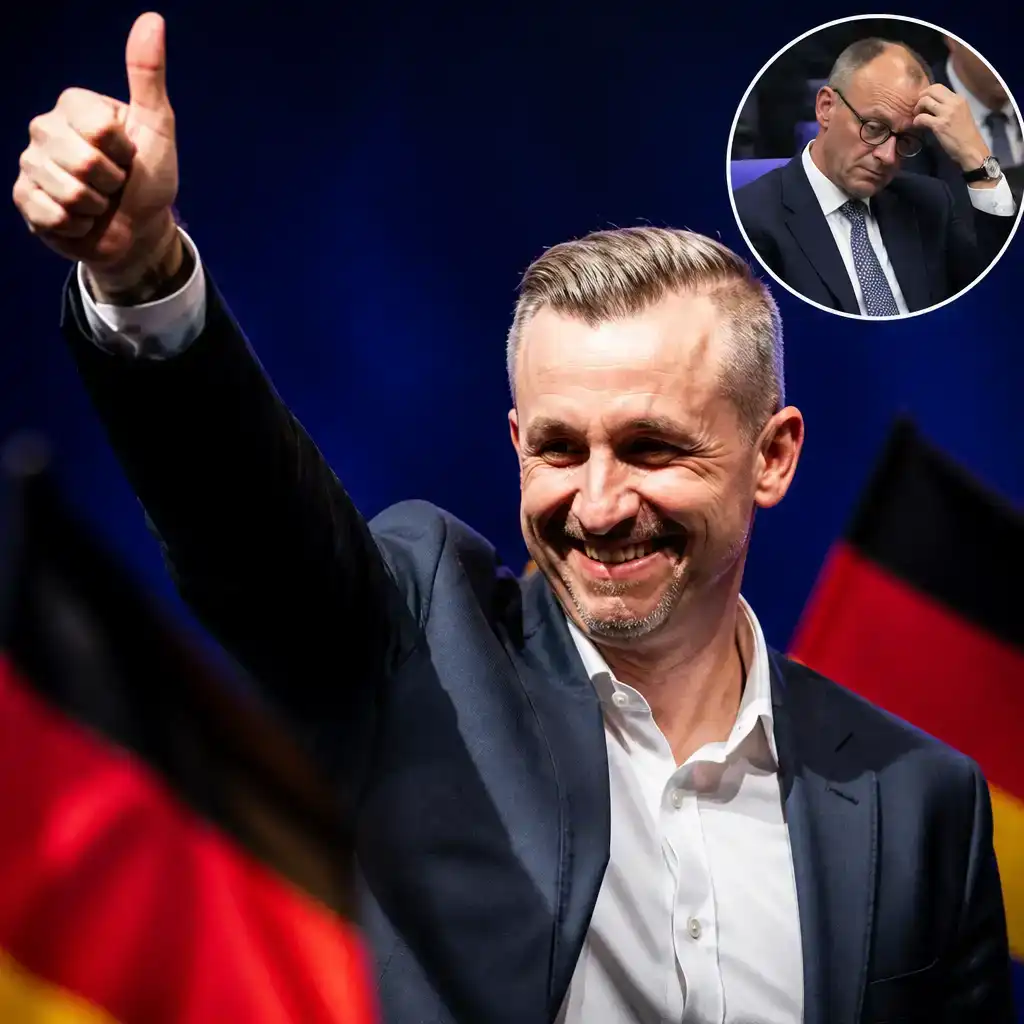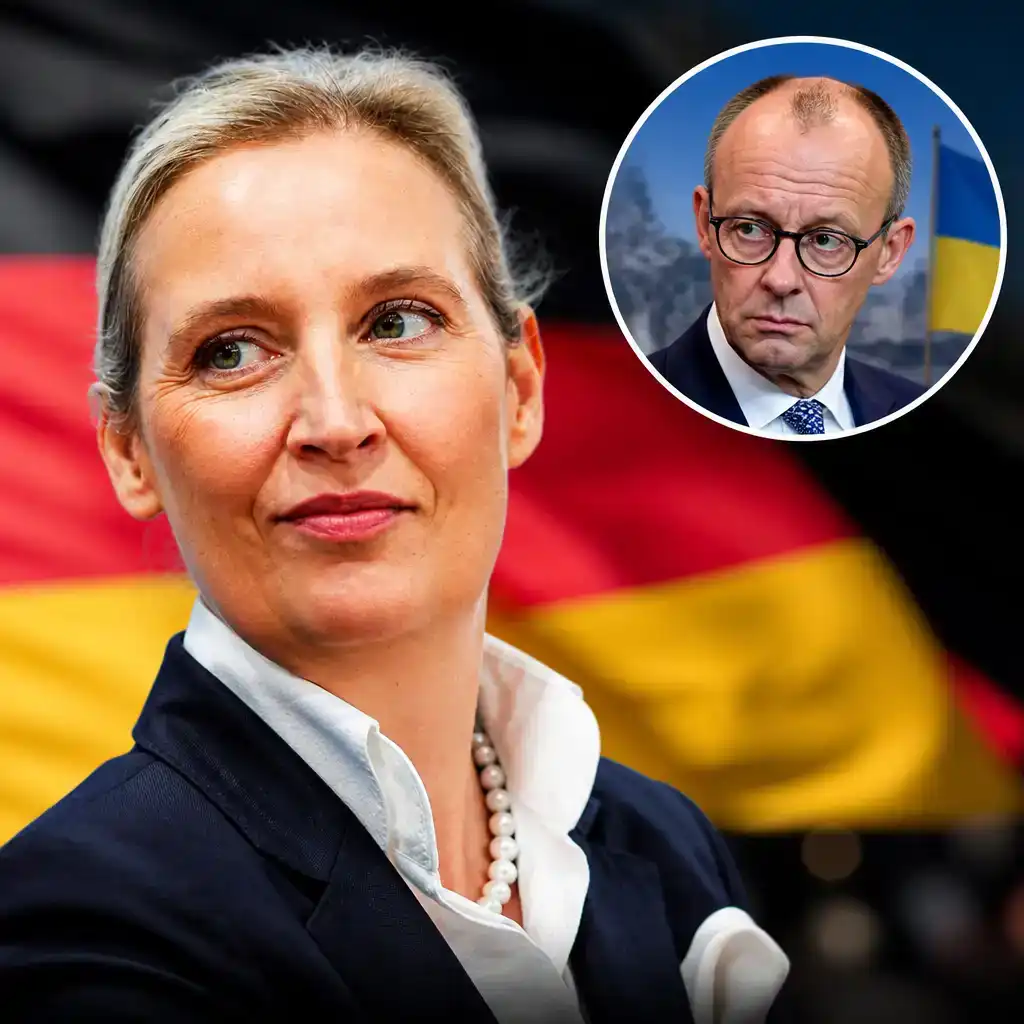
The far-right rise in Germany has moved from an uncomfortable polling trend to a direct challenge for Chancellor Friedrich Merz and Europe’s political stability. Alternative für Deutschland won 43.8 percent of the vote in Saxony-Anhalt on September 6, decisively defeating Merz’s governing Christian Democratic Union.
The result brought a far-right party closer than any such force since World War II to leading a German state. Two weeks later, the AfD secured more than 38 percent in Mecklenburg-Western Pomerania. The Christian Democratic Union failed even to clear the 5 percent threshold required to enter the regional parliament, an outcome Merz called “a disaster”.
Germany’s political centre is now under pressure from both directions. In a separate Sunday by-election in Berlin, the left-wing Die Linke won 25.3 percent of the vote.
Political scientist Catherine Fieschi of the Carnegie Endowment for International Peace said the AfD is following a familiar far-right strategy: weakening trust in established parties and “hollowing out of the centre”. Germany, it turns out, is not exempt from political fragmentation merely because it has particularly serious coalition meetings.
How could the AfD affect support for Ukraine?
The most immediate international concern is Germany’s policy towards Ukraine. Berlin remains a major source of financial assistance, weapons and industrial capacity, making any reduction in support significant well beyond German borders.
“This is bad news for Merz. It’s bad news for Germany, and it’s bad news for the Franco-German engine, and therefore for Ukraine,” Fieschi said.
The AfD supports reopening dialogue with Russia and opposes Germany’s current approach to the war. Ronald Meinardus, a research fellow at the Hellenic Foundation for European and Foreign Policy, said the party has repeatedly called for Germany to:
- End military and financial assistance to Ukraine
- Oppose Ukrainian membership of the European Union and NATO
- Restore relations with Moscow
- Restart the Nord Stream gas pipelines
The Kremlin has responded warmly, with little attempt at subtlety. As doubts grew over Merz’s political future, Kremlin spokesman Dmitry Peskov praised the AfD as a popular force interested in “establishing relations” with Russia.
“This can’t fail to appeal to us,” Peskov said on Tuesday.
Why does Russian energy remain part of the argument?
Europe stopped buying Russian oil in 2023 in response to Moscow’s invasion of Ukraine. The European Union also plans to end imports of Russian gas by the close of 2027.
Moscow continues to argue that Germany damaged its own economy by abandoning cheap Russian energy. On Monday, Peskov blamed the decline in German competitiveness largely on Berlin’s decision to replace Russian gas with more expensive supplies from elsewhere, particularly the United States.
That argument suits both the Kremlin and the AfD. It connects dissatisfaction over energy prices and weak industrial performance with demands for renewed ties to Russia. It also presents sanctions as a German economic mistake rather than a response to an invasion, which is a useful rearrangement of cause and effect.
Germany did receive some unexpectedly positive economic news. Handelsblatt reported a 2026 growth forecast of 1.3 percent, twice the previous estimate.
The AfD nevertheless campaigns on an inward-looking economic programme. It wants public spending directed primarily towards German citizens and opposes foreign aid in any form. That position would affect not only Ukraine but Germany’s broader international commitments.
Can regional victories change national policy?
The AfD may have won relative majorities in Saxony-Anhalt and Mecklenburg-Western Pomerania, but forming governments will be much harder. Most other parties refuse to enter coalitions with it, preserving the political barrier commonly used to keep the far right out of office.
A federal election is not scheduled until early 2029, so the AfD cannot immediately take control in Berlin. Its regional successes can still weaken Merz long before then.
Fieschi said the defeats had already forced the chancellor into crisis management. Merz cancelled commitments and did not travel to the United Nations General Assembly in New York. In her assessment, he is likely to become a less effective leader as his government focuses on containing domestic political damage.
Germany is unlikely to end support for Ukraine outright, she said, but future assistance may become quieter and less ambitious. A highly visible visit by Merz to Kyiv now appears less likely.
The distinction matters. Governments do not need to announce a major foreign policy reversal if they can delay decisions, reduce commitments and avoid politically costly gestures one meeting at a time.
What could Germany now withhold from Ukraine?
Before taking office, Merz suggested Germany might provide Ukraine with Taurus cruise missiles, long-range weapons that Kyiv has repeatedly requested. Following the AfD’s gains and the damage to his authority, that prospect appears remote.
Europe is also unlikely to revive plans to lend Ukraine more than 200 billion euros, about $230bn, backed by immobilised Russian assets held in the European financial system. Such financing could sustain Ukraine’s military effort for years.
Fieschi said there was “absolutely no appetite” for the plan. Belgium has objected because Brussels-based securities depository Euroclear holds most of the frozen assets. Other governments, she said, have been content to shelter behind the Belgian position.
Oleksandr Danylyuk, a specialist in Russian hybrid warfare and a former senior adviser to Ukrainian defence and intelligence officials, offered a darker assessment. He said Moscow aims to exhaust Ukraine while disrupting Western assistance and believes it is making substantial progress.
Russia therefore has little incentive to accept negotiations or a ceasefire, he argued, because political conditions in Europe and the United States increasingly favour delay. Danylyuk predicted greater division within Europe and warned that financial support could fall from levels he already considers inadequate.
Could Merz’s governing coalition collapse?
The AfD won 20.8 percent of the national vote in Germany’s February 2025 general election, twice its share in 2021. Established parties responded by building a broad coalition designed to keep it away from federal power.
Merz’s Christian Democratic Union joined with its traditional centre-left rival, the Social Democratic Party. The arrangement secured a parliamentary majority, but repeated regional defeats could place the coalition under severe strain.
Fieschi described Merz as badly weakened ahead of the next round of state elections in April 2027. If those results resemble the losses in Saxony-Anhalt and Mecklenburg-Western Pomerania, she believes Germany could hold an early federal election in autumn 2027.
That would not guarantee an AfD government. It would, however, force mainstream parties to construct another potentially awkward coalition while explaining why their previous one failed. Each compromise can also help the AfD portray itself as the only genuine opposition, even while other parties continue refusing to work with it.
The strategy does not require immediate control of the chancellery. Persistent pressure can be enough to narrow what the government believes is politically possible.
Can the AfD take national power?
Meinardus said Germany’s federal parliamentary system still makes an AfD national government unlikely. The party is far stronger in the former East German states than in much of the west, and it would need broader support across several regions.
Coalition arithmetic presents another obstacle. Because other major parties reject cooperation, the AfD can finish first without assembling the majority needed to govern. Winning votes and obtaining power are related activities, but Germany’s system has made sure they are not identical.
The country’s judiciary would provide another line of resistance. Courts could challenge legislation that violated Germany’s constitution, particularly measures affecting democratic rights and institutions.
Public opposition also remains substantial. On September 12, tens of thousands of people marched against the AfD in 20 German cities. The demonstrations showed that the party remains deeply divisive outside its eastern strongholds.
The AfD may therefore remain locked out of federal government. Even so, its growth can reshape policy by weakening leaders, complicating coalitions and making support for Ukraine harder to sustain. A party does not need to run Germany to alter what Germany does, which is why the consequences will not stop at its borders.